Mango Sticky Rice Rolls with Coconut Rice
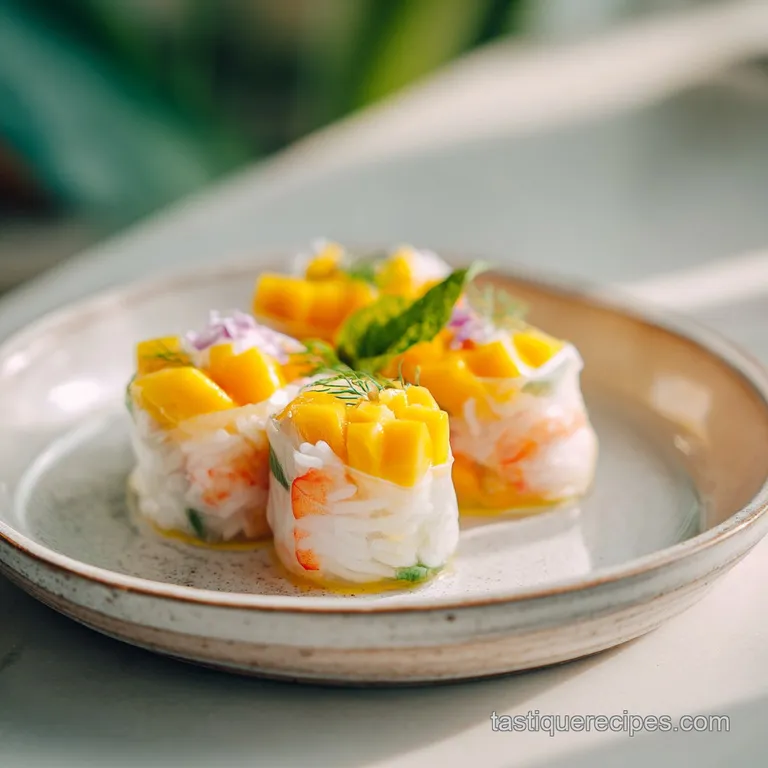
- Time: Active 20 minutes, Passive 25 minutes, Total 45 minutes
- Flavor/Texture Hook: Velvety coconut rice with a honey sweet mango core
- Perfect for: Modern dinner parties or a high energy afternoon snack
- Why You’ll Crave These Mango Sticky Rice Rolls
- The Logic of Layered Sweetness
- Decoding Each Essential Component
- Tools for Handheld Success
- Mastering the Rolling Technique
- Fixing Common Rolling Hurdles
- Tweaking Flavors for Everyone
- Keeping Your Rolls Fresh
- Finishing with Extra Panache
- Recipe FAQs
- 📝 Recipe Card
Why You’ll Crave These Mango Sticky Rice Rolls
Imagine walking through a humid night market, the air thick with the scent of toasted sesame and sweet cream. You see a vendor expertly slicing a golden mango, the juice catching the light, as they scoop a mound of pearly rice onto a plate.
It’s the ultimate comfort, but let’s be real eating sticky rice from a foam box while navigating a crowd is a logistical nightmare. That’s why I started making these Mango Sticky Rice Rolls.
They take everything we love about the classic dish and wrap it into a neat, bite sized package that actually stays together when you take a bite.
The first time I tried this at home, I made the classic mistake of over soaking the rice, turning it into a gummy paste that had zero structure. I’ve since learned that the secret lies in the balance of moisture and tension.
You want that rice to be tender and infused with coconut, but it needs enough "bite" to hold its shape inside the rice paper. When you hit that sweet spot, the contrast between the cool, slippery wrapper and the warm, fragrant rice is absolutely addictive.
We aren't just making a snack here; we're building layers of flavor that hit every part of your palate.
If you’ve ever felt intimidated by traditional Thai desserts, this is your gateway. We are using modern shortcuts like monk fruit to keep things light without sacrificing that deep, caramel like sweetness we crave. Plus, using rice paper as a vehicle is a total game changer for portability.
Whether you’re serving these at a summer BBQ or just treating yourself after a long day, these rolls bring a bit of tropical sunshine right into your kitchen. Trust me, once you master the "tuck and roll" technique, you'll never go back to the bowl.
The Logic of Layered Sweetness
The Physics of the Grip
The amylopectin in the glutinous rice acts as a natural adhesive, bonding the rice grains together so they don't tumble out of the rice paper. This creates a structural "log" that maintains its shape even when you bite through the chewy outer layer.
- Starch Retrogradation: Cooling the rice slightly before rolling allows the starches to firm up, preventing the roll from becoming a shapeless tube.
- Capillary Action: The rice paper absorbs just enough moisture from the warm rice to become perfectly pliable without dissolving into a sticky mess.
- Osmotic Balance: Salt in the rice enhances the perception of sweetness in the mango by suppressing bitter notes on the tongue.
- Fat Emulsification: Light coconut milk provides a silky mouthfeel that coats the rice grains, preventing them from clumping into a dry mass.
| Feature | Classic Bowl Method | Fast Roll Method |
|---|---|---|
| Portability | Requires bowl and spoon | Handheld and mess free |
| Texture Mix | Soft on soft | Chewy wrapper vs. velvety rice |
| Prep Style | Traditional overnight soak | 20 minute modern simmer |
The beauty of this method is how it bridges the gap between old school flavor and modern convenience. While a classic mango sticky rice requires a lot of waiting, this version uses a stovetop technique that gets you to the finish line much faster. For another fun twist on using rice paper, you might want to try my Vietnamese Pizza Rice recipe which uses similar wrappers but in a totally different, savory way.
Decoding Each Essential Component
To get that restaurant quality finish, we need to understand what our ingredients are doing. We aren't just tossing things together; we're selecting components that play well with heat and moisture.
| Component | Science Role | Pro Secret |
|---|---|---|
| Glutinous Rice | Provides the "chew" via high amylopectin content | Rinse until water is clear to prevent gummy clumps |
| Coconut Milk | Adds fat for a velvety, rich mouthfeel | Light coconut milk prevents the rolls from feeling heavy |
| Monk Fruit | Sweetens without the glycemic spike | Dissolve in warm milk first for even distribution |
| Rice Paper | Structural integrity and tactile contrast | Use 22cm diameter for the perfect rice to wrap ratio |
1. Selecting the Mango
Ripeness is non negotiable here. You want a honey mango (Ataulfo) that gives slightly when pressed. If it's too firm, it won't meld with the rice; if it's too soft, it will turn into mush when you try to roll it. Look for a deep yellow skin with maybe a few small wrinkles that’s the sweet spot.
2. The Rice Paper Prep
Don't use boiling water to soften your wrappers. It makes them too delicate and prone to tearing. Lukewarm or even cool water is your friend. A quick 5 second dip is all it takes; it will continue to soften on your work surface as you add the filling.
3. Coconut Milk Ratios
We use 0.75 cup (180ml) for the rice to ensure every grain is saturated but not swimming. The additional 0.5 cup (120ml) for the sauce is where we add that final layer of decadence. If you love coconut based treats, this flavor profile is very similar to what you'll find in my Mango Sago Dessert recipe.
Tools for Handheld Success
You don't need a professional kitchen, but a few specific tools make the process of making Mango Sticky Rice Rolls much smoother. First, a heavy bottomed saucepan is essential for the rice. It distributes heat evenly, so you don't end up with burnt bits at the bottom and raw grains on top.
A wide, shallow bowl or a specialized rice paper water bowl is a lifesaver for the dipping process. You want something large enough to submerge the 22cm wrapper without folding it. Finally, a very sharp knife is critical for slicing the mango into those 3 inch batons.
A dull blade will bruise the fruit and make your rolls look messy.
Chef's Note: If your rice is sticking too much to your hands during assembly, keep a small bowl of water nearby to dampen your fingertips. It makes handling the sticky rice significantly easier.
Mastering the Rolling Technique
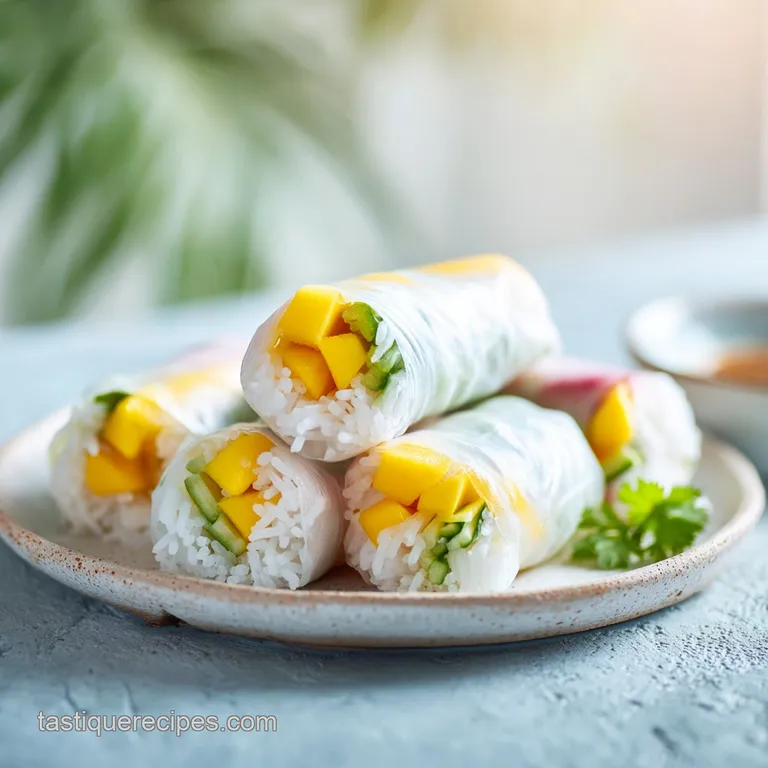
- Rinse the rice. Place 1 cup (200g) glutinous rice in a fine mesh sieve and rinse under cold water until the water runs clear. Note: This removes excess surface starch for better grain definition.
- Cook the base. Combine the rinsed rice, 0.75 cup (180ml) light coconut milk, 2 tbsp (30g) monk fruit, and 0.25 tsp (1.5g) sea salt in a saucepan. Bring to a simmer over medium heat.
- Steam and set. Cover tightly and reduce heat to low. Cook for 20 minutes until the liquid is fully absorbed and rice is translucent.
- Rest the rice. Turn off the heat and let the rice sit, covered, for 10 minutes. Note: This allows the steam to finish softening the core of each grain.
- Prep the mango. Slice 2 ripe honey mangos into 3 inch long batons, about half an inch thick.
- Hydrate the wrapper. Dip one rice paper wrapper into room temperature water for 5 seconds until it feels slightly pliable but still has some structure.
- Layer the filling. Place the wrapper on a clean surface. Add a small log of rice (about 2 tbsp) in the lower third, then top with a mango baton.
- The "Burrito" Roll. Fold the bottom over the filling, tuck in the sides, and roll tightly until the seam is sealed and the roll is firm.
- Make the sauce. Simmer 0.5 cup (120ml) light coconut milk with 1 tsp monk fruit for 5 minutes until slightly thickened and glossy.
- Final garnish. Drizzle the sauce over the rolls and sprinkle with 0.5 tsp toasted sesame seeds until they stick to the creamy glaze.
| Servings | Rice Amount | Mango Count | Wrappers |
|---|---|---|---|
| 4 people | 0.5 cup | 1 large | 4 rounds |
| 8 people | 1 cup | 2 large | 8 rounds |
| 16 people | 2 cups | 4 large | 16 rounds |
Fixing Common Rolling Hurdles
Why Your Rice Paper Tears
This is usually a hydration issue. If the water is too hot, the starch in the paper gelatinizes instantly, making it weak. If you soak it for too long, it loses its tensile strength. Stick to cool water and a quick dip.
If it tears, don't panic you can actually double wrap it with a second sheet to save the roll.
Why Your Rice is Hard
Glutinous rice is stubborn. If the center of the grain feels chalky, it didn't get enough steam. Ensure your lid is tight fitting. If you see steam escaping, place a clean kitchen towel under the lid to create a better seal. Also, don't skip the 10 minute rest; it's the most important part of the cooking process.
The Myth of "Sticky" Rice
People often think "sticky rice" means any rice that's overcooked. That's a myth! True glutinous rice is a specific variety with very little amylose and a ton of amylopectin. You cannot substitute regular jasmine or basmati rice here; they will never achieve that signature "chew" and will simply fall apart inside the roll.
| Problem | Root Cause | Solution |
|---|---|---|
| Soggy Rolls | Mango was too juicy | Pat mango slices dry with a paper towel before rolling |
| Bland Flavor | Not enough salt | Increase sea salt to 0.5 tsp in the rice mixture |
| Wrapper is Slimy | Over soaked paper | Reduce dip time to 3 seconds in colder water |
Common Mistakes Checklist:
- ✓ Rinsing the rice thoroughly (prevents a glue like texture)
- ✓ Using "Light" coconut milk (prevents the fat from separating and making the rice greasy)
- ✓ Letting the rice cool for at least 15 minutes before rolling (prevents the rice paper from melting)
- ✓ Tucking the sides tightly (prevents the mango from sliding out when you bite it)
Tweaking Flavors for Everyone
If you're scaling this recipe up for a party, remember that the rice paper becomes more difficult to handle in large batches. I recommend rolling no more than 4 at a time to prevent them from sticking to your work surface.
For spices, if you want to add a bit of warmth, a pinch of ground ginger or cardamom in the coconut milk adds a lovely modern twist.
The Low Glycemic Swap
While we are already using monk fruit, you can swap the white glutinous rice for black glutinous rice (often called "forbidden rice"). It has a nuttier flavor and a much lower glycemic index.
Just keep in mind that black rice requires a longer soak (at least 4 hours) and about 10 minutes more cook time.
Nut Free Garnish Crunch
If you want that crunch without using sesame seeds, try toasted mung beans. They are a traditional Thai topping that provides a fantastic "shatter" texture. Simply soak hulled mung beans, pat them dry, and toast them in a dry pan until they are golden and fragrant.
Keeping Your Rolls Fresh
Mango Sticky Rice Rolls are best enjoyed within 2 to 3 hours of assembly. Because the rice paper is mostly starch, it tends to harden and become rubbery if left in the fridge for too long. However, if you have leftovers, place them in an airtight container with a damp paper towel draped over them.
This helps maintain the humidity and keeps the wrappers soft.
- Fridge
- 24 hours (wrappers will toughen slightly).
- Freezer
- Not recommended. The rice texture changes significantly upon thawing, becoming grainy.
- Zero Waste Tip
- If you have leftover coconut rice but ran out of mangos, roll the rice with banana slices or even a bit of dark chocolate for a different dessert profile. Leftover mango scraps can be blended into a quick smoothie or a Black Sesame Latte recipe for a creamy, fruity drink.
Finishing with Extra Panache
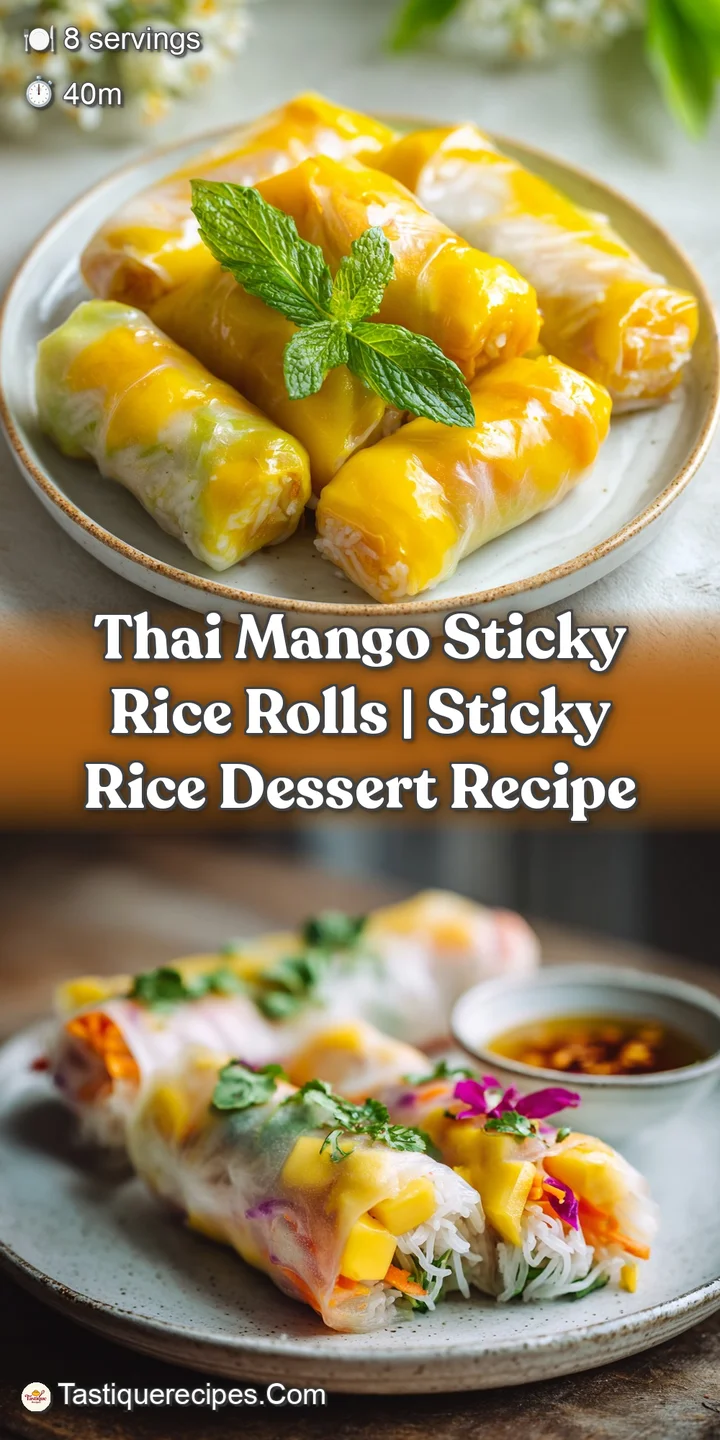
Presentation is everything with these rolls. Since the rice paper is translucent, the vibrant yellow of the mango should peek through beautifully. Slice the rolls on a sharp diagonal to show off the "bullseye" of fruit and rice.
It makes them look much more professional and reveals the internal layers we worked so hard to build.
Serve these on a dark platter to make the white rice and yellow mango pop. A final drizzle of the warm coconut sauce and a heavy dusting of sesame seeds adds that restaurant quality touch. If you want to go all out, serve them alongside a small bowl of extra dipping sauce so your guests can control the sweetness level.
These rolls are all about that perfect balance sweet, salty, creamy, and fresh all in one elegant, handheld bite. Enjoy the process, and don't worry if your first few rolls look a little wonky; they'll still taste incredible!
Recipe FAQs
Can I substitute jasmine rice for the glutinous (sweet) rice?
No, you must use glutinous rice. Jasmine rice lacks the high amylopectin content needed to achieve the signature sticky, cohesive texture required to hold the roll shape.
How do I soften the rice paper wrappers without them tearing?
Dip the wrapper into room temperature water for only 5 seconds. If the water is too hot, the starch structure breaks down instantly, leading to tears when rolling.
How long can I prepare the coconut rice in advance?
Yes, you can prepare the rice up to 24 hours ahead. Store the cooked coconut rice in an airtight container in the refrigerator, allowing it to firm up before assembly the next day.
Is it true that freezing leftovers improves the texture?
No, freezing is not recommended. Freezing causes the rice starches to retrograde unevenly, resulting in a grainy and unappealing texture when thawed.
What is the trick to ensuring the mango doesn't make the roll soggy?
Slice very ripe but firm mangoes and pat them completely dry with a paper towel. Excess surface moisture will rapidly dissolve the rice paper wrapper during rolling.
How to achieve the silky mouthfeel in the coconut sauce without using heavy cream?
Gently simmer the light coconut milk with sweetener for 5 minutes until it reduces by about 20%. This concentrates the fat and natural sugars, similar to the emulsion technique used in our Vegan Cashew Glaze recipe, creating a smoother finish.
How to cut the mango batons for the perfect cross section?
Cut the mango flesh into thick sticks approximately 3 inches long and half an inch wide. Ensuring uniform size is crucial for an even distribution of fruit throughout the roll.
Mango Sticky Rice Rolls
Ingredients:
Instructions:
Nutrition Facts:
| Calories | 166 kcal |
|---|---|
| Protein | 2.3 g |
| Fat | 2.3 g |
| Carbs | 34.4 g |
| Fiber | 0.6 g |
| Sugar | 6.2 g |
| Sodium | 81 mg |
