Tanghulu Recipe Fruit Candy: Shatter Crisp Shell
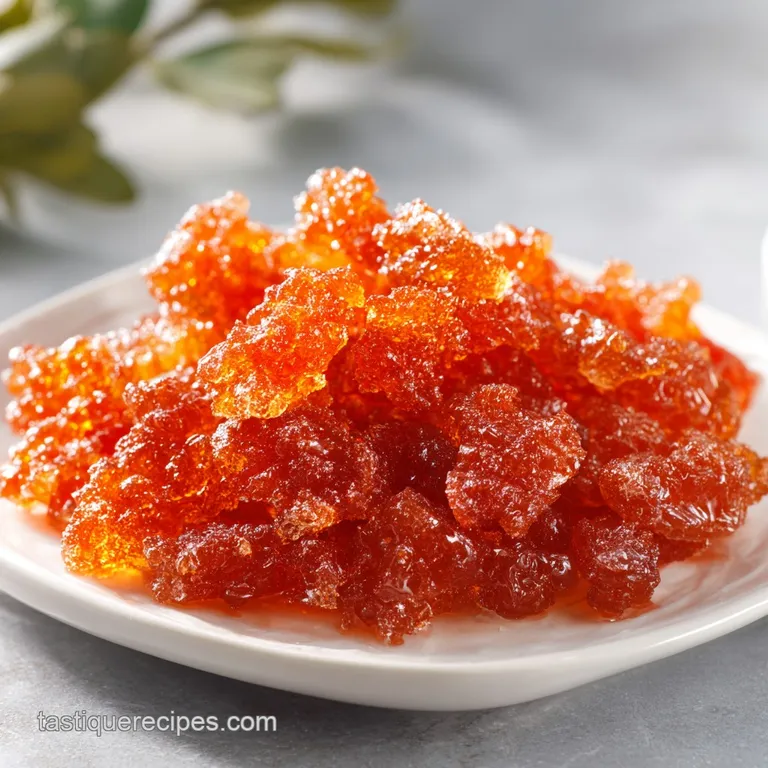
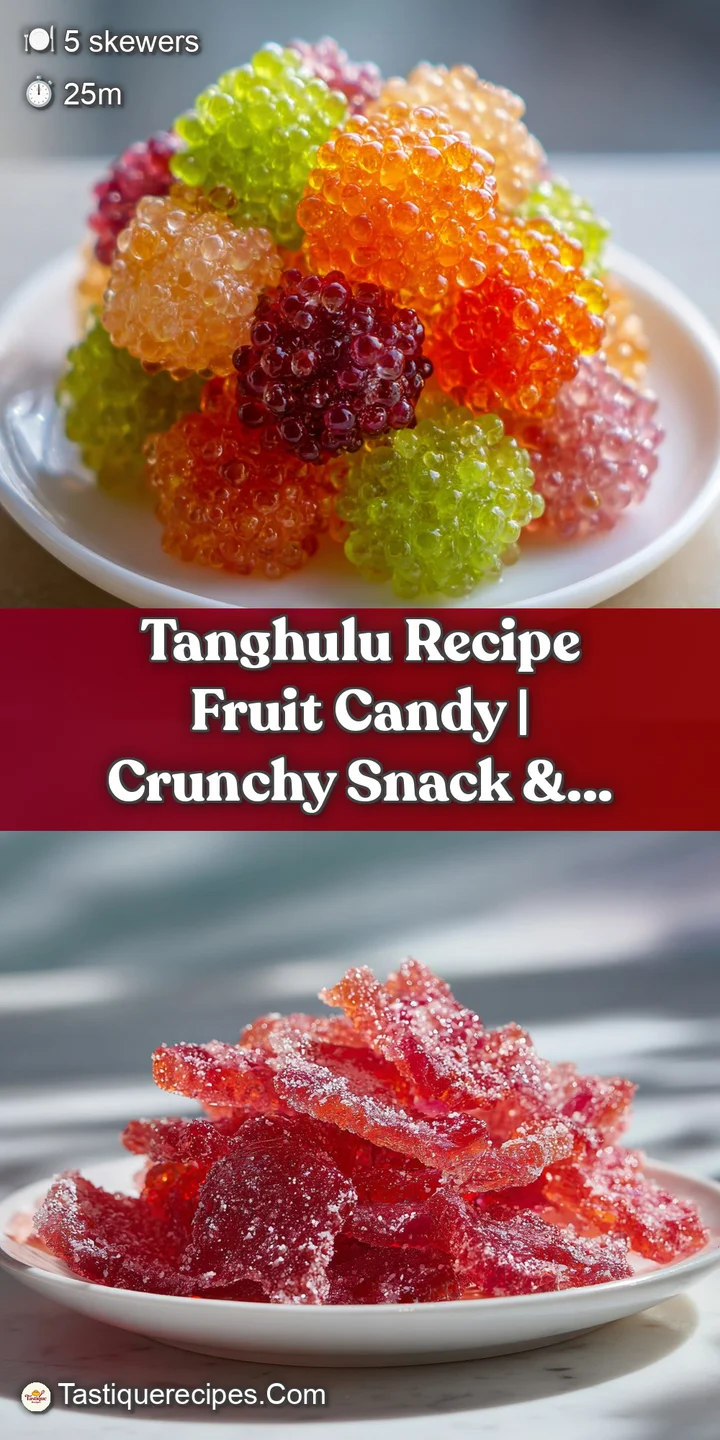
- Time: Active 15 minutes, Passive 10 minutes, Total 25 minutes
- Flavor/Texture Hook: Shatter crisp sugar shell with a cold, tart center
- Perfect for: Impressive party snacks or a fun weekend kitchen project
- Master The Ultimate Tanghulu Recipe Fruit Candy
- Why This Crunchy Method Works
- Essential Recipe Specifications
- The Complete Shopping List Breakdown
- Necessary Kitchen Tools For Success
- Step-By-Step Coating Instructions
- Expert Tricks And Common Pitfalls
- Simple Fruit And Sweetener Adaptations
- Smart Storage And Cleanup Tips
- Creative Ways To Serve Tanghulu
- Myths Regarding Sugar Candy
- Recipe FAQs
- 📝 Recipe Card
Master The Ultimate Tanghulu Recipe Fruit Candy
The first time I tried to make this, I ended up with a pot full of what looked like wet, white sand. I had made the classic rookie mistake of stirring the sugar while it boiled, which triggered a chain reaction of crystallization.
I was so frustrated because I just wanted that iconic "snap" I’d seen in street food videos. But after scrubbing my favorite pot for forty minutes, I realized that this recipe isn't about effort - it is about patience and leaving things alone.
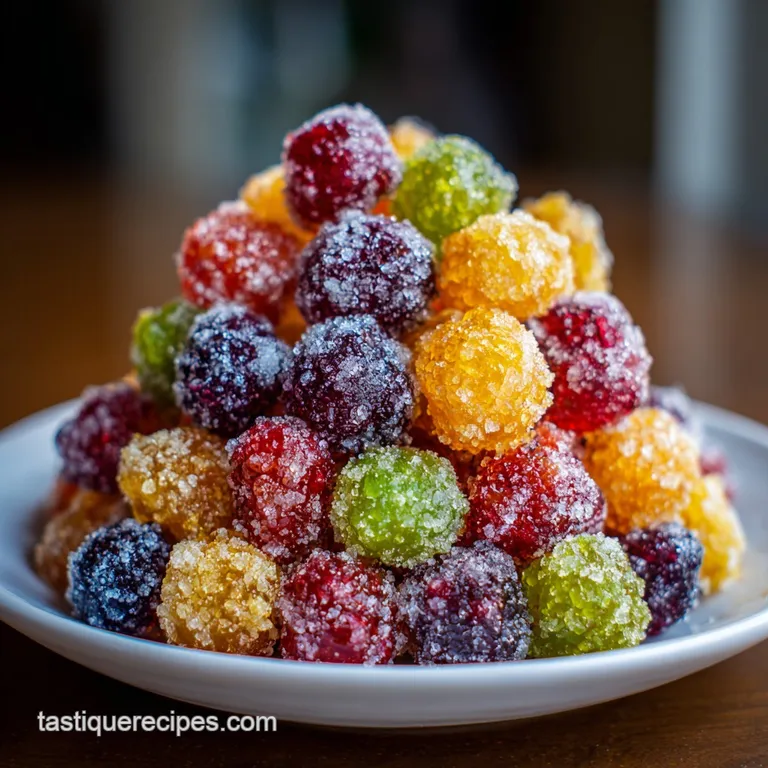
When you get it right, the sensation is incredible. You pick up a skewer of strawberries, and as your teeth hit the surface, there is a literal "crack" that sounds like a tiny pane of glass breaking.
Then, your teeth sink into the cold, giving fruit, and the sweetness of the shell mixes with the natural acidity of the strawberry. It is a texture lover's dream, and once you understand the science of the hard crack stage, you will never want to buy a pre made candy apple again.
We are going to walk through the exact steps to ensure your sugar stays crystal clear and shatters perfectly. This tanghulu recipe fruit candy is all about the contrast between the hot, molten syrup and the icy fruit. Trust me, once you hear that first shatter, you will be hooked.
Let's get into the specifics of why this method actually works every single time.
Why This Crunchy Method Works
The magic of this recipe fruit candy lies in the chemistry of sucrose. We are essentially creating a glass out of sugar by heating it to a specific temperature where almost all the water has evaporated.
This leaves behind a concentrated syrup that, when cooled rapidly, cannot reorganize into crystals, resulting in that smooth, transparent finish.
- Concentrated Saturation: The 2:1 sugar to water ratio creates a solution that, once boiled, becomes a super saturated syrup capable of reaching the hard crack stage.
- Inversion Prevention: Using corn syrup acts as an "interfering agent," which prevents the sucrose molecules from bonding together and turning your clear glaze into a grainy mess.
- Thermal Shock Induction: Dipping the hot fruit into an ice bath immediately after the syrup coating causes the sugar to solidify instantly into a brittle, glass like state.
- Moisture Barrier: The sugar shell acts as a temporary seal, locking the juices inside the fruit and creating that characteristic explosion of flavor when you take a bite.
This crisp texture reminds me of the refreshing snap in my Mango Sago Dessert recipe, where the balance of textures is the star of the show.
| Method | Time | Texture | Best For |
|---|---|---|---|
| Classic Stovetop | 25 minutes | Glass like shatter | Authentic street food results |
| Microwave Hack | 8 minutes | Tacky and soft | Quick cravings only |
| Oven Syrup | 35 minutes | Thick and amber | Large batches |
Choosing the stovetop method is the only way to ensure you hit that 300°F mark consistently. While the microwave is faster, it often results in "hot spots" that burn the sugar before the rest of the bowl is ready.
Essential Recipe Specifications
When we talk about candy making, precision is everything. You cannot eyeball the temperature of boiling sugar and expect a perfect result. We are aiming for the "Hard Crack Stage," which occurs between 300°F and 310°F.
If you stop at 280°F, you will have a sticky toffee like coating that gets stuck in your teeth. If you go past 320°F, the sugar will turn dark amber and taste bitter.
| Component | Science Role | Pro Secret |
|---|---|---|
| Granulated Sugar | Primary structure | Don't stir once it starts boiling |
| Corn Syrup | Crystal inhibitor | Keeps the coating crystal clear |
| Water | Solvent for heat | Use filtered water for the best clarity |
It is also vital to consider the fruit you are using. Strawberries and grapes are traditional because they have a naturally high water content and a skin that can be dried completely. If the fruit is wet, the sugar will slide right off.
The Complete Shopping List Breakdown
For this tanghulu recipe fruit candy, we are sticking to simple, high-quality ingredients. The sugar needs to be standard white granulated sugar - don't try to use brown sugar or coconut sugar here, as their moisture content and impurities will prevent the hard crack stage from forming correctly.
- 1 lb fresh strawberries, stems removed Why this? Provides the perfect tart sweet balance and holds its shape well.
- 1 cup green grapes, seedless Why this? Their firm skin creates a superior bond with the sugar syrup.
- 2 cups granulated white sugar Why this? The pure sucrose needed to reach the 300°F hard crack stage.
- 1 cup water Why this? Acts as the medium to dissolve the sugar evenly before evaporation.
- 1 tbsp corn syrup Why this? Prevents crystallization, ensuring a smooth, glass like transparency.
| Original Ingredient | Substitute | Why It Works |
|---|---|---|
| Corn Syrup | Cream of Tartar | Prevents sugar crystals. Note: Use 1/4 teaspoon per cup of sugar. |
| Granulated Sugar | Cane Sugar | Similar melting point. Note: Resulting syrup will be slightly darker. |
| White Grapes | Blueberries | Firm skin. Note: Ensure they are very dry before dipping. |
If you find yourself with extra strawberries and grapes, they would be a fantastic addition to the fruit medley in my Raspberry Lemon Fruit recipe. It is a great way to use up the leftovers while keeping that bright, fruity theme going.
Necessary Kitchen Tools For Success
You don't need a high end candy lab, but a few specific tools will make your life much easier. The most important is a candy thermometer. While the "cold water test" works, a thermometer removes the guesswork. You also want a small, deep saucepan rather than a wide skillet.
A deeper pool of syrup makes dipping the skewers much easier and keeps the temperature stable for longer.
1. The Fruit Foundation
Start with fruit that is at room temperature. If the fruit is too cold, it can cause the syrup to seize or create condensation under the shell, making it soggy. I always wash my fruit an hour ahead of time and let it air dry on paper towels. Any bit of moisture is the enemy of a good sugar shell.
2. The Glass Coating
The corn syrup is your insurance policy. I used to think it was optional, but after many batches of grainy, opaque candy, I realized it is the secret to that "glass" look. It interferes with the sugar molecules, stopping them from latching onto each other in a grid.
step-by-step Coating Instructions
- Wash the fruit and pat it bone dry with paper towels. Note: Any water on the skin will cause the sugar to slide off.
- Thread the strawberries and grapes onto wooden skewers. until firmly secured.
- Combine 2 cups sugar, 1 cup water, and 1 tbsp corn syrup in a small saucepan. Note: Stir only once before turning on the heat.
- Heat the mixture over medium high heat. until it begins to bubble vigorously.
- Boil the syrup without stirring for about 10 to 12 minutes. until a candy thermometer reads 300°F.
- Observe the bubbles; they will transition from small and watery to large and slow popping. until the syrup looks thick and clear.
- Prepare a large bowl with ice and water. until it is freezing cold.
- Tilt the saucepan and quickly roll a fruit skewer in the syrup. until completely and thinly coated.
- Immediately plunge the coated skewer into the ice bath for 5 seconds. until the sugar shatters when tapped.
- Place the finished skewers on parchment paper. until the surface is no longer tacky.
Expert Tricks And Common Pitfalls
The biggest mistake people make is stirring the pot. Once the heat is on, put the spoon away. Stirring introduces air and can knock sugar crystals from the side of the pot back into the liquid, which ruins the texture.
If you see crystals forming on the sides, use a wet pastry brush to gently wash them down into the syrup.
Why Your Fruit Is Sticky
If your tanghulu remains tacky or sticks to your teeth, you didn't cook the syrup long enough. Even 290°F isn't enough - it must hit that 300°F mark. The ice bath is also non negotiable for that instant set.
| Problem | Root Cause | Solution |
|---|---|---|
| Sticky Shell | Low syrup temp | Boil until exactly 300°F on a thermometer |
| Cloudy Syrup | Stirring the pot | Do not touch the mixture once it starts boiling |
| Sugar Sliding | Wet fruit skin | Pat fruit dry and let air dry for 30 minutes |
Common Mistakes Checklist
- ✓ Never stir the sugar once the heat is turned on to avoid graininess.
- ✓ Use a small, deep pot to ensure you can fully submerge the fruit.
- ✓ Ensure the fruit is at room temperature to prevent condensation.
- ✓ Always have your ice bath ready before the syrup hits 300°F.
- ✓ Dip quickly - leaving the fruit in the hot syrup too long will cook the fruit inside.
Simple Fruit And Sweetener Adaptations
While strawberries and grapes are the gold standard, you can get creative. Tangerine segments are a classic Beijing variation, but you must ensure you don't break the membrane, or the juice will leak out and melt the sugar.
1. Low Glycemic Sweetener Options
I’ve been asked if Allulose or Erythritol works for this recipe. Honestly, they don't behave the same way as sucrose. They tend to crystallize much faster and don't reach that same "hard crack" glass stage.
If you need a lower carb option, Allulose is your best bet, but the shell will be softer and more like a hard caramel than glass.
2. Vegan And Natural Colors
If you want to make these look even more festive, you can add a drop of natural food coloring to the syrup once it hits 300°F. A tiny drop of beet juice or gel coloring can turn the clear glaze into a vibrant ruby red, which looks stunning over green grapes.
Smart Storage And Cleanup Tips
Tanghulu is meant to be eaten immediately. Because fruit is full of water, the sugar will eventually start to pull moisture from the fruit, causing the shell to melt. If you live in a humid environment, this happens even faster.
Storage: If you must store them, place them in an airtight container with a piece of parchment paper between layers. They will stay crunchy in the fridge for about 2 hours. Do not freeze them, as the fruit will turn to mush when thawed, and the sugar will liquefy.
Zero Waste: Don't throw away the leftover hardened sugar in your pot! Fill the pot with water and bring it to a boil. The hardened sugar will dissolve effortlessly, making cleanup a breeze.
You can also pour leftover syrup onto a silicone mat, let it harden, and crush it up to use as "sugar glass" decorations for cupcakes.
Creative Ways To Serve Tanghulu
These skewers are a showstopper on their own, but I love serving them as part of a larger dessert spread. They provide a fantastic crunch when served alongside softer desserts. I once served these with a bowl of whipped matcha cream, and the earthy bitterness of the tea was a perfect match for the sugary fruit.
- The Platter Approach: Arrange skewers of different colors - red strawberries, green grapes, and orange tangerine segments - for a rainbow effect.
- Champagne Topper: Balance a single tanghulu grape on the rim of a glass of sparkling wine. As the sugar slowly dissolves into the bubbles, it sweetens the drink.
- Contrast Pairing: Serve these alongside a creamy dip like my Raspberry Lemon Fruit recipe. The combination of the hard sugar shell and the velvety dip is a total sensory experience.
Myths Regarding Sugar Candy
Many people believe that adding more water will make the syrup "thinner" and easier to dip. This is a myth. Water is simply the vehicle. All the water must evaporate for the sugar to reach the hard crack stage. Adding more water just means you will be standing at the stove longer waiting for it to boil off.
Another common misconception is that you need a specialized "tanghulu pot." Any heavy bottomed stainless steel saucepan will do. In fact, avoid non stick pans if possible, as it is harder to see the color change of the sugar against a dark surface, which can lead to burning.
Finally, some say you can't make this on a humid day. While it is true that sugar absorbs moisture from the air, you can still succeed if you work quickly and serve the candy immediately. Just keep your kitchen windows closed and maybe turn on the AC to dry out the air a bit!
Recipe FAQs
What temperature must the sugar syrup reach for a proper shatter?
Exactly 300°F (150°C). This is the hard crack stage, where nearly all water has evaporated, resulting in a brittle, glass like coating.
How do I prevent the sugar from crystallizing into a grainy mess?
Add one tablespoon of corn syrup to the water and sugar. The corn syrup acts as an interfering agent, preventing the sucrose molecules from forming large, visible crystals.
How do I correctly dip the fruit to get a thin, even coating?
Tilt the saucepan and swiftly roll the skewer in the syrup, then immediately plunge it into an ice bath. The ice bath ensures instant solidification before the sugar has time to drip off or cook the fruit inside.
Is it true that stirring the sugar while it boils is acceptable?
No, stirring is the primary cause of graininess. If crystals form on the side of the pot, gently wash them down with a wet pastry brush instead of stirring the bulk mixture.
Can I use frozen fruit for making tanghulu?
No, stick with fresh fruit at room temperature. Frozen fruit releases too much moisture during thawing, which compromises the sugar's ability to adhere properly, leading to a sticky shell.
If I don't have a candy thermometer, how can I test the syrup doneness?
Drop a tiny amount of syrup into a bowl of ice water and test the resulting candy's hardness. If it is hard and shatters cleanly, you have reached the correct stage, similar to the texture we aim for when making a stable emulsion in a [Miso Caramel Sauce recipe].
How long can tanghulu be stored before the sugar coating melts?
Tanghulu should ideally be eaten immediately for the best texture. If necessary, store them in an airtight container in the refrigerator for a maximum of two hours, as the fruit's internal moisture will eventually dissolve the shell.
Tanghulu Recipe Fruit Candy
Ingredients:
Instructions:
Nutrition Facts:
| Calories | 371 kcal |
|---|---|
| Protein | 0.8 g |
| Fat | 0.3 g |
| Carbs | 95.4 g |
| Fiber | 2.1 g |
| Sugar | 88.2 g |
| Sodium | 4 mg |
