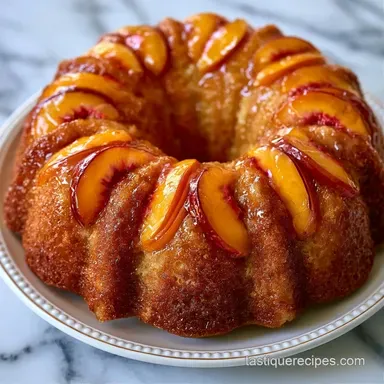
Tender Fresh Peach Bundt Cake
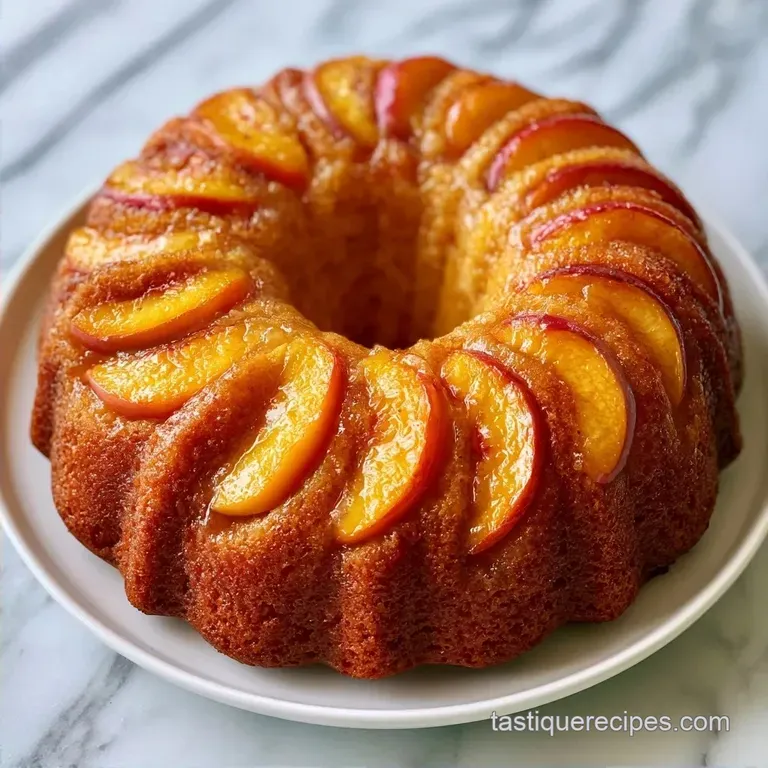
- Time: 20 min active + 60 min baking
- Flavor/Texture Hook: Buttery crumb with juicy, tart peach pockets
- Perfect for: Summer potlucks or a slow Sunday brunch
- Fresh Peach Bundt Cake Recipe
- Why Some Cakes Fail
- The Ingredient List
- Essential Baking Specs
- Minimal Tools Needed
- Step-by-Step Baking
- Fixing Common Issues
- Troubleshooting Common Issues
- Scaling Guidelines
- Debunking Baking Myths
- Keeping It Fresh
- Best Serving Ideas
- Swaps and Changes
- Recipe FAQs
- 📝 Recipe Card
The smell of warm cinnamon and bubbling peach juice hitting a hot oven is something you just can't beat. I remember the first time I tried to make a fruit heavy cake. I just folded the sliced peaches right into the batter, thinking it would be fine.
I ended up with a beautiful, golden top and a bottom layer of fruit that looked like a soggy peach jam. It was a mess, honestly.
But that's where the learning comes in. I figured out that you have to treat the fruit like it's a separate entity before it joins the party. Once I started tossing the peaches in a bit of flour, everything changed. The fruit stayed suspended in the batter, and the texture became that classic, rustic bake I love.
This Fresh Peach Bundt Cake is all about that balance. You get the richness of the butter and sour cream, but the peaches cut through the sweetness. It is a simple, reliable bake that doesn't require any fancy equipment, just a standard Bundt pan and a bit of patience while it cools.
Fresh Peach Bundt Cake Recipe
When you're baking with fresh fruit, the biggest challenge is moisture. Peaches are essentially water balloons. If you put them in raw, they release all that liquid as they heat up, which can create "wet spots" in your cake. This is why the flour toss is non negotiable.
It creates a barrier that absorbs some of that juice and gives the fruit something to grip onto in the batter.
I've found that using a full fat sour cream base is the only way to get a crumb that feels substantial but not heavy. It gives the cake a slight tang that mirrors the acidity of the peaches. If you've ever tried a Classic Pound Cake, you'll notice this is a bit lighter but still has that satisfying, dense feel.
A lot of people over mix their batter, which is the fastest way to turn a tender cake into a rubbery sponge. The goal is to mix until the streaks of flour just disappear. If you keep going, you develop too much gluten.
For a rustic bake like this, we want the crumb to be tender and a bit open, not tight like a commercial grocery store cake.
Why Some Cakes Fail
The Fruit Sink: Peaches are heavy and wet. Without a flour coating, they gravitate to the bottom of the pan, leaving the top of your cake plain and the bottom soggy.
The Stuck Crust: Bundt pans have a lot of nooks. If you only grease the bottom and forget the center tube, the cake will cling and tear when you flip it.
The Over Mix: Beating the flour too long creates a tough texture. Mixing on low speed keeps the air pockets intact, ensuring the cake actually rises.
| Fresh Peaches | Canned Peaches | Resulting Impact |
|---|---|---|
| Bright, tart flavor | Concentrated sweetness | Fresh is more balanced |
| Firm texture | Soft/mushy | Fresh gives better "pops" |
| Requires peeling | Pre peeled | Canned is faster |
The Ingredient List
For those who love rustic baking, I often suggest trying einkorn flour for the base. It has a nuttier taste and a softer gluten structure that works well here. However, all purpose flour is the standard for a reason, it gives you a consistent, reliable rise every time.
What Each Ingredient Does
| Ingredient | What It Does | Best Swap |
|---|---|---|
| All purpose Flour | Provides the structure | Einkorn flour for a nuttier taste |
| Full fat Sour Cream | Adds moisture and tang | Greek yogurt (thick) |
| Unsalted Butter | Adds flavor and richness | Coconut oil (solid state) |
| Fresh Peaches | Adds juicy acidity | Nectarines |
The Grocery List
For the Batter
- 3 cups (360g) all purpose flourWhy this? Reliable structure for heavy fruit.
- 1 cup (200g) granulated sugar
- 1 tbsp (8g) baking powder
- ½ tsp (3g) salt
- ¾ cup (170g) unsalted butter, softened
- 3 large eggs
- 1 cup (240g) full fat sour creamWhy this? Prevents the cake from drying out.
- 2 tsp (10ml) vanilla extract
For the Fresh Peach Fold ins
- 2 cups (300g) fresh peaches, peeled and diced smallWhy this? Small dice ensures even distribution.
- 1 tbsp (8g) all purpose flour
- ½ tsp (1g) ground cinnamon
For the Light Glaze
- 1 cup (120g) powdered sugar
- 2 tbsp (30ml) fresh lemon juice or peach nectar
- 1 pinch (0.5g) salt
Essential Baking Specs
To get the best results, you need to hit a few specific markers. First, make sure your butter is softened but not melted. If the butter is too oily, the sugar won't aerate properly, and your cake will be flat.
- Preheat Temp: 350°F (175°C)
- Bake Time: 55-65 minutes
- Pan Cooling: 10 minutes before inverting
If you're unsure if it's done, use a wooden toothpick. It should come out with a few moist crumbs clinging to it, but no wet batter. If it's totally clean, you might have overbaked it by a minute or two.
Minimal Tools Needed
You don't need a kitchen full of gadgets for this. A couple of bowls and a hand mixer will do the job perfectly. If you have a stand mixer, feel free to use it, but don't overdo the speed.
- 10 cup Bundt Pan: This is the standard size. Any smaller and the batter might overflow.
- Mixing Bowls: One for dry ingredients and one for the wet.
- Rubber Spatula: Essential for folding in the peaches without deflating the batter.
- Wire Rack: To allow air to circulate under the cake so the bottom doesn't steam.
Step-by-step Baking
Right then, let's get into the actual process. Take your time with the creaming stage, as this is where the lift happens.
Preparing the Foundation 1. Preheat your oven to 350°F (175°C). Generously grease your 10 cup Bundt pan. I like to use softened butter and then a light dusting of flour to make sure nothing sticks. 2. Peel your peaches and dice them into small, even pieces.
In a small bowl, toss the peaches with 1 tbsp of flour and the cinnamon. Note: This stops them from sinking to the bottom.
Mixing the Batter 3. Cream the softened butter and granulated sugar together. Beat them until the mixture looks pale and fluffy. This usually takes about 3-4 minutes. 4. Beat in the eggs one at a time. Once the eggs are in, stir in the vanilla extract. 5.
In a separate bowl, whisk together the flour, baking powder, and salt. 6. Add the flour mixture and the sour cream to the butter mixture. Do this alternately, starting and ending with flour. Mix on low speed until just combined.
Folding and Baking 7. Use your rubber spatula to gently fold the floured peaches into the batter. Do not use the mixer for this step, or you'll crush the fruit. 8. Pour the batter into your pan and smooth the top.
Bake for 55-65 minutes until a toothpick comes out clean and the edges are golden brown. 9. Let the cake cool in the pan for exactly 10 minutes. If you flip it too soon, it might break. If you wait too long, it might stick.
Finishing with the Glaze 10. Whisk together the powdered sugar, lemon juice (or nectar), and salt. Drizzle it over the cake while it's still slightly warm. This creates a silky finish that seeps slightly into the crust.
Fixing Common Issues
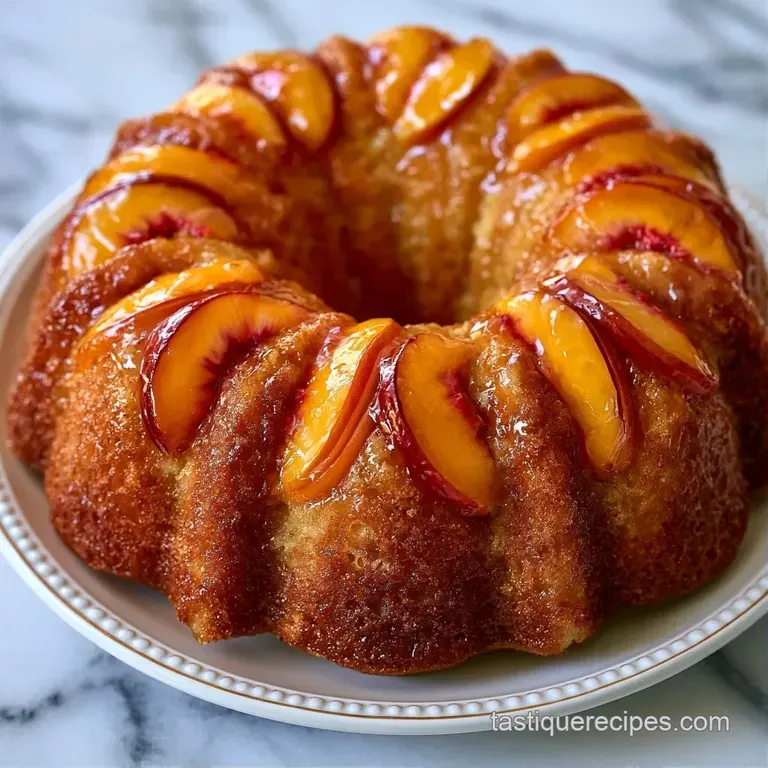
If your cake doesn't come out exactly right, don't panic. Most issues come down to temperature or moisture.
Troubleshooting Common Issues
| Issue | Solution |
|---|---|
| Why Your Cake Stuck | If the cake tore when you flipped it, you likely had a "cold spot" in your greasing process. Bundt pans are notorious for this. Make sure you get into every single groove of the pan. |
| Why Your Center Sunken | A sunken center usually means the oven door was opened too early, letting out the heat, or the baking powder was expired. Check your dates before you start. |
| Why Your Crust Is Soggy | This happens when too many peaches cluster together. Ensure your dice is small and the flour coating is thorough. |
Scaling Guidelines
Depending on your crowd, you might need to change the size. Just be careful with the eggs, as they can throw off the hydration.
Scaling Down (1/2 Batch) If you have a smaller 6 inch pan, halve everything. For the eggs, beat one egg in a cup and use half of it. Reduce your bake time by about 20%, but start checking at 40 minutes.
Scaling Up (2x Batch) If you're making two cakes, don't just double the baking powder. Use about 1.5x the leavening agents to avoid a metallic taste. Lower the oven temp to 325°F (160°C) and extend the bake time by 10-15 minutes to ensure the centers cook through without burning the edges.
Decision Shortcut
- Want a tangier glaze? Use fresh lemon juice.
- Want a denser, more rustic cake? Use einkorn flour.
- Want a more visual contrast? Leave the peach skins on.
Debunking Baking Myths
You'll hear a lot of advice that isn't actually helpful. Let's clear some things up.
One big one is that you must sift your flour. While sifting helps with very light cakes like angel food, for a Fresh Peach Bundt Cake, a good whisking of the dry ingredients is plenty. You want a bit of substance here.
Another myth is that room temperature eggs are a strict requirement. While they do incorporate more easily, you can put cold eggs in a bowl of warm water for 5 minutes to take the chill off. It works just as well.
Keeping It Fresh
This cake stays moist thanks to the sour cream, but you still want to store it correctly to keep that texture.
Storage Guidelines Keep the cake in an airtight glass container at room temperature for up to 3 days. If you live in a very humid area, the fridge is better, but let a slice sit out for 20 minutes before eating to let the butter soften.
Freezing Instructions You can freeze this cake for up to 3 months. Wrap individual slices in parchment paper and then foil. Thaw in the fridge overnight or microwave for 15 seconds for a "just baked" feel.
Zero Waste Tips Don't throw away the peach skins. If you're peeling them, collect the skins and simmer them with a bit of sugar and water to make a simple peach syrup. It's great over vanilla ice cream.
Best Serving Ideas
This cake is great on its own, but a few additions can make it a real event. I love serving it with a dollop of lightly sweetened whipped cream or a scoop of vanilla bean ice cream.
For a party spread, I've found that pairing a sweet cake with a savory appetizer works best. If you're hosting a garden get together, try serving these alongside some Shrimp Egg Rolls for a bit of a salty contrast.
If you prefer a beverage pairing, a cold glass of iced tea with mint or a light roast coffee brings out the cinnamon notes in the cake. The bitterness of the coffee balances the sugary glaze perfectly.
Swaps and Changes
Baking is a science, but there's room for a bit of creativity. Depending on what's in your pantry, you can tweak a few things.
The Flour Swap If you want to move away from all purpose, you can use a 1:1 gluten-free flour blend. Note that the crumb will be slightly more fragile, so let the cake cool completely before flipping it. For a heartier feel, substituting 1 cup of AP flour with spelt flour gives it a wonderful, old-fashioned taste. This makes it feel more like a Classic Pound Cake but the fruit twist.
The Fruit Variation If peaches aren't in season, nectarines work exactly the same way. You can even use frozen peaches, but make sure they are thawed and patted dry with a paper towel before you toss them in flour. If they are too wet, the batter will break.
Dairy Adjustments For a lighter version, you can use low-fat sour cream, but be warned that the cake won't be as tender. If you're avoiding dairy, a thick coconut cream can replace the sour cream, though it will add a tropical note to the Fresh Peach Bundt Cake.
| Original Ingredient | Substitute | Why It Works |
|---|---|---|
| Sour Cream (1 cup) | Greek Yogurt (1 cup) | Similar acidity and thickness. Note: Slightly tangier. |
| AP Flour (3 cups) | Einkorn Flour (3 cups) | Heritage grain. Note: Denser, nuttier crumb. |
| Lemon Juice (2 tbsp) | Peach Nectar (2 tbsp) | Concentrates fruit flavor. Note: Less tartness. |
Trust me, once you get the hang of the flour tossed fruit, you'll want to apply this to every fruit cake you make. This Fresh Peach Bundt Cake is a staple in my house every August. It's honest, simple, and tastes like a summer afternoon. Now, get your oven preheating and give it a go!
Recipe FAQs
How do I stop the peaches from sinking to the bottom?
Toss diced peaches in flour and cinnamon. This coating absorbs excess moisture and creates friction, which keeps the fruit suspended in the batter during baking.
Can I use frozen peaches instead of fresh?
No, stick with fresh. Frozen peaches release too much liquid, which can lead to a gummy texture. If you enjoyed controlling the fruit-to-batter ratio here, the same logic applies to our classic apple pie.
How to store this peach bundt cake?
Keep it in an airtight container at room temperature for up to two days. For longer freshness, store it in the refrigerator for up to five days.
Why did my cake stick to the pan?
You likely missed a spot when greasing. Bundt pans have complex grooves; ensure every single surface is generously coated with butter to prevent the cake from tearing.
How to save a mealy peach and make it unmealy?
Puree the mealy peaches and fold them into the batter. This eliminates the grainy texture while still contributing the necessary fruit flavor and moisture.
Can I substitute the sour cream?
No, sour cream is essential for the texture. Its acidity reacts with the baking powder to create a tender, moist crumb that other substitutes cannot replicate.
Is it true that I must bake this cake at 400°F to get a golden crust?
No, this is a common misconception. Bake at 350°F (175°C) for 55 65 minutes to ensure the center is fully cooked without burning the outside.
Fresh Peach Bundt Cake