Vegan Oyster Sauce: Umami Rich Substitute
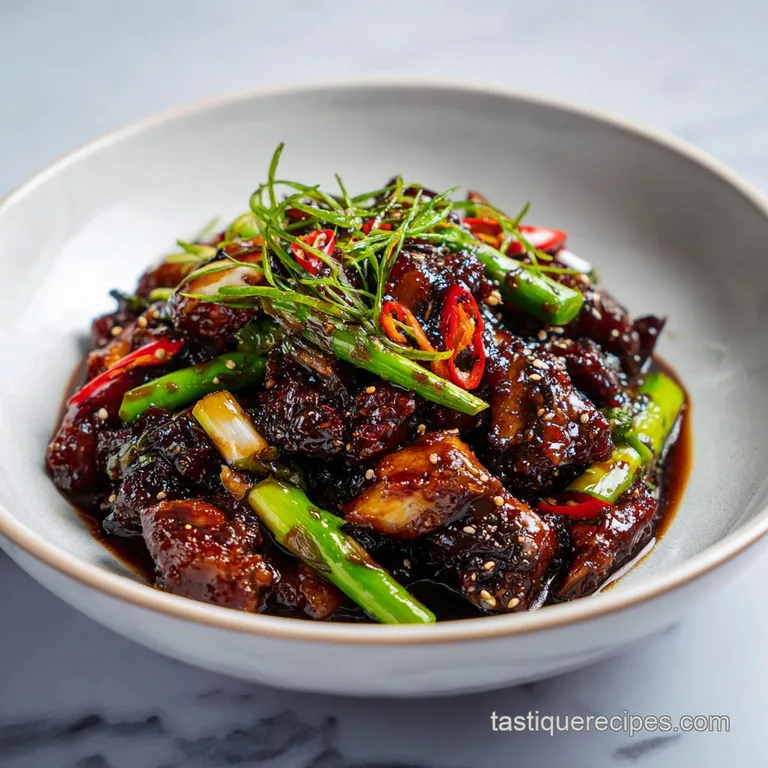
- Time: Active 10 minutes, Passive 25 minutes, Total 35 minutes
- Flavor/Texture Hook: Velvety, salty sweet glaze with a concentrated mushroom finish
- Perfect for: Authentic stir fries, vegetable glazes, and professional grade meal prep
- The Science Behind Perfect Results
- Precise Specifications for Success
- The Alchemy of Selecting Your Elements
- Essential Equipment for a Silky Sauce
- Mastering the Reduction For a Glossy Finish
- Correcting Common Texture and Flavor Issues
- Adjusting the Recipe for Larger Batches
- Debunking Common Kitchen Myths
- Keeping Your Sauce Fresh and Minimizing Kitchen Waste
- Pairing This Sauce With Modern Asian Classics
- Recipe FAQs
- 📝 Recipe Card
The first time I tried to make a stir fry without my usual bottle of oyster sauce, the result was... sad. It was watery, one dimensional, and lacked that specific glossy "cling" that makes restaurant dishes look so enticing.
I realized that soy sauce alone can't provide the body or the complex, funky depth that fermented oysters usually do. I spent weeks in my kitchen surrounded by bags of dried mushrooms and sheets of seaweed, trying to find the "soul" of that flavor without the actual shellfish.
I finally nailed it when I heard that distinct sizzle of the sauce hitting a red hot wok and saw it transform into a dark, syrupy lacquer. The aroma was earthy and rich, not just salty. This version relies on the deep, concentrated juices of rehydrated shiitakes and the "brine" of toasted nori.
Trust me, once you see this sauce coat a spear of bok choy in a velvety, shimmering layer, you'll never go back to the store-bought stuff that’s mostly corn syrup and MSG.
The Science Behind Perfect Results
The Physics of Synergistic Umami: When we combine the glutamates in the soy with the guanylates in dried shiitakes, they don't just add up they multiply our perception of savory "meatiness" by nearly eightfold.
This chemical synergy is what gives the sauce its incredible depth without needing animal proteins.
| Method | Time | Texture | Best For |
|---|---|---|---|
| High Speed Blend | 35 minutes | Ultra smooth, professional | Precise stir fries and dressings |
| Quick Simmer Only | 20 minutes | Slightly rustic, thinner | Casual weeknight vegetable tosses |
| Blender + Reduction | 45 minutes | Velvety glaze, concentrated | Restaurant quality "lacquered" dishes |
The cooking process is a balance of extraction and concentration. We are essentially pulling the flavor out of the dried components and then evaporating the excess water to leave behind a thick, flavor dense syrup. It’s similar to the reduction technique used in our Vegan Japanese Curry recipe to ensure the base is rich rather than watery.
Precise Specifications for Success
This recipe is designed to be a direct 1:1 replacement for traditional bottled versions. While many "vegetarian" brands in the store use caramel color and thickeners, we are using the natural sugars in Medjool dates and the polysaccharides in the mushrooms to create that signature viscosity.
| Component | Science Role | Pro Secret |
|---|---|---|
| Dried Shiitake | Provides guanylates (umami) | Use "Flower" shiitakes for the highest flavor concentration |
| Medjool Dates | Natural thickener and sweetener | Soak in the boiling water first to ensure zero grittiness |
| Toasted Nori | Mimics the "sea" funk | Lightly toast over an open flame for 3 seconds to release oils |
If you find yourself missing a specific component, remember that the "sea" element is crucial. If you don't have nori, a small amount of dulse flakes can work, though the flavor profile will shift slightly toward a more mineral taste. For those looking to branch out into other high umami dishes, this sauce is the perfect companion to a Vegan Dan Dan recipe where you need a hit of salt and sugar to balance the spice.
The Alchemy of Selecting Your Elements
Choosing high-quality ingredients here is non negotiable because there are so few of them. The dark soy sauce is specifically for that deep mahogany color and a hint of molasses flavor regular soy sauce will leave the mixture looking a bit pale and tasting too sharp.
- 6 large dried shiitake mushrooms: Removed stems for a cleaner blend. Why this? Dried mushrooms have way more concentrated umami than fresh ones.
- 1 cup boiling filtered water: To extract the mushroom essence.
- 1 piece (2x2 inch) toasted nori seaweed: Adds the ocean like brine.
- 2 pitted Medjool dates: For sweetness and "clinging" body. Why this? They provide a jammy texture that white sugar lacks.
- 0.5 cup coconut aminos: For a complex, fermented sweetness.
- 2 tablespoons dark soy sauce: For that essential deep color.
- 1 teaspoon mushroom bouillon paste: To boost the savory baseline.
- 1 inch knob fresh ginger: Peeled and smashed to infuse.
- 2 cloves garlic: Smashed to release juices.
- 1 teaspoon toasted sesame oil: For a nutty aroma.
- 0.5 teaspoon sea salt: To sharpen all other flavors.
- 1 teaspoon cornstarch slurry: Optional, for extra gloss.
Chef Tip: Don't toss the mushroom stems! Keep them in a bag in your freezer to add to your next batch of vegetable stock. They are flavor gold.
Essential Equipment for a Silky Sauce
You don't need a kitchen full of gadgets, but a high speed blender is your best friend here. It turns the rehydrated dates and mushrooms into a perfectly smooth liquid that won't feel grainy on your tongue.
If you only have a standard blender, you'll just need to strain the sauce through a fine mesh sieve after the final reduction to ensure it's velvety.
A heavy bottomed saucepan is also vital. Since we are dealing with a sauce that has high sugar content (from the dates and aminos), it can scorch easily in a thin pan. A small stainless steel or ceramic pot will distribute the heat evenly as you simmer it down to that perfect syrupy consistency.
Mastering the Reduction For a Glossy Finish
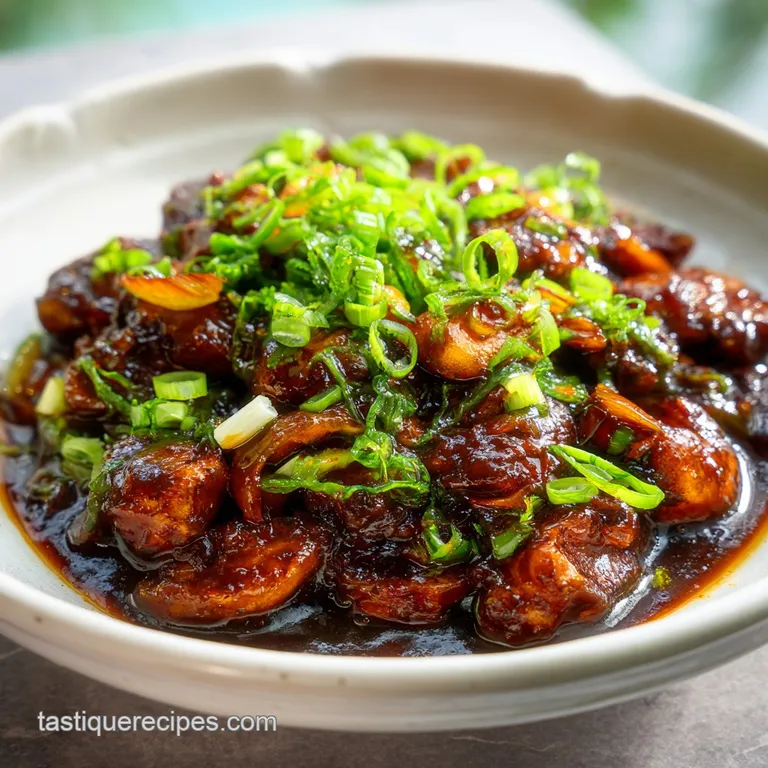
- Rehydrate the mushrooms. Place 6 dried shiitakes and 2 pitted dates in a heatproof bowl with 1 cup boiling water for 15 minutes until soft and pliable.
- Infuse the aromatics. In your saucepan, heat 1 teaspoon toasted sesame oil over medium low heat. Add 1 inch smashed ginger and 2 cloves smashed garlic.
- Sizzle and soften. Cook the aromatics for 2 minutes until fragrant but not browned.
- Prepare the blend. Transfer the soaked mushrooms, dates, and their soaking liquid into a blender. Add 1 piece toasted nori.
- Liquify the base. Blend on high for 60 seconds until the mixture is completely smooth.
- Combine the liquids. Pour the blended mixture into the saucepan with the ginger and garlic. Stir in 0.5 cup coconut aminos, 2 tablespoons dark soy sauce, 1 teaspoon mushroom bouillon, and 0.5 teaspoon sea salt.
- Simmer and concentrate. Bring to a gentle bubble, then reduce heat to low. Simmer for 15 minutes, stirring occasionally, until the sauce coats the back of a spoon.
- Strain for perfection. Remove the ginger and garlic pieces. If the sauce feels slightly textured, pour through a fine mesh sieve.
- Optional gloss. If you want that extreme restaurant shine, whisk in the cornstarch slurry and simmer for 1 more minute until translucent and thick.
- Cool and set. Let the sauce cool completely; it will continue to thicken as the natural pectins and sugars stabilize.
Correcting Common Texture and Flavor Issues
Sometimes the mushrooms might be extra dry or the dates a bit firm, leading to a sauce that isn't quite right. The key is to trust your eyes and tongue more than the clock. If it's too thin, keep simmering; if it's too thick, a splash of water fixes it instantly.
Why Your Sauce Is Gritty
If the sauce feels sandy, it's usually because the dates didn't fully break down or the nori was too dry. This is common with older dates or standard blenders.
| Problem | Root Cause | Solution |
|---|---|---|
| Grainy Texture | Incomplete blending of dates | Pass the finished sauce through a fine mesh sieve or nut milk bag |
| Bitter Aftertaste | Burnt garlic or ginger | Strain aromatics out earlier or ensure they only "sweat" in the oil |
| Too Salty | Excessive reduction | Add 1 tablespoon of water and a tiny pinch of extra date paste to balance |
- ✓ Always pit your dates before soaking (trust me, I've broken a blender blade).
- ✓ Pat the rehydrated mushrooms dry if they seem excessively spongy before blending.
- ✓ Use low heat during the reduction to prevent the sugars from caramelizing into a bitter mess.
- ✓ Taste the sauce at the 10 minute simmer mark to check the salt balance.
Adjusting the Recipe for Larger Batches
If you're a meal prep enthusiast, you might want to double this. When scaling up, be careful with the aromatics. Doubling the ginger and garlic can sometimes result in an overwhelming pungency that masks the delicate mushroom notes. Use 1.5x the ginger and garlic instead of a full 2x.
For smaller portions, it's easiest to make the full batch and freeze half. Scaling down to a 1/4 batch is tricky because the liquid levels in the blender will be too low to get a smooth emulsion. It's better to have extra than to struggle with a chunky sauce.
Debunking Common Kitchen Myths
One common myth is that you can simply substitute "Mushroom Soy Sauce" for this recipe. While mushroom soy is great, it lacks the viscosity and the sweetness of a true oyster style sauce. It's too thin to properly glaze a stir fry.
Another misconception is that the nori will make the sauce taste "fishy." In reality, the nori provides a clean, oceanic salinity that simply rounds out the earthiness of the fungi. It’s about creating a "wide" flavor profile rather than a specific seaweed taste.
Keeping Your Sauce Fresh and Minimizing Kitchen Waste
This sauce stays fresh in an airtight glass jar in the fridge for up to 2 weeks. Because of the salt and sugar content, it preserves quite well. For long term storage, you can freeze it in silicone ice cube trays. Once frozen, pop the cubes into a bag.
One cube is usually the perfect amount for a single serving stir fry.
To minimize waste, use those leftover mushroom stems I mentioned earlier! You can also use the "scrapings" from the blender add a splash of hot water to the blender after pouring out the sauce, whiz it around, and use that "mushroom tea" as a base for a quick noodle soup.
Pairing This Sauce With Modern Asian Classics
This sauce is incredibly versatile. It’s obviously the star of the show in a classic Broccoli and Beef (using a meat alternative or seared tofu), but it also works wonders as a marinade. If you’re making a Vegan Soy Curl recipe, brushing a little of this sauce on during the last few minutes of cooking creates a savory, chewy crust that is honestly addictive.
It also pairs beautifully with "clean" flavors. Try drizzling it over steamed silken tofu with a bit of chili oil and scallions. The rich, salty glaze cuts through the creamy neutrality of the tofu perfectly. If you're hosting a snack night, try using a thinned out version of this as a dipping sauce for a Vegan Chex Mix recipe to add an unexpected hit of umami to the crunch.
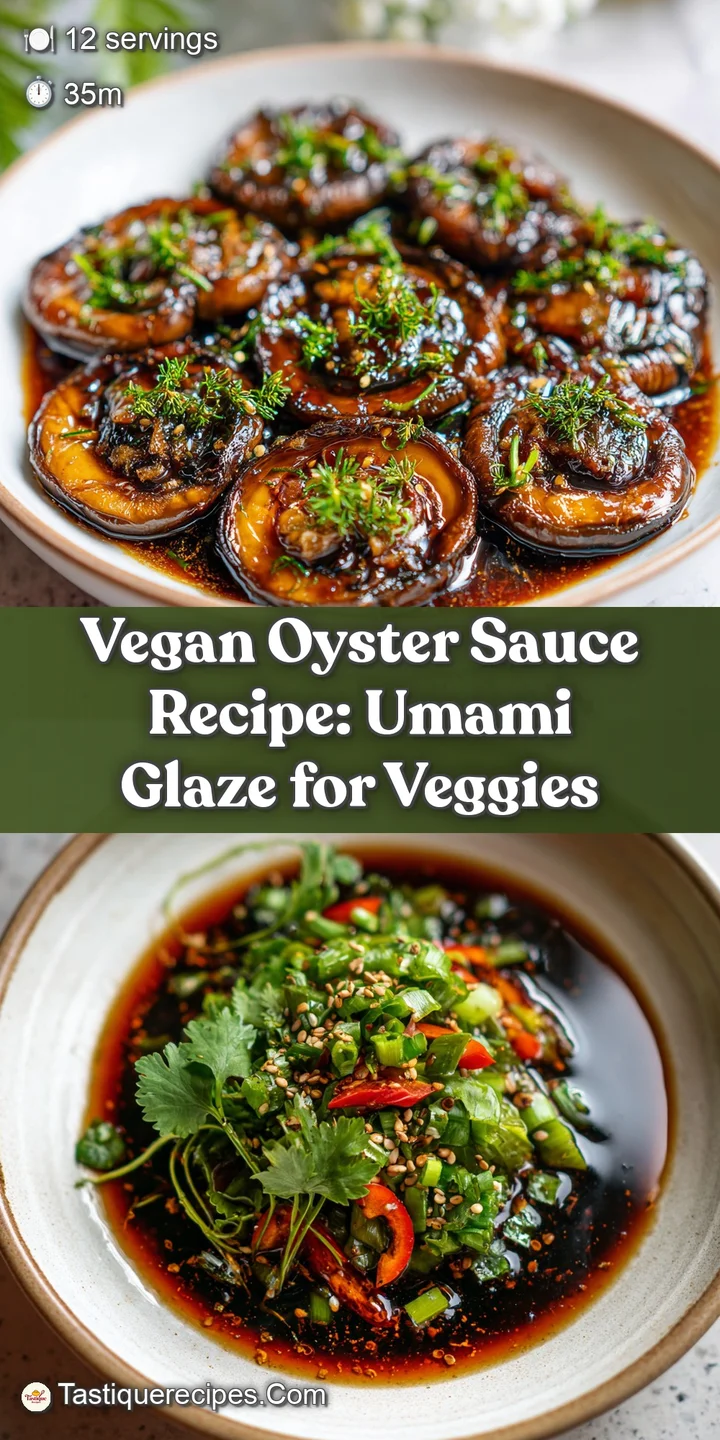
Recipe FAQs
What is a vegan alternative to oyster sauce?
Mushroom based sauces using shiitake and nori. These alternatives replicate the savory depth and thick consistency using fermented plant ingredients for umami.
What to use if there is no oyster sauce in a stir fry?
Combine dark soy sauce, mushroom powder, and a sweetener like maple syrup. This triad provides saltiness, umami, and body to mimic the original.
Is Kikkoman vegetarian oyster sauce vegan?
Check the specific label, but often no. Kikkoman's vegetarian oyster sauce sometimes contains honey or hydrolyzed wheat protein, making it not strictly vegan.
Why is traditional oyster sauce not vegan?
It is made by boiling down actual oysters. This process extracts the natural glutamates and creates the characteristic salty, intensely savory flavor profile.
How do I make this vegan sauce thick and glossy like the original?
Reduce the liquid substantially and incorporate a date paste slurry. The dates provide natural sugars that caramelize slightly, while reduction concentrates the mushroom polysaccharides to create that cling factor.
Can I use this vegan sauce as a marinade for vegetables?
Yes, it works excellently as a glaze or marinade base. The balanced sweet salty profile adheres well during cooking; for best results with seared tofu, try brushing it on during the last few minutes of cooking, similar to how we finish the Spicy Enoki Mushrooms Recipe.
Is it true that dried shiitake mushrooms provide the most umami for this recipe?
Yes, dried shiitake mushrooms are crucial for deep, concentrated flavor. The drying process concentrates the naturally occurring guanylate, which synergizes with soy sauce glutamates for an amplified savory effect; mastering this flavor layering is key, much like balancing acid in the Balthazar Beet
Salad recipe.
Vegan Oyster Sauce Substitute
Ingredients:
Instructions:
Nutrition Facts:
| Calories | 45 calories |
|---|---|
| Protein | 0.5 g |
| Fat | 0.4 g |
| Carbs | 10.2 g |
| Fiber | 0.5 g |
| Sugar | 7.7 g |
| Sodium | 458 mg |
