Authentic Castella Cake Recipe
- Time: Active 20 minutes, Passive 45 minutes, Total 1 hours 5 mins
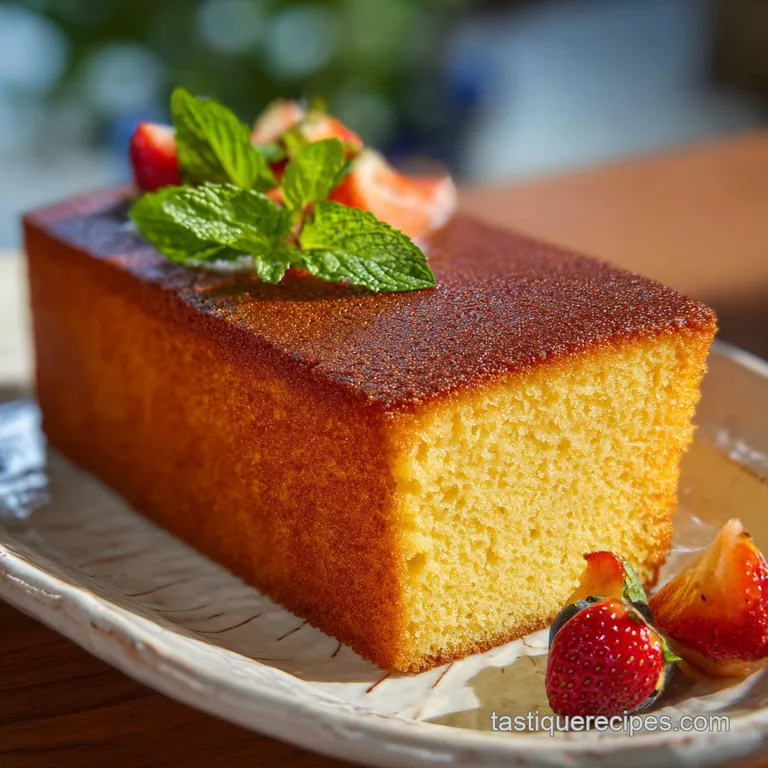
- Flavor/Texture Hook: Deeply caramelized honey crust with a dense, moist, and springy crumb
- Perfect for: Afternoon tea, traditional gifting, or a weekend baking project
- Mastering the Traditional Honey Castella Cake Recipe
- Vital Measurements and Expected Yields
- The Physics of Persistent Foam
- Selecting high-quality Baking Elements
- Essential Tools for Aerated Batter
- Executing the Multi Stage Bake
- Identifying and Fixing Crumb Issues
- Personalizing Your Sponge Cake
- Maintaining Optimal Moisture Content
- Debunking Sponge Cake Theories
- Elegant Serving Techniques
- Recipe FAQs
- 📝 Recipe Card
Mastering the Traditional Honey Castella Cake Recipe
I still remember the first time a neighbor brought over a box wrapped in heavy, cream colored paper. When I peeled it back, the aroma of burnt honey and toasted sugar hit me like a warm hug. It wasn't like any Western sponge cake I’d ever had; it didn't have that airy, dry crumble.
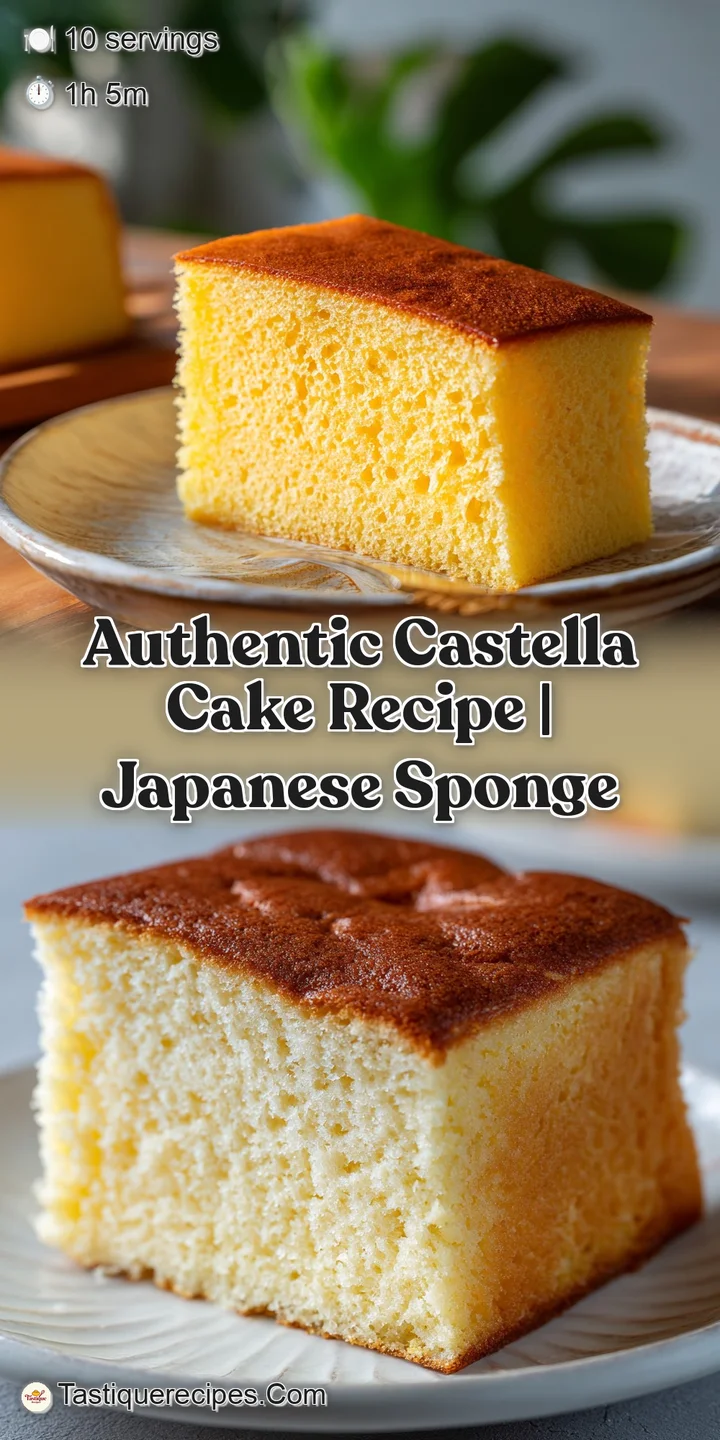
Instead, it was dense, almost bouncy, and had this dark, mahogany top that looked like it had been painted with liquid gold. I spent the next three months trying to replicate that specific "boing" when you press down on the slice.
My first three attempts were, honestly, embarrassing. One came out like a flat pancake because I was too scared to beat the eggs long enough. Another was so dry it practically turned to dust in my mouth.
I learned the hard way that a castella cake recipe isn't about throwing things in a bowl it's about the dance between the honey and the egg proteins. We’re going to walk through the exact rhythm you need to get that signature velvety finish.
Trust me, once you smell that honey water hitting the warm batter, you’ll know why we obsess over this.
Vital Measurements and Expected Yields
The beauty of this sponge lies in its simplicity, but that means every gram counts. We aren't using baking powder or soda here. All the lift comes from the physical air we trap in the eggs, and all the moisture comes from the honey and sugar. If you've tried my Loaf Pan Basque recipe, you know I'm a stickler for getting the internal structure just right. For this castella, we are aiming for a tight, uniform crumb with zero large air bubbles.
| Method | Total Time | Texture | Best For |
|---|---|---|---|
| Traditional Oven | 1 hours 5 mins | Dense, velvety, moist | Authentic results |
| Rice Cooker | 55 minutes | Fluffier, less dense | Convenience seekers |
| Steam Bake | 1 hours 15 mins | Extremely soft, pale | Taiwanese style |
This comparison highlights why the oven remains king for this specific dish. The dry heat of the oven is what creates that iconic dark brown top and bottom. Without that Maillard reaction on the surface, you lose the bittersweet contrast that makes the honey pop.
We want that top to be almost tacky to the touch that's the sugar migrating to the surface during the bake.
The Physics of Persistent Foam
- Protein Denaturation
- Whipping the eggs at room temperature allows the proteins to unravel and bond around air bubbles, creating a stable network.
- Hygroscopic Retention
- Honey and sugar attract and hold onto water molecules, preventing the cake from drying out even after days of storage.
- Gluten Reinforcement
- Unlike standard cakes, using bread flour provides a stronger "net" to hold the heavy honey sugar mixture aloft during the rise.
- Thermal Regulation
- Baking at a high initial temperature sets the crust, while a lower subsequent temperature cooks the interior without collapsing the structure.
Selecting high-quality Baking Elements
The quality of your honey will dictate the soul of this cake. I usually go for a strong clover or wildflower honey something that actually smells like flowers. If the honey tastes bland out of the jar, your cake will taste bland out of the oven.
And don’t even think about skipping the zarame sugar; those little crunchy surprises at the bottom are the hallmark of a professional grade slice.
- 6 large eggs: These provide the entire structure and lift. Why this? They emulsify the honey and flour into a stable, aerated foam.
- 200g granulated sugar: Provides sweetness and stabilizes the egg foam. Why this? Fine crystals dissolve faster, preventing a gritty texture in the final crumb.
- 150g bread flour: Gives the cake its signature "bouncy" and chewy texture. Why this? Higher protein content supports the weight of the honey better than cake flour.
- 45ml honey: The primary flavor and moisture agent. Why this? It creates the moist, slightly sticky texture unique to this sponge.
- 15ml warm water: Used to thin the honey. Why this? Ensures the honey distributes evenly without weighing down the delicate egg foam.
- 15g zarame sugar: Coarse Japanese sugar crystals for the bottom crust. Why this? It stays solid during baking, adding a deliberate and delightful crunch.
| Ingredient | Science Role | Pro Secret |
|---|---|---|
| Bread Flour | Structural Support | Sift it three times to introduce air and prevent heavy clumps. |
| Honey | Moisture Magnet | Warm it slightly with the water so it incorporates without deflating eggs. |
| Eggs | Aeration Base | Use room temperature eggs; they whip to a much higher volume. |
When you're sifting that bread flour, it might feel like overkill. But think of it like the prep work in my Einkorn Biscuits Recipe. You’re not just removing lumps; you’re ensuring the flour particles are as light as possible so they don't sink the ship when you fold them in.
Essential Tools for Aerated Batter
You don't need a professional bakery to pull this off, but you do need a steady hand and a good whisk attachment. A stand mixer is your best friend here because we’re going to be whipping those eggs for what feels like an eternity. If you're doing this by hand, prepare for a serious arm workout.
Chef's Tip: Line your pan with parchment paper that stands 2 inches above the rim. This cake rises tall and needs the paper for support so it doesn't "mushroom" over the edges.
Another unconventional trick: Once the batter is in the pan, take a wooden skewer and draw a zig zag pattern through the batter. This is called "cutting" the air. It breaks up those big, rogue bubbles that cause holes in your cake. We want a crumb that looks like a fine sponge, not Swiss cheese.
Executing the Multi Stage Bake
- Prepare the honey. Mix 45ml honey with 15ml warm water until smooth. Note: Thinning it prevents the honey from sinking to the bottom of your batter.
- Prep the pan. Line a 18cm square pan with parchment and sprinkle 15g zarame sugar evenly across the bottom.
- Whip the eggs. Beat 6 large eggs and 200g granulated sugar at high speed for 8-10 minutes. Wait until the mixture is thick, pale, and leaves a ribbon trail.
- Introduce honey. Pour the honey water mixture into the eggs while mixing on low. Mix until the aroma of honey is distinct and floral.
- Sift and fold. Gradually sift 150g bread flour into the batter in three stages. Note: Fold gently with a spatula to keep the air trapped in the eggs.
- Refine the batter. Use a skewer to zig zag through the batter in the pan for 1 minute. Watch for large bubbles rising and popping on the surface.
- Initial high bake. Place in a preheated oven at 350°F (180°C) for 10 minutes. Bake until the top starts to turn a light golden tan.
- The slow finish. Drop the temperature to 325°F (160°C) and bake for another 35 minutes. Cook until the center springs back when lightly pressed.
- The seal. Immediately remove from the oven and wrap the entire pan (with the cake inside) in plastic wrap. Note: This traps the steam and forces the moisture back into the crumb.
- The rest. Let the cake cool completely upside down on a flat surface. Allow to rest for at least 12 hours before slicing.
Identifying and Fixing Crumb Issues
One of the most heart wrenching moments is pulling a beautiful cake out, only to see it shrink and wrinkle like a raisin five minutes later. This usually happens because of a sudden temperature shock or trapped steam that hasn't been reabsorbed.
Preventing Structural Cake Collapse
If your cake looks like it has a "waist" (the sides curve inward), it’s often because the flour wasn't folded in well enough or the oven door was opened too early. Castella is sensitive to drafts. Keep that door shut!
| Problem | Root Cause | Solution |
|---|---|---|
| Large holes in crumb | Air pockets not popped | Use the skewer zig zag technique before baking. |
| Top crust peels off | Underbaked surface | Ensure the top is dark mahogany before removing from heat. |
| Dense, rubbery bottom | Honey settled | Mix the honey water more thoroughly into the egg foam. |
Common Mistakes Checklist
- ✓ Ensure eggs are at room temperature (around 70°F) before whipping.
- ✓ Never skip the "ribbon stage" if the eggs aren't thick enough, the cake will fail.
- ✓ Wrap the cake while it's still warm to lock in that velvety moisture.
- ✓ Resist the urge to eat it immediately; the flavor peaks after 24 hours.
- ✓ Use a serrated knife and a sawing motion for clean, professional slices.
Personalizing Your Sponge Cake
Once you've mastered the classic honey version, you can start playing with the profile. If you're a fan of deeper, earthier tones, I highly recommend checking out a Black Sesame Basque recipe for inspiration on how to incorporate nuttier pastes into your bakes.
Matcha Green Tea Adaptation
Replace 15g of the bread flour with high-quality ceremonial grade matcha powder. Sift it together with the flour to ensure no green clumps remain. This adds a beautiful bitterness that balances the 200g of sugar perfectly.
Adding Citrus Zest
Grating the zest of one Yuzu or Lemon into the sugar before whipping the eggs releases the essential oils. This gives the cake a bright, modern twist that pairs beautifully with a cup of Earl Grey tea.
Maintaining Optimal Moisture Content
Castella is a living thing. The moment it hits the air, it starts to lose its soul (aka moisture). If you leave it out on the counter uncovered, it will turn into a dry brick by morning. The sugar content is high, which acts as a natural preservative, but only if you keep it sealed.
- Fridge
- Store in an airtight container for up to 5 days. The texture actually improves on day 2 and 3 as the moisture redistributes.
- Freezer
- Wrap individual slices tightly in plastic wrap and then foil. They will stay fresh for up to 2 months. Thaw at room temperature for 30 minutes before eating.
- Zero Waste Tip
- If you do end up with dry edges, don't toss them! Cut them into cubes, toast them in a low oven until crispy, and use them as "cake croutons" over vanilla bean ice cream.
Debunking Sponge Cake Theories
One of the biggest myths is that you need a wooden frame to make "real" Castella. While traditional shops in Nagasaki use thick wooden boxes to insulate the cake and keep it moist, you can achieve 95% of that quality in a standard metal pan by using the plastic wrap steam trap method I mentioned in the steps.
The wood just regulates heat; our temperature drop (350°F to 325°F) does the same job.
Another misconception is that more honey equals a moister cake. Actually, too much honey will weigh down the egg foam and result in a gummy, wet mess that never rises. Stick to the 45ml specified in the recipe. It’s the perfect balance between flavor and physics.
Elegant Serving Techniques
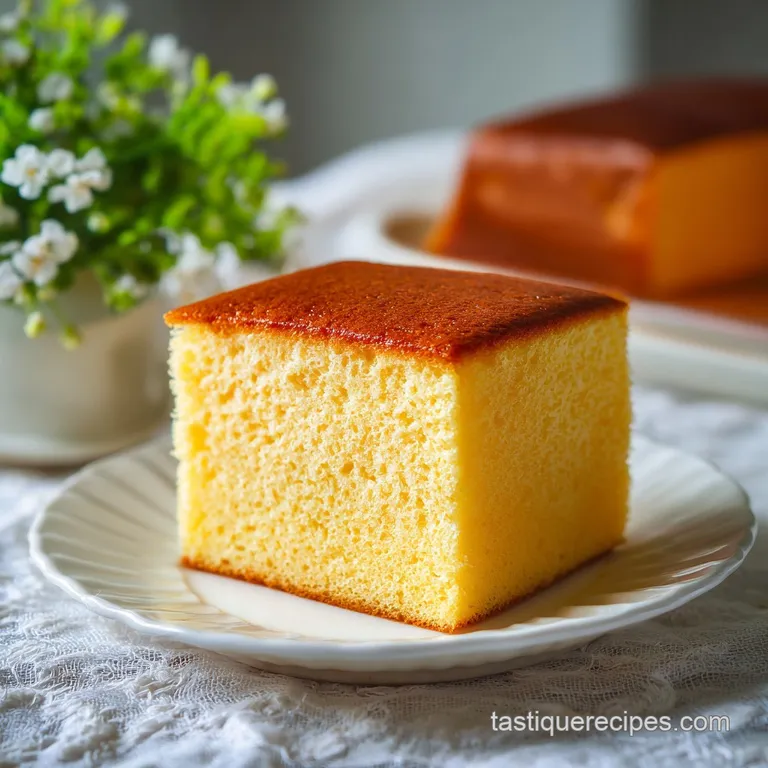
When you're ready to serve, don't just hack into it. Trim the side crusts off to reveal that gorgeous, uniform yellow interior. This is how it's traditionally served in Japan as perfect, rectangular blocks. It looks incredibly professional and highlights the work you put into that fine crumb.
Pair a slice with a hit of unsweetened whipped cream or a few tart berries. The cake itself is quite sweet, so you want something to cut through that honey richness. If you're feeling adventurous, a small dollop of red bean paste (anko) on the side bridges the gap between traditional and modern dessert styles perfectly.
Just remember, the star of the show is that bouncy, honey soaked sponge. Enjoy every velvety bite!
Recipe FAQs
What is the difference between sponge cake and Castella cake?
Castella is denser and relies solely on eggs for lift. Unlike many Western sponge cakes which use chemical leaveners like baking powder, Castella uses bread flour and relies on a meticulously whipped egg foam to achieve its signature bouncy, moist, and heavy texture.
What is the secret to a moist Castella?
Wrap the cake tightly immediately after baking. Trapping the steam in the cooling process forces the moisture back into the crumb, which is essential for achieving that velvety mouthfeel.
What are the ingredients in Castella cake?
Eggs, sugar, bread flour, and honey are the core components. You also need warm water to thin the honey and coarse zarame sugar for the bottom crust, which provides a necessary textural contrast to the soft interior.
How do I prevent the Castella cake from collapsing after baking?
Ensure your eggs are whipped to the full ribbon stage before folding. If the egg foam isn't strong enough to support the heavy honey and flour, the structure will fail when cooling; if you master the aeration here, the same principles help stabilize batters in recipes like our Spelt Flour Pancakes recipe.
Is it true I must use a special wooden mold for an authentic Castella?
No, this is a common misconception. While traditional shops use wood boxes for insulation, a metal pan lined high with parchment paper and subjected to a two-stage temperature bake achieves nearly identical results by controlling the surface setting.
How do I get the signature dark, caramelized crust?
Bake at a high temperature initially, then reduce the heat significantly. Starting at 350°F (180°C) sets the crust quickly via the Maillard reaction, and the subsequent drop to 325°F (160°C) cooks the interior gently without burning the surface.
What are common Castella cake mistakes?
Folding the flour too vigorously and opening the oven door too early are the biggest issues. Over mixing deflates the critical air incorporated into the eggs, leading to a flat cake; be gentle when folding in the flour.
Japanese Castella Cake Recipe
Ingredients:
Instructions:
Nutrition Facts:
| Calories | 203 kcal |
|---|---|
| Protein | 5.7g |
| Fat | 3.4g |
| Carbs | 38g |
| Fiber | 0.4g |
| Sugar | 26g |
| Sodium | 43mg |
