Velvety Vegan Congee Recipe
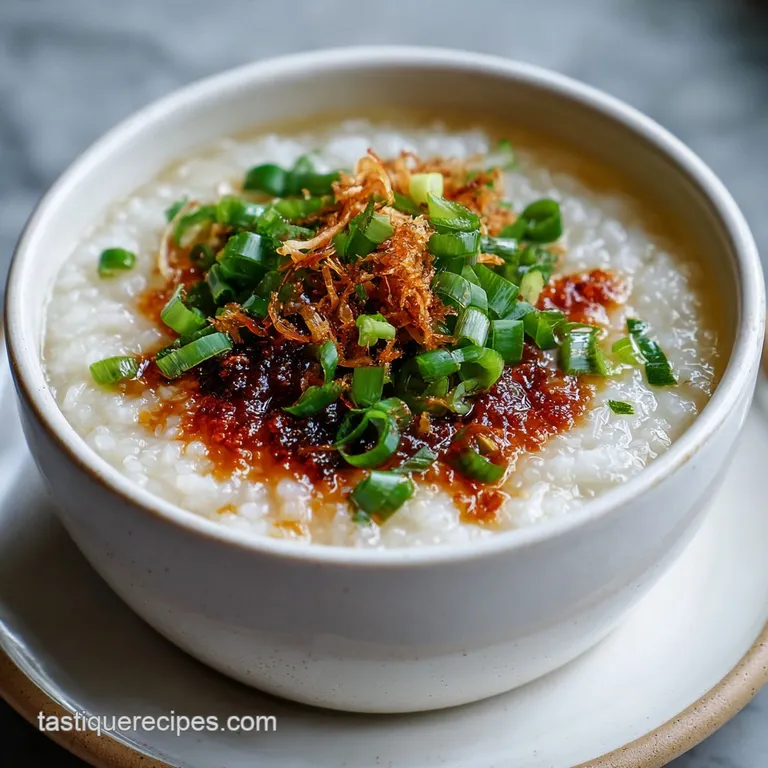
- Time: Active 10 minutes, Passive 50 minutes, Total 1 hour
- Flavor/Texture Hook: Silky smooth rice base with crispy garlic pops
- Perfect for: Healing rainy days or a cozy savory breakfast
- Mastering This Silky Vegan Congee Recipe
- The Emotional Pull of a Warm Rice Bowl
- Essential Ingredients for Maximum Flavor
- Tools for a Smooth Cooking Process
- Step-By-Step Guide to Perfect Texture
- Solving Common Porridge Texture Issues
- Modifying the Recipe for Any Diet
- Proper Storage and Leftover Reheating
- Garnishes to Make the Dish Pop
- Kitchen Myths Debunked
- High in Sodium
- Recipe FAQs
- 📝 Recipe Card
Mastering This Silky Vegan Congee Recipe
I still remember the first time I tried to make a rice porridge that didn't come from a packet. It was a drizzly Tuesday, the kind where the dampness seems to seep into your bones, and I wanted nothing more than a bowl of something soft and steaming.
I threw some rice and water into a pot, boiled it for twenty minutes, and ended up with... well, wet rice. It was thin, sad, and tasted like nothing. I realized then that congee isn't just "boiled rice" - it is a transformation of texture that requires a bit of patience and a few clever tricks.
The real magic happens when the aroma of sliced ginger starts to mingle with the earthy, deep scent of rehydrating shiitake mushrooms. It fills the kitchen with a sense of calm that you just can't get from a quick stir fry.
Since that first watery failure, I have spent years tweaking the ratios, experimenting with different grains, and finding the exact moment when the rice "blooms" and turns into that velvety silk we all crave.
This vegan congee recipe is the result of all those cold mornings spent standing over a simmering pot, waiting for the bubbles to tell me it is ready.
You are going to love how this dish feels like a warm hug for your digestive system while still hitting all those high notes of umami and spice. We aren't just making porridge here; we are building layers of flavor that start with a rich, mushroom infused broth and end with the sharp, satisfying crunch of fried garlic and fresh cilantro.
Whether you are feeling under the weather or just want a breakfast that sustains you through a long morning, this is the method that actually delivers restaurant quality results in your own kitchen.
The Emotional Pull of a Warm Rice Bowl
The Starch Bloom: Simmering rice in a high liquid to grain ratio causes the starch granules to swell and eventually burst, creating a naturally thickened, creamy consistency.
Amylose Breakdown: Long cooking times break down the long chain starches in Jasmine rice, which releases a silky mouthfeel without needing any dairy or added fats.
Umami Extraction: Using dried shiitake mushrooms provides a source of natural guanylate, which works with the sea salt to create a deep, savory profile that mimics meat based broths.
Aromatic Diffusion: The essential oils in the fresh ginger are fat soluble, so they slowly infuse into the rice grains as they soften, providing a gentle heat from the inside out.
Finding Your Perfect Cooking Method
Before you start chopping your ginger, you need to decide which path you are taking. While I usually reach for my heavy bottomed pot on the stove, there are days when I just want to set it and forget it. Each method changes the texture slightly, so pick the one that fits your vibe today.
| Method | Time | Texture | Best For |
|---|---|---|---|
| Stovetop | 50 minutes | Most control over thickness | When you have time to stir and watch |
| Oven | 1 hours 10 mins | Very consistent, no scorching | Meal prepping large batches |
| Instant Pot | 20 minutes | Dense and very creamy | Busy mornings when you are in a rush |
This recipe relies on the interaction between the grains and the broth. If you find yourself craving something equally comforting but with a different flavor profile later this week, you might enjoy the spices in my Vegan Japanese Curry recipe. Just like that curry, this congee relies on a slow build of aromatics to reach its full potential.
Essential Ingredients for Maximum Flavor
Selecting your grains is the most important part of this process. I always use a mix of Jasmine rice for the floral aroma and a tiny bit of glutinous rice to ensure that signature "stickiness" that makes the broth feel rich. It is a small addition, but it makes a world of difference in the final mouthfeel.
Component Analysis
| Ingredient | Science Role | Pro Secret |
|---|---|---|
| Jasmine Rice | Base structure and aroma | Rinse 3 times to remove dusty surface starch for a cleaner finish |
| Glutinous Rice | Thickening agent | This adds "body" and prevents the porridge from separating into water and grain |
| Dried Shiitake | Umami foundation | Save the soaking liquid! It contains more flavor than the mushroom itself |
| Fresh Ginger | Digestive aid and aromatic | Slice it into thin coins to maximize surface area contact with the broth |
- 1 cup (200g) Jasmine rice
- The backbone of the dish. Why this? Provides the classic floral scent and soft texture. (Substitute: Medium grain white rice)
- 2 tbsp (25g) glutinous rice
- Our secret thickener. Why this? Adds a velvety, almost creamy viscosity. (Substitute: 2 extra tbsp of Jasmine rice)
- 8.5 cups (2L) vegetable broth
- The flavor vehicle. Why this? More complex than plain water. (Substitute: Water with 2 bouillon cubes)
- 5 dried shiitake mushrooms
- For that deep savory hit. Why this? Dried mushrooms have more concentrated flavor than fresh. (Substitute: 1 tbsp soy sauce)
- 2 inch piece fresh ginger, sliced
- For warmth. Why this? Cuts through the starch and brightens the palate. (Substitute: 0.5 tsp ground ginger)
- 1 tsp sea salt
- To wake up the flavors. Why this? Essential for highlighting the rice's natural sweetness. (Substitute: Kosher salt)
- 0.5 tsp ground white pepper
- For a subtle, earthy heat. Why this? More traditional and floral than black pepper. (Substitute: Black pepper)
- 2 tsp toasted sesame oil
- For the finishing fat. Why this? Adds a nutty aroma that rounds out the bowl. (Substitute: Peanut oil)
- Toppings
- 2 tbsp crispy fried garlic, 2 whole green onions (sliced), 1 tbsp fresh cilantro, and 1 tsp chili oil.
Tools for a Smooth Cooking Process
You don't need a professional kitchen to make a stellar congee, but a few specific tools will make your life much easier. I've made this in everything from a cheap dorm room pot to a high end Dutch oven.
The heavy bottomed pot is my favorite because it distributes heat evenly, which is crucial when you are simmering starch for nearly an hour. You don't want those rice grains sticking to the bottom and burning before they have a chance to soften.
A good fine mesh strainer is also a must. Rinsing the rice is non negotiable for me because it removes the excess surface starch that can make the porridge feel "slimy" rather than "silky." You want the starch that is inside the grain to do the work, not the dust on the outside. If you are a fan of traditional rice based drinks, using a similar rinsing technique is actually what makes a Simple vegan horchata recipe so refreshing and smooth.
Finally, keep a whisk or a sturdy wooden spoon nearby. As the congee thickens, you will need to give it a good stir every now and then to help the grains break down. It's a bit of a workout for the arm, but it's the secret to getting that consistent, restaurant style texture.
step-by-step Guide to Perfect Texture
- Rinse the rice. Place the 1 cup (200g) Jasmine rice and 2 tbsp (25g) glutinous rice in a strainer and wash under cold water until the water runs clear. Note: This prevents the congee from becoming unpleasantly gluey.
- Rehydrate the mushrooms. Soak the 5 dried shiitake mushrooms in warm water for 20 minutes, then slice them thinly. Don't throw away the soaking liquid!
- Combine the base. In a large heavy bottomed pot, add the rinsed rice, the sliced mushrooms (and their liquid), the 8.5 cups (2L) vegetable broth, and the sliced ginger.
- Initial boil. Bring the mixture to a boil over medium high heat until large bubbles break the surface.
- Lower and simmer. Reduce the heat to low, cover the pot partially with a lid, and simmer for 45 minutes.
- Stir for silkiness. Every 10 minutes, give the pot a thorough stir until you see the rice grains starting to fray at the edges.
- Season the pot. Add the 1 tsp sea salt and 0.5 tsp white pepper. Taste the broth to ensure it is savory enough for your liking.
- The "Bloom" check. Continue simmering for another 5-10 minutes until the texture is thick, creamy, and the rice has fully integrated with the liquid.
- Final aromatics. Turn off the heat and stir in the 2 tsp toasted sesame oil.
- Garnish and serve. Ladle the congee into bowls and top with the crispy fried garlic, sliced green onions, fresh cilantro, and a drizzle of chili oil.
Solving Common Porridge Texture Issues
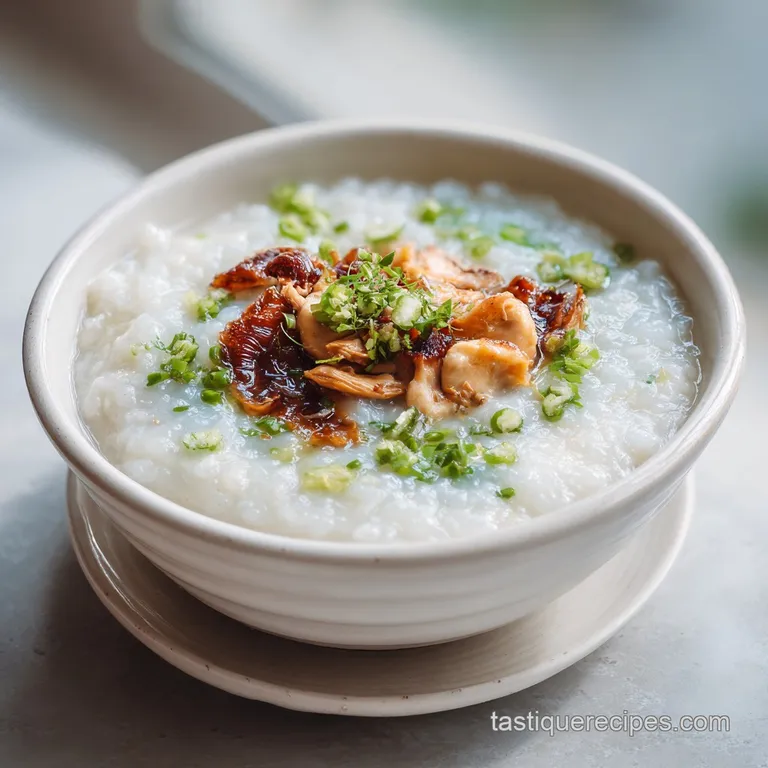
Even with the best intentions, congee can be a bit finicky depending on the age of your rice or the strength of your stove. The most common heartbreak is ending up with something that looks like rice soup instead of a thick porridge. If you are at the 40 minute mark and it still looks thin, don't panic!
Just turn up the heat slightly and stir more vigorously. The agitation helps the starch release.
Why Your Porridge Is Too Thin
If your congee looks more like a broth with rice floating in it, you likely have too much liquid or didn't simmer it long enough. Every stovetop is different, and some "low" settings are cooler than others.
| Problem | Root Cause | Solution |
|---|---|---|
| Separated liquid | Not enough agitation | Whisk the rice vigorously for 2 minutes to break the grains |
| Grainy texture | Rice is too old/dry | Add another 1/2 cup of water and simmer for 15 more mins |
| Burnt bottom | Heat was too high | Transfer the top, unburnt portion to a new pot; do not scrape the bottom! |
Common Mistakes Checklist
- ✓ Don't skip the rinsing step, or you'll end up with a sticky, gummy mess rather than a silky cream.
- ✓ Always use a heavy bottomed pot to ensure even heat distribution and prevent scorching.
- ✓ Never leave the pot completely unattended for the full 50 minutes; starch settles and burns easily.
- ✓ Avoid adding the salt at the very beginning; it can toughen the outer layer of the rice grain.
- ✓ Use dried mushrooms instead of fresh to ensure the broth has enough depth without adding meat.
Modifying the Recipe for Any Diet
One of the things I love most about congee is how accommodating it is. If you're looking to boost the protein, you can easily stir in some silken tofu right at the end. It melts into the porridge and adds a wonderful creaminess without changing the flavor profile much.
If you are watching your salt intake, you can replace the sea salt with a splash of low sodium tamari or coconut aminos. For those who want a bit of a crunchier, snack like topping, you could even crush up some leftovers from a Vegan Chex Mix recipe and sprinkle them on top. It sounds wild, but the savory spices in the mix actually pair beautifully with the ginger base.
Quick Adjustments for Different Needs
- For extra creaminess: Replace 1 cup of the vegetable broth with full fat coconut milk.
- For a spicy kick: Double the chili oil and add some sliced fresh Thai bird's eye chilies.
- For a "green" version: Stir in two handfuls of baby spinach during the last 2 minutes of cooking.
Proper Storage and Leftover Reheating
Congee is notorious for thickening up significantly as it cools. If you put a bowl of leftovers in the fridge, it will likely turn into a solid block by the next morning. Don't worry, it's not ruined!
Storage: Keep the plain congee in an airtight container in the fridge for up to 4 days. I don't recommend freezing it, as the rice grains can become unpleasantly mealy once thawed. It is always better fresh or from the fridge.
Reheating: To bring it back to life, place the cold congee in a small saucepan and add about 1/4 cup of water or broth per serving. Heat it over medium low, whisking constantly, until it returns to its original silky state.
It might need an extra pinch of salt after being diluted, so give it a quick taste before serving.
Zero Waste Tip: If you have leftover ginger peels or cilantro stems, don't toss them! Toss them into a freezer bag. Next time you make a vegetable stock from scratch, these scraps will add incredible depth and aroma that you just can't get from store-bought broth.
Garnishes to Make the Dish Pop
The toppings are where you get to express your personality. While the fried garlic and green onions are my "holy trinity" for congee, you can get much more adventurous. I've been known to add pickled mustard greens, shredded nori, or even a drizzle of toasted peanut butter for a weirdly satisfying savory sweet combo.
The Savory Breakfast Spread
If you are serving this for a group, I love setting out a "congee bar." Put the plain, seasoned porridge in a large tureen and surround it with small bowls of various toppings. It makes the meal feel special and allows everyone to customize their bowl to their specific spice tolerance.
Flavor Profile Shortcut Table
If you want to change the vibe of your bowl without changing the whole recipe, try these three ingredient topping combinations.
| Vibe | Topping 1 | Topping 2 | Topping 3 |
|---|---|---|---|
| Traditional | Sliced Doughnut (You Tiao) | Soy Sauce | White Pepper |
| Modern Zest | Toasted Pumpkin Seeds | Lime Zest | Chili Flakes |
| Earthy | Sautéed Kale | Miso Paste | Sesame Seeds |
Kitchen Myths Debunked
Many people believe you must use a rice cooker to get authentic congee, but that isn't true. While a rice cooker is convenient, the stovetop method allows for better evaporation and starch agitation, which actually leads to a creamier result.
The constant movement of the bubbles in a pot helps the grains collide and break down more effectively than the static environment of a rice cooker.
Another common misconception is that you can't overcook congee. While it is very forgiving, if you leave it for hours, the rice will eventually lose all its integrity and turn into a paste that lacks the "bloom" of a well timed porridge.
You want to stop when the grains are soft and frayed but still visible within the creamy matrix. Trust your eyes and your spoon when it coats the back of the spoon in a thick, velvety layer, it is time to eat!
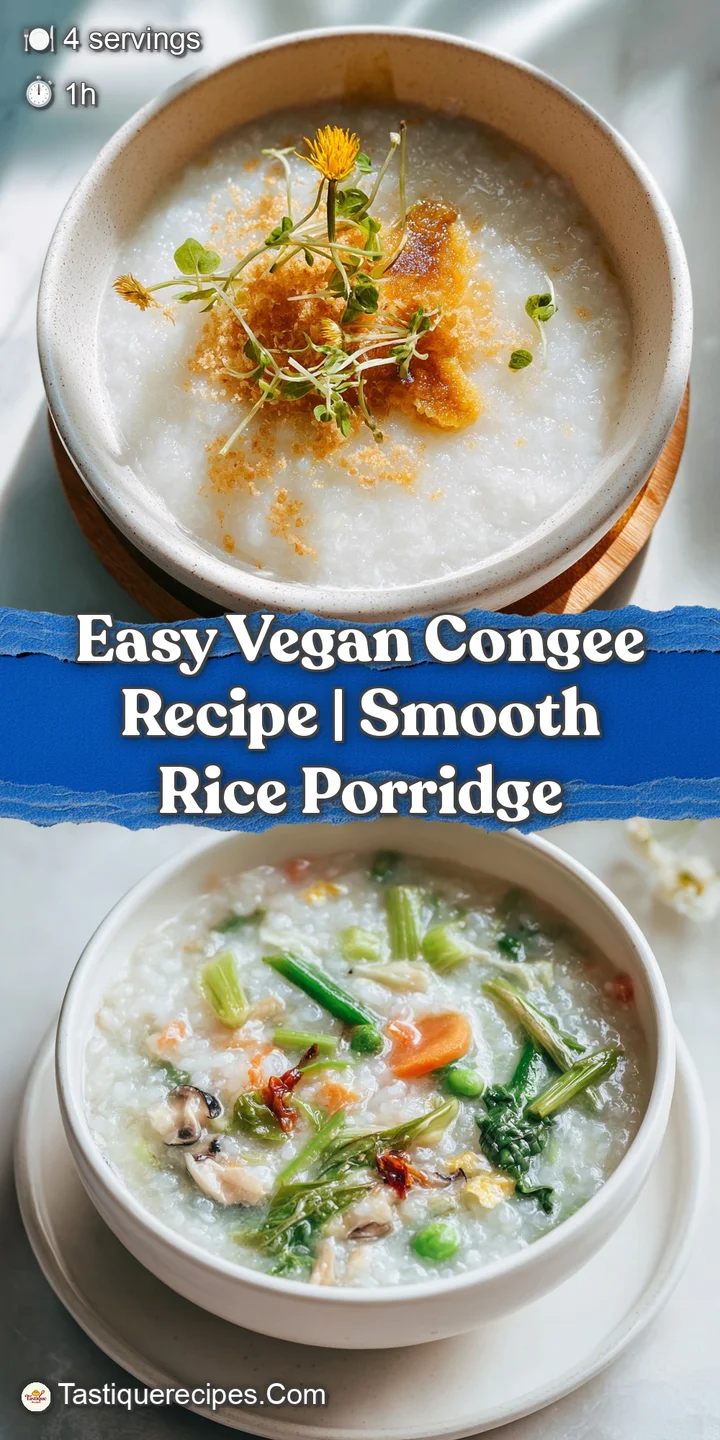
High in Sodium
845 mg mg of sodium per serving (37% % of daily value)
The American Heart Association recommends limiting sodium intake to about 2,300mg per day for overall health.
Tips to Reduce Sodium in Your Congee:
-
Low-Sodium Broth-30%
Swap regular vegetable broth for a low-sodium or no-salt added version. This is the single biggest source of sodium in the recipe.
-
Reduce Added Salt-25%
Cut the added sea salt in half, from 1 tsp to 0.5 tsp. You can always add more to taste after cooking, but starting with less significantly reduces sodium.
-
Hydrate Mushrooms Right-10%
Be sure to drain and rinse your shiitake mushrooms well after rehydrating them. This can help remove some sodium if any was absorbed during the drying process.
-
Minimize Fried Garlic-10%
Reduce the amount of crispy fried garlic used as a topping by half, from 2 tbsp to 1 tbsp. Crispy fried garlic often contains added salt.
-
Control Chili Oil-5%
Use chili oil sparingly or omit it entirely. Many chili oils contain added sodium, so controlling the amount will make a difference.
-
Flavor Boost
Enhance the flavor with fresh herbs and spices like ginger, white pepper, green onions, and cilantro. These add complexity without adding sodium.
Recipe FAQs
What is the secret to the great congee?
Use a high liquid-to-grain ratio and long, slow simmering. This forces the rice starch granules to break down completely, creating a naturally silky mouthfeel without adding any cream or thickeners.
Is rice congee inherently vegan?
No, traditional preparations often use chicken or pork broth. Our recipe specifically uses vegetable broth and dried shiitake mushrooms to build a deep umami base, making it completely plant based.
What vegetable to put in congee?
Dried shiitake mushrooms provide the best depth of flavor. They release intense umami into the cooking liquid, which is crucial for a satisfying savory base.
Why do Asians eat congee when sick?
It is incredibly easy to digest while still providing necessary hydration and calories. The smooth texture requires almost no digestive effort, making it soothing for upset stomachs, similar to how soft foods aid recovery in many cultures.
How to ensure my congee achieves a truly silky texture?
Add a small amount of glutinous rice along with your main grain. This sticky rice releases more amylopectin starch, which binds the liquid into that luxurious, velvety sauce that coats the spoon.
How to prevent the rice from sticking to the bottom of the pot while simmering?
Use a heavy bottomed pot and stir every 10 minutes during the simmer time. This consistent agitation keeps the grains suspended and prevents the starch from settling and scorching on the base.
Can I substitute the Jasmine rice with another grain?
Yes, but it will significantly change the texture and cooking time. If you enjoy working with long grain starches, mastering the texture control here will help you when preparing recipes like our Vegan Mushroom Stroganoff recipe, which relies on careful reduction.
Creamy Vegan Congee Recipe
Ingredients:
Instructions:
Nutrition Facts:
| Calories | 268 kcal |
|---|---|
| Protein | 5.2 g |
| Fat | 6.1 g |
| Carbs | 48 g |
| Fiber | 2.4 g |
| Sugar | 1.8 g |
| Sodium | 845 mg |
