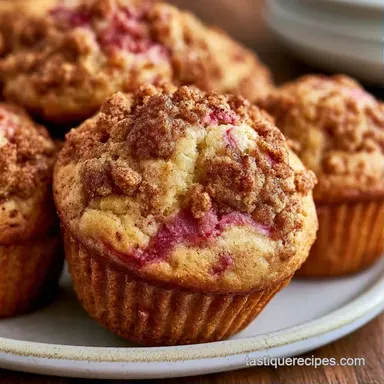
Streusel Topped Rhubarb Muffins with Cinnamon
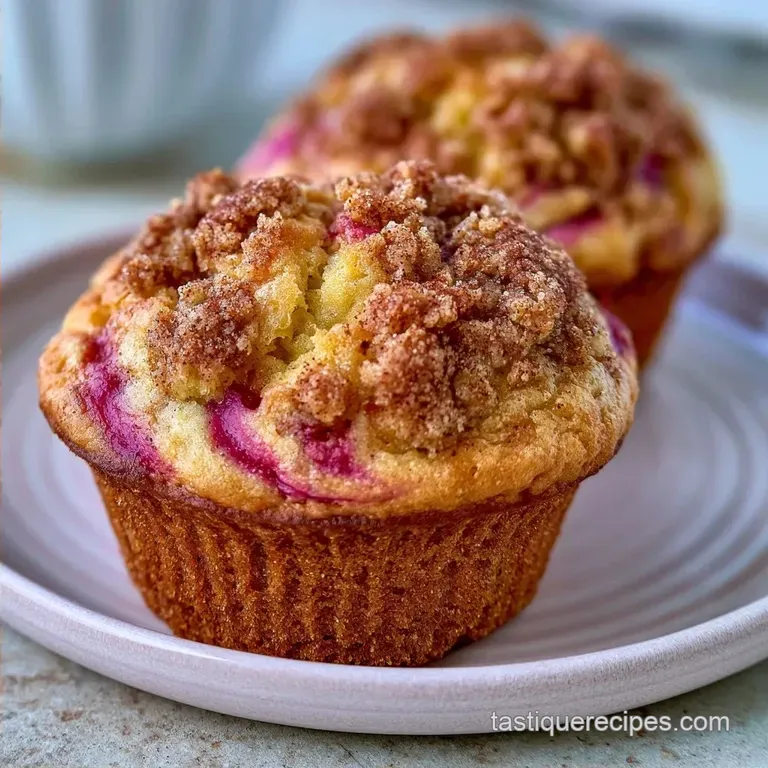
- Time:15 minutes active + 25 minutes baking
- Flavor/Texture Hook: Tart, jammy rhubarb with a crunchy cinnamon crust
- Perfect for: Spring brunch or a quick weekday breakfast
The smell of tart rhubarb hitting a hot oven is one of my favorite spring scents. It's a sharp, bright aroma that cuts right through the sweetness of the brown sugar. But for a long time, I struggled with the actual results.
My muffins always came out with a "soggy bottom," where the fruit released all its juice into the batter, leaving a gummy, undercooked mess at the base.
I realized the problem wasn't the fruit, but the temperature. Most recipes call for a standard 350°F (175°C), which is too slow for something as watery as rhubarb. By cranking the heat and keeping the topping cold, these Rhubarb Muffins actually hold their shape.
You can expect a muffin that's tender and moist thanks to the sour cream, but a distinct, defined edge. This batch of Rhubarb Muffins doesn't feel like a sponge; it feels like a rustic pastry.
Avoiding the Soggy Rhubarb Trap
When making Rhubarb Muffins, the biggest hurdle is moisture control. Rhubarb is essentially a water filled stalk. When it heats up, that water wants to go somewhere, and usually, it goes straight into your flour, ruining the crumb.
By using a 400°F (200°C) oven, the outside of the muffin sets almost instantly. This creates a structural wall that traps the fruit juices in small, jammy pockets rather than letting them flood the whole muffin. It's the difference between a cakey texture and a soggy one.
Another common issue with traditional Rhubarb Muffins is the topping melting into the batter. If your streusel is room temperature, it just sinks. Keeping the crumble in the fridge until the very last second ensures those pea sized butter clumps stay intact, giving you a distinct crunch.
Standard Rhubarb Muffins often miss this detail, leaving you with a flat, sugary glaze instead of a proper crumble.
Cold Streusel: Chilling the topping prevents the butter from melting too quickly, which keeps the crumble texture separate from the cake. High Initial Heat: A hotter oven triggers a faster rise and sets the crust, preventing the "soggy bottom" effect.
| Method | Temp | Texture | Best For |
|---|---|---|---|
| Classic | 350°F | Soft, cake like | Traditional tea cakes |
| Fast Set | 400°F | High dome, crisp edges | Fruit heavy muffins |
Quick Summary and Specs
The beauty of this recipe is that it doesn't require any fancy equipment. You don't need a stand mixer or a food processor to get these Rhubarb Muffins right. A couple of bowls and a sturdy whisk do all the heavy lifting.
Because we use oil and sour cream, the batter is forgiving. You won't have to worry about the butter separating if your eggs are a few degrees too cold. This makes it a great choice for a busy morning when you just want something fresh from the oven.
What You'll Need
Getting the right ingredients is the first step to your Rhubarb Muffins. I prefer using fresh stalks over frozen because frozen rhubarb releases significantly more water, which can throw off the moisture balance we've worked so hard to fix.
For the best Rhubarb Muffins, look for stalks that are firm and bright red. If they feel bendy or look shriveled, they'll be less tart and more likely to collapse during baking.
For the Cinnamon Crumble Topping
- 1/2 cup (65g) all purpose flour
- 1/2 cup (100g) brown sugar, packed Why this? Adds a deep, molasses sweetness
- 1 tsp (2g) ground cinnamon
- 4 tbsp (57g) unsalted butter, cold and cubed Why this? Cold fat creates the crumble texture
For the Muffin Batter
- 2 cups (250g) all purpose flour
- 3/4 cup (150g) granulated sugar
- 2 tsp (10g) baking powder Why this? Essential for the high dome
- 1/2 tsp (3g) salt
- 1/2 cup (120g) sour cream, room temperature Why this? Adds acidity and tenderness
- 1/2 cup (120ml) neutral oil (like canola or vegetable)
- 2 large eggs, room temperature
- 1 tsp (5ml) vanilla extract
- 1 1/2 cups (225g) fresh rhubarb, diced into 1/4 inch pieces Why this? Small dice ensures even distribution
| Ingredient | What It Does | Best Swap |
|---|---|---|
| Sour Cream | Adds moisture and tang | Full fat Greek yogurt (1:1) |
| Neutral Oil | Keeps the crumb tender | Melted butter (makes it richer) |
| Brown Sugar | Provides caramel notes | Coconut sugar (slightly earthier) |
Tools for Simple Baking
You don't need a professional kitchen to make these Rhubarb Muffins. In fact, I find that using a simple hand whisk often prevents over mixing, which is the number one cause of tough muffins.
All you really need is a standard 12 cup muffin tin and some liners. I always use paper liners because the sugar in the rhubarb can stick to the pan, making cleanup a nightmare. A simple spatula for folding the fruit is also a must to keep the air in the batter.
The Baking Process
Let's crack on with the actual making of these Rhubarb Muffins. The key here is to keep the wet and dry components separate until the very end.
1. Constructing the Crumble
In a medium bowl, whisk together the flour, brown sugar, and cinnamon. Use a pastry cutter or a fork to work the cold butter into the mixture. You're looking for pea sized clumps, not a smooth paste. Once it looks like wet sand with some lumps, pop it in the refrigerator. This keeps the butter cold for the oven.
2. Preparing the Base
Preheat your oven to 400°F (200°C). In a large bowl, whisk the flour, granulated sugar, baking powder, and salt. In a separate bowl, beat the eggs, sour cream, oil, and vanilla. Mix them until the batter is velvety and smooth. This is where the richness of the sour cream really blends in.
3. The Final Fold and Bake
Pour the wet ingredients into the dry bowl. Use a spatula to stir them together, but stop the second you don't see any more streaks of flour. Over mixing here will lead to tunnels in your Rhubarb Muffins. Gently fold in the diced rhubarb so you don't crush the pieces.
Fill your muffin liners almost to the top. Take that chilled streusel from the fridge and sprinkle a generous pinch over each one. Bake for 20-25 minutes until the tops are golden brown and the edges pull away slightly from the liner.
Chef's Note: If you notice the tops browning too fast, you can move the rack down one level, but don't drop the temperature. That 400°F heat is what gives you the rise.
Troubleshooting Common Muffin Issues
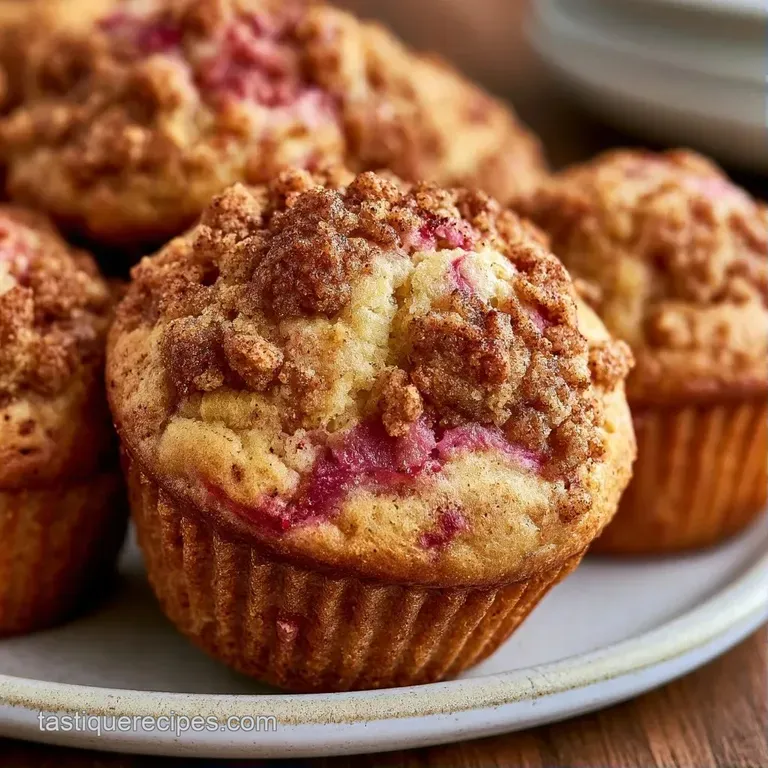
Even when you're careful, these Rhubarb Muffins can act up. Most issues come down to temperature or mixing.
| Issue | Solution |
|---|---|
| Why Your Muffins Are Flat | If your muffins didn't dome up, your baking powder might be old, or you might have over mixed the batter. When you stir too much, you pop the air bubbles that the baking powder is trying to expand. |
| Why the Rhubarb Sinks | Rhubarb pieces can migrate to the bottom if the batter is too thin. Ensure your sour cream is thick and your flour is measured correctly using a scale. |
| Why Your Streusel Melted | This happens if the butter in the crumble was too soft when it went into the oven. The butter melts before the flour and sugar can set, causing the topping to slide. |
Customizing Your Muffins
Once you've got the hang of these Rhubarb Muffins, you can start playing with the flavor profile. Rhubarb is a great base because its tartness balances out almost any sweet addition.
If you want something a bit more colorful, try adding a handful of blueberries or raspberries. These Muffins with Sour Cream recipe are a huge hit with kids because the berries soften the sharp edge of the rhubarb.
For a deeper, more autumnal flavor, you can swap the granulated sugar in the batter for brown sugar. This results in Muffins with Sour Cream recipe that taste almost like a coffee cake. It's a wonderful variation of Rhubarb Muffins for those who prefer a richer, caramel like taste.
You can also add a bit of citrus. Grating some lemon or orange zest into the batter lifts the whole flavor. It complements the tartness of the rhubarb without adding extra liquid. This style of Rhubarb Muffins feels much lighter and more "spring like."
If you're looking for a gluten-free option, you can use a 1:1 gluten-free flour blend. Just be aware that the texture will be slightly denser, and you might need to add an extra tablespoon of sour cream to keep the crumb moist.
When making a gluten-free batch of Rhubarb Muffins, let the batter rest for 10 minutes before baking to allow the flours to hydrate.
Scaling Your Batch
If you're baking for a crowd, you can double this recipe, but don't just double everything and throw it in the oven. Baking twice as many muffins changes the airflow in your oven.
For a 2x batch, I recommend lowering the oven temperature by about 25°F (15°C) and extending the bake time by 5-8 minutes. This prevents the edges from burning before the center of the crowded pan is cooked through.
If you only need a few, you can halve the recipe. For the egg, crack one into a bowl, beat it, and use half of it. Use a smaller pan or just fill 6 slots in your standard tin. Reduce the bake time by about 20% and start checking them at the 15 minute mark.
Baking Truths
There are a few things people tell you about baking that just aren't true. Let's clear them up so you can make your Rhubarb Muffins with confidence.
First, some say you must sift your flour for a light muffin. While sifting helps with lumps, a good whisking of the dry ingredients does the same thing. It's not a mandatory step for this recipe.
Second, there's a myth that you need to "cream" the butter and sugar for 5 minutes to get a rise. Since we're using oil and sour cream for the base, we don't need to worry about that. The rise comes from the chemical reaction of the baking powder and the high heat.
Storage and Zero Waste
Your Rhubarb Muffins will stay fresh at room temperature in an airtight container for about 2 days. Because of the moisture in the fruit, they can get a bit soft if left out too long.
For longer storage, keep them in the fridge for up to 5 days. I find that these actually taste great slightly chilled, as the tartness of the rhubarb becomes more pronounced. When you're ready to eat them, just pop them in a toaster oven for 2 minutes to bring back the crunch of the streusel.
You can also freeze these Rhubarb Muffins for up to 3 months. Wrap them individually in foil and then place them in a freezer bag. Thaw them in the fridge overnight or microwave for 30 seconds for a quick breakfast.
To avoid waste, don't throw away the rhubarb leaves unless you're unsure of the source they can be toxic. However, the ends of the stalks that are too woody for muffins can be simmered with a bit of sugar and water to make a simple syrup for pancakes. This ensures you're using every bit of the produce.
Serving and Pairing Ideas
These Rhubarb Muffins are a complete treat on their own, but a few additions can make them feel like a proper meal. A smear of salted butter while they're still warm is the classic way to go. The salt cuts through the sugar and highlights the tartness of the fruit.
If you're serving these as part of a brunch, pair them with a sharp cheddar cheese or a slice of smoked salmon. The contrast between the sweet tart muffin and the salty protein is brilliant.
Many people enjoy these classic Rhubarb Muffins alongside a hot cup of black coffee, which balances the richness of the sour cream.
For a more dessert like experience, serve your Rhubarb Muffins warm with a dollop of whipped cream or a drizzle of honey. It turns a simple breakfast item into something a bit more special.
Whenever you're making Rhubarb Muffins, remember that the beauty is in the rustic look. Don't worry if the crumble isn't perfectly even or if a bit of fruit peeks through the top. That's what makes them feel like they came from a home kitchen rather than a factory. I hope you love Rhubarb Muffins as much as I do!
Recipe FAQs
What does rhubarb taste like?
Tart and tangy. It has a sharp, acidic profile similar to a Granny Smith apple but more intense.
What sweet flavors pair well with rhubarb?
Cinnamon and vanilla. These warm notes balance the fruit's natural acidity and enhance the sweetness of the brown sugar.
How to make rhubarb taste good in baking?
Balance the tartness with sugar. Pairing the fruit with granulated or brown sugar prevents it from being overly sour. If you enjoyed balancing fruit acidity here, see how the same principle works in our strawberry muffin tops.
Why are my muffins soggy in the middle?
Under baking or excessive fruit moisture. Bake for the full 20-25 minutes at 400°F to ensure the center is fully set.
Why are my muffins flat instead of domed?
Expired baking powder or over mixing. Stirring the batter too much pops the air bubbles needed for the muffins to rise.
Why did the rhubarb sink to the bottom of the muffin?
The batter was too thin. Use a scale for flour and ensure your sour cream is thick to support the diced fruit pieces.
How long do these muffins stay fresh in the fridge?
Up to 5 days. Keep them in an airtight container to prevent them from drying out.
Streusel Topped Rhubarb Muffins