Homemade Salsa: Fresh and Chunky
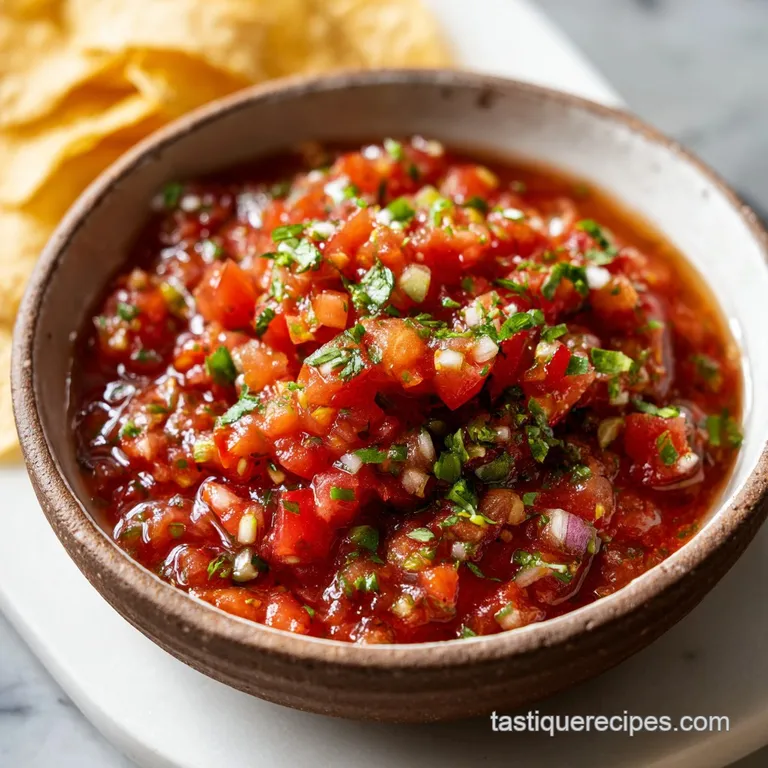
- Time: Active 15 minutes, Passive 20 minutes, Total 15 minutes
- Flavor/Texture Hook: Zesty, crisp, and bright
- Perfect for: Game night, meal prep, or high protein vegan snacking
- Avoiding the Watery Salsa Trap
- Vital Metrics for Salsa Success
- Deep Dive into Fresh Elements
- Minimal Tools for Maximum Impact
- Mastering the Five Minute Pulse
- Solving Common Texture and Heat
- Clever Ways to Customize Flavor
- Storing and Keeping Salsa Fresh
- Best Ways to Enjoy Salsa
- Recipe FAQs
- 📝 Recipe Card
Avoiding the Watery Salsa Trap
One of the biggest hurdles in any plant based kitchen is managing moisture. When you chop a tomato, it wants to leak. Most people just throw everything in a blender and end up with a pink smoothie. That is not what we want. The key here is physical separation and a bit of kitchen chemistry.
By removing the seeds and the watery pulp from the Romas, we are essentially concentrating the flavor and the structure. This keeps the salsa "tight" so it sits on top of a chip rather than soaking into it and making it soggy.
Another trick most people miss is the "bite" of a raw onion. Have you ever eaten a salsa that just tasted like sharp, aggressive onions for three hours afterward? That’s because the sulfur compounds in the onion haven't been tamed.
By letting the diced onions sit in lime juice for just five minutes, we use the acidity to "cook" the onion slightly. This process, often called maceration, mellows the harshness and replaces it with a bright, tangy sweetness that rounds out the whole dish.
What Actually Prevents Soggy Salsa
Moisture Control: Removing the tomato seeds and pulp prevents the mixture from turning into a watery soup over time.
Acidic Mating: The lime juice breaks down the cellular walls of the aromatics, releasing flavor without needing heat.
Sugar Balancing: A tiny pinch of sugar acts as a bridge between the acidic lime and the savory cumin, making the flavor feel three dimensional.
| Method | Time | Texture | Best For |
|---|---|---|---|
| Fresh Pulse | 15 minutes | Crisp and chunky | Chips, tacos, and fresh bowls |
| Roasted Stovetop | 35 minutes | Smoky and velvety | Enchiladas and warm dipping |
| Hand Chopped | 25 minutes | Very chunky | Topping for grilled protein |
Whether you are looking for a quick weeknight fix or something to impress at a weekend brunch, the fresh pulse method is the winner for speed and vibrancy. If you find yourself enjoying these fresh, herb driven flavors, you might also love the clean, aromatic profile of a Basil Pesto Recipe which uses similar "pulse and go" techniques to keep things bright.
Vital Metrics for Salsa Success
Before we grab the cutting board, let’s talk about the specs. This isn't a long haul cooking project; it’s a sprint. We are looking at a 15 minute total investment of your time. Because there is no heat involved, the quality of your ingredients is the only thing that matters.
You want Romas that feel heavy for their size and have a deep, uniform red color. If they are pale or mushy, your salsa will reflect that.
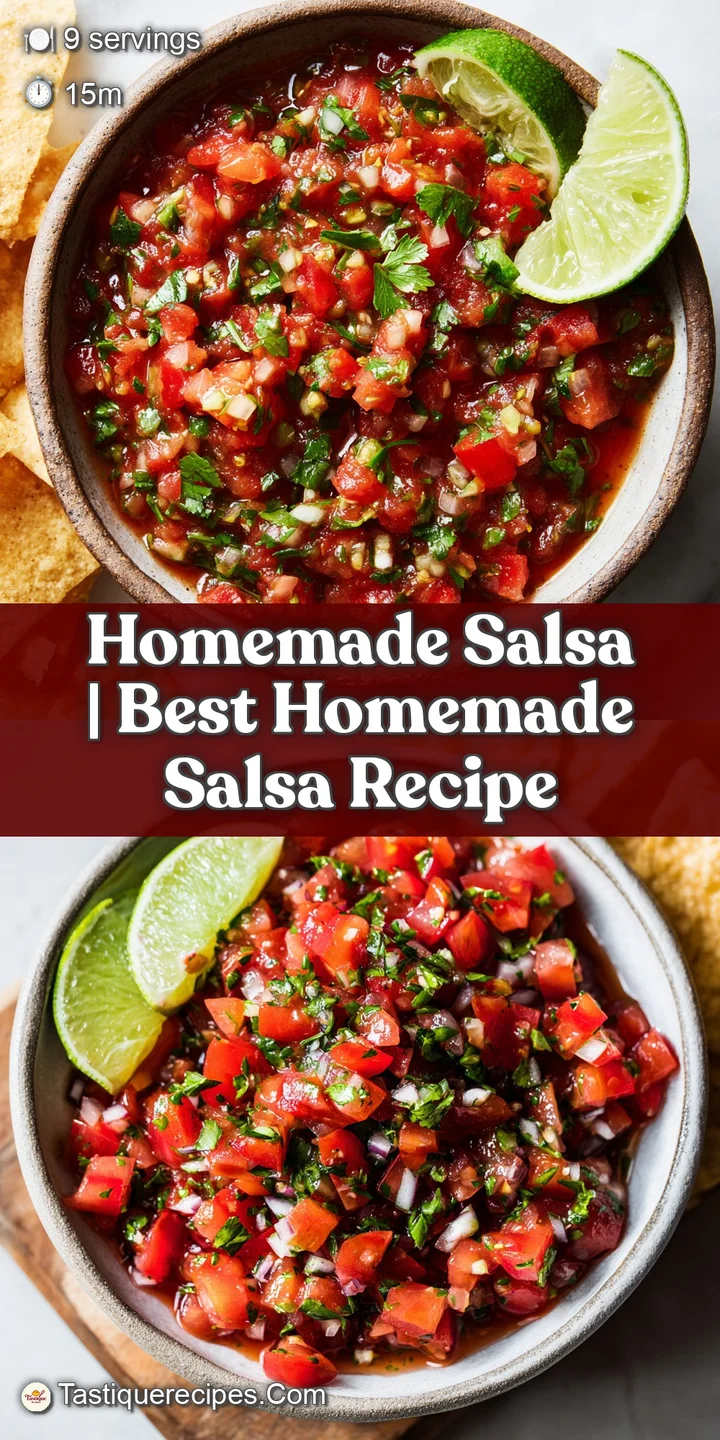
The yield here is about 9 servings, which is perfect for a small gathering or a week of meal prep topping. Each serving is a lean 17 calories, making it a fantastic way to add flavor to high protein vegan meals without adding heavy fats or processed sugars.
It’s pure, plant based goodness that relies on the natural sugars of the tomatoes and the punch of the jalapeños to do the heavy lifting.
| Component | Science Role | Pro Secret |
|---|---|---|
| Roma Tomatoes | Structural Base | Use Romas because they have thicker walls and less water than beefsteak varieties. |
| Lime Juice | Flavor Conductor | Rolling the lime on the counter before squeezing breaks the juice sacs for more yield. |
| Sea Salt | Osmotic Agent | Salt pulls just enough juice from the tomatoes to create a natural "sauce" without being runny. |
| Cumin | Earthy Anchor | A tiny amount provides a savory depth that makes the salsa taste professional. |
It is worth noting that while we are using fresh tomatoes here, the technique of balancing acid and spice is universal. For example, when making a hearty Kabocha Squash Soup, the addition of ginger provides a similar bright "pop" that balances out the heavy, creamy textures of the squash.
Deep Dive into Fresh Elements
Let's talk about the lineup. You’ll need 1.5 lbs of fresh Roma tomatoes. Don't skip the "Roma" part; they are the workhorses of the salsa world. You also need 0.5 cup of white onion.
I prefer white onion here because it has a cleaner, sharper finish than yellow onion, which can sometimes be a bit too sweet and soft for a fresh salsa.
For the heat, we’re using 2 medium jalapeños. If you like it mild, scrape every single seed out. If you like to live on the edge, leave a few in. Then we have 3 cloves of garlic, 0.5 cup of fresh cilantro, and our seasonings: 1 tsp sea salt, 0.5 tsp cumin, and 0.25 tsp granulated sugar.
The sugar isn't there to make it sweet; it's there to prevent the lime juice from tasting too "pointy."
- 1.5 lbs Roma tomatoes: Why this? They have a high flesh to seed ratio, ensuring a thick, chunky result. (Sub: Vine ripened tomatoes, but drain well.)
- 0.5 cup white onion: Why this? Provides a crisp texture and a sharp, traditional salsa bite. (Sub: Red onion for a milder, colorful twist.)
- 3 cloves garlic: Why this? Adds a necessary savory pungency that builds as the salsa sits. (Sub: 1 tsp garlic powder in a pinch, but fresh is better.)
- 2 medium jalapeños: Why this? The classic choice for a controllable, bright heat level. (Sub: Serranos if you want significantly more spice.)
- 0.5 cup fresh cilantro: Why this? Gives that essential herbal lift that defines restaurant style salsa. (Sub: Flat leaf parsley if you have the "soap" gene.)
- 2 tbsp fresh lime juice: Why this? Acts as the preservative and the main flavor enhancer. (Sub: Lemon juice, though it will taste slightly more floral.)
- 1 tsp fine sea salt: Why this? Enhances all the other flavors and helps release tomato juices. (Sub: Kosher salt, but use 1.5 tsp.)
- 0.5 tsp ground cumin: Why this? Adds an earthy, smoky undertone that balances the acidity. (Sub: Smoked paprika for a different kind of depth.)
- 0.25 tsp granulated sugar: Why this? Neutralizes the harshness of the lime and enhances tomato sweetness. (Sub: Agave nectar or honey.)
Minimal Tools for Maximum Impact
You don't need a professional kitchen for this. In fact, a fancy blender might actually work against you here. Blenders are designed to liquefy, but we want texture. A basic food processor is your best friend.
If you don't have one, a sharp knife and a bit of patience will do the job just as well, giving you a "pico de gallo" style finish.
Chef's Tip: If you are using a knife instead of a processor, chop your tomatoes into 1/4 inch cubes. This mimics the "pulse" texture and ensures you get every ingredient in a single bite.
You’ll also need a small bowl for macerating the onions and a sturdy spoon for mixing. That’s really it. No pans to wash, no oven to preheat. This is high efficiency cooking at its best.
Just make sure your knife is actually sharp; a dull knife will bruise the cilantro and tomatoes rather than slicing them, which leads to a dark, muddy looking salsa.
Mastering the Five Minute Pulse
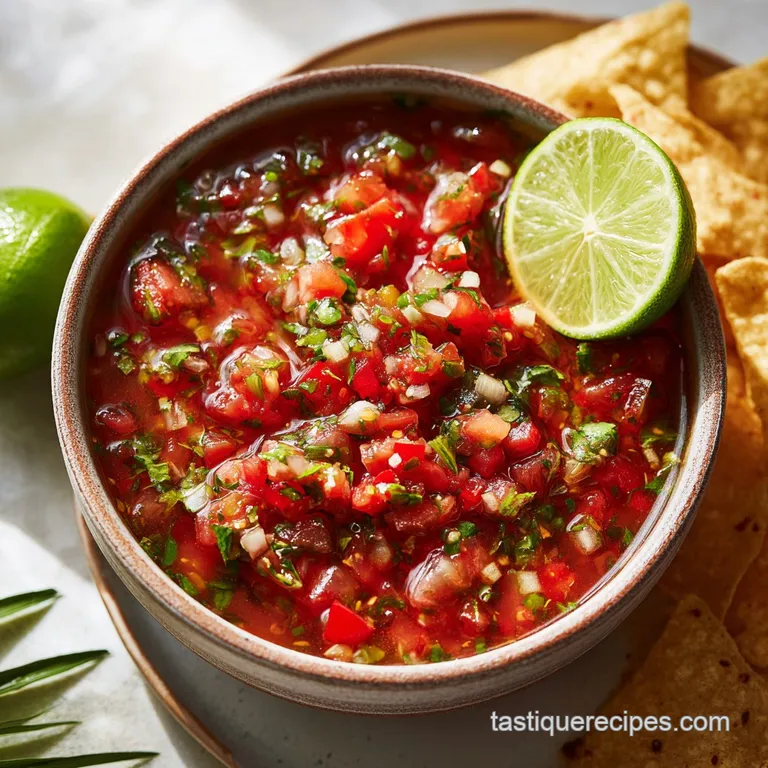
- Halve the Roma tomatoes. Use your thumb or a small spoon to scoop out the watery seeds and pulp. Discard the pulp and roughly chop the remaining tomato flesh. Note: This is the most important step for texture control.
- Prepare the aromatics. Combine the finely diced white onion, minced jalapeño, and 2 tbsp fresh lime juice in a small bowl.
- Macerate the mixture. Allow the onion and jalapeño to sit for 5 minutes. Wait until the onion looks slightly translucent and smells less sharp.
- Load the processor. Place the chopped tomatoes, 3 cloves of minced garlic, 0.5 cup of chopped cilantro, 1 tsp salt, 0.5 tsp cumin, and 0.25 tsp sugar into the food processor.
- Add the liquids. Pour the macerated onion and jalapeño mixture (including all that lime juice) into the processor.
- Start the pulse. Pulse the mixture 5 to 7 times in short, one second bursts. Stop when you see distinct chunks of tomato and onion.
- Check the consistency. If it's still too chunky for your liking, give it one or two more pulses, but do not turn it into a puree.
- Rest the salsa. Transfer the mixture to a bowl and let it sit for 20 minutes at room temperature. Wait for the colors to deepen and the flavors to meld.
- Taste and adjust. After the rest, try a spoonful. Add a tiny pinch more salt if the flavors don't "pop" yet.
Solving Common Texture and Heat
Even with the best intentions, things can go sideways. Maybe your tomatoes were extra juicy, or your jalapeños were unexpectedly fiery. Don't panic. Most salsa "fails" are easily corrected with a few simple adjustments. The beauty of a raw recipe is that you can taste and fix as you go.
Why Your Salsa Is Watery
If you find a pool of liquid at the bottom of your bowl, it usually means the tomatoes weren't seeded well enough or the salt has worked overtime. To fix this, you can actually strain a bit of the liquid out through a fine mesh sieve. Don't throw that liquid away, though!
It’s basically liquid gold and can be used as a base for a spicy vinaigrette or added to a pot of beans for extra flavor.
It’s Way Too Spicy
We’ve all been there the jalapeño "Russian Roulette." If the heat is overwhelming, the best fix is more bulk. Add another chopped tomato or some finely diced cucumber to dilute the spice.
A little extra sugar or another squeeze of lime can also help mask the burn on your tongue, as the acid and sweet compete with the capsaicin.
It Tastes Flat or Bland
This is almost always a salt or acid issue. If the salsa doesn't make you want to go back for a second dip, add another pinch of sea salt. Salt is the volume knob for flavor. If that doesn't work, add a teaspoon more lime juice. The acidity brightens the dull notes and makes the tomato flavor stand out.
| Problem | Root Cause | Solution |
|---|---|---|
| Bitter Aftertaste | Raw onion or garlic | Macerate onions longer next time; add a pinch of sugar now. |
| Dull Color | Over processing | Pulse fewer times. Add fresh cilantro at the very end. |
| Foamy Texture | Too much air (over blending) | Let it sit for 30 minutes; the air bubbles will settle out. |
Common Mistakes Checklist:
- ✓ Skipping the seeding step (results in a tomato soup consistency).
- ✓ Using canned tomatoes without draining the metallic juice.
- ✓ Forgetting to let the salsa rest (the salt needs time to work).
- ✓ Over pulsing until it looks like gazpacho.
- ✓ Using bottled lime juice instead of fresh (the flavor difference is massive).
Clever Ways to Customize Flavor
Once you've mastered the base, the world is your oyster. You can take this "blank canvas" and paint it however you like. Want something smoky? Char the tomatoes and jalapeños under a broiler for 5 minutes before pulsing. This gives you a "salsa tatemada" vibe that is incredibly deep and savory.
If you are a fan of that sweet and spicy contrast, try dicing up some fresh mango or pineapple and folding it in at the end. This is a game changer for fish tacos or as a topping for a high protein black bean bowl. The fruit adds a velvety texture that contrasts beautifully with the crisp onions.
If you want X, do Y:
- If you want a smoky flavor: Add 1/2 tsp of smoked paprika or a chipotle pepper in adobo sauce.
- If you want it extra creamy: Fold in one diced avocado just before serving.
- If you want more crunch: Add 1/4 cup of finely diced red bell pepper.
| Original Ingredient | Substitute | Why It Works |
|---|---|---|
| Jalapeño | Serrano Pepper | Same flavor profile but 3x the heat. Note: Use sparingly! |
| White Onion | Scallions | Milder and adds a bright green color to the mix. |
| Lime Juice | Apple Cider Vinegar | Provides a sharp tang and helps preserve the salsa longer. |
Storing and Keeping Salsa Fresh
This homemade salsa is at its peak about 2 to 4 hours after you make it. The flavors have had time to get to know each other, but the vegetables are still crisp. You can store it in an airtight glass jar in the fridge for up to 5 days.
Just be aware that it will release more liquid the longer it sits, so you might need to give it a quick stir or a drain before serving.
I don't recommend freezing fresh salsa. The freezing process breaks the cell walls of the tomatoes and onions, and when it thaws, you’ll be left with a mushy, unappealing mess. If you find yourself with too much, it’s better to use it up in a cooked dish.
It makes an incredible base for a "shakshuka" style breakfast or can be stirred into a soup for an instant flavor boost.
Zero waste tip: If you have leftover cilantro stems, don't toss them! They actually hold more flavor than the leaves. Finely mince them and add them to the food processor along with the leaves for an extra punch of herbiness.
The tomato skins and seeds you scooped out can also go into your compost or be simmered with other veggie scraps to make a quick vegetable stock.
Best Ways to Enjoy Salsa
While the classic chip and dip combo is undefeated, don't let your salsa be a one trick pony. This recipe is a plant based powerhouse that can transform boring meals into something spectacular. I love spooning a generous amount over a bowl of warm lentils or using it as a "dressing" for a hearty kale salad.
The acidity helps soften the kale leaves, making them much more pleasant to eat.
Another trick is to use it as a marinade. The lime juice and salt help tenderize plant based proteins like tofu or tempeh. Just let them sit in the salsa for an hour before searing them in a hot pan. The sugars in the tomato and the bit of granulated sugar we added will caramelize, creating a beautiful crust.
If you are hosting a brunch, try serving this alongside some warm, fluffy bread. While it might sound unconventional, a scoop of fresh salsa on a piece of toasted Homemade Biscuits with a little avocado is a breakfast you won't soon forget. The buttery layers of the biscuit play perfectly against the sharp, acidic salsa.
At the end of the day, making your own salsa is about taking control of the flavors in your kitchen. It’s a simple act that yields a massive reward. No preservatives, no weird thickeners just fresh, vibrant plants treated with a little bit of respect and a few clever tricks.
Grab your chips and get pulsing; your taste buds will thank you.
Recipe FAQs
Is salsa ok for diabetics?
Yes, this salsa is generally a diabetic friendly choice. It is low in calories and carbohydrates, relying on fresh tomatoes, onions, and peppers rather than added sugars or fats.
What makes Mexican Restaurant salsa so good?
The secret is macerating the onions in lime juice. By letting the onion and jalapeño sit in lime juice for 5 minutes before blending, you mellow the raw bite and create a balanced, integrated flavor profile. If you enjoyed balancing these sharp acids, see how we apply a similar technique to enhance flavor in our Roasted Creamy Carrot Soup.
What can I add to my homemade salsa to make it taste better?
Allow the salsa to sit at room temperature for 20 minutes before serving. This critical resting period allows the sea salt to draw out the natural juices from the tomatoes and enables the cumin and garlic to meld properly with the rest of the ingredients.
What is considered the best salsa?
The best salsa uses fresh Roma tomatoes with the seeds and watery pulp removed. Removing the excess moisture ensures your final dip has a clean, vibrant texture instead of becoming a watery soup.
How to achieve the perfect texture?
Pulse the mixture 5 to 7 times in short, controlled bursts. Stopping at this stage keeps the vegetables chunky; processing any longer will turn the fresh ingredients into an unappealing, watery puree.
Is it true that I should freeze my leftover salsa for later?
No, this is a common misconception. Freezing ruptures the cell walls of the fresh tomatoes and onions, which results in a mushy, watery mess once the salsa is thawed.
How to keep the flavor fresh for days?
Store the salsa in an airtight glass jar in the refrigerator. It will stay fresh for up to 5 days, though you should expect it to release some natural liquid, which you can simply drain or stir back in before serving.
Homemade Salsa Recipe
Ingredients:
Instructions:
Nutrition Facts:
| Calories | 17 kcal |
|---|---|
| Protein | 0.7 g |
| Fat | 0.1 g |
| Carbs | 3.8 g |
| Fiber | 0.9 g |
| Sugar | 2.1 g |
| Sodium | 259 mg |
