Crab Cake with Lemon Butter Sauce
- Time: Active 10 minutes, Passive 50 minutes, Total 60 minutes
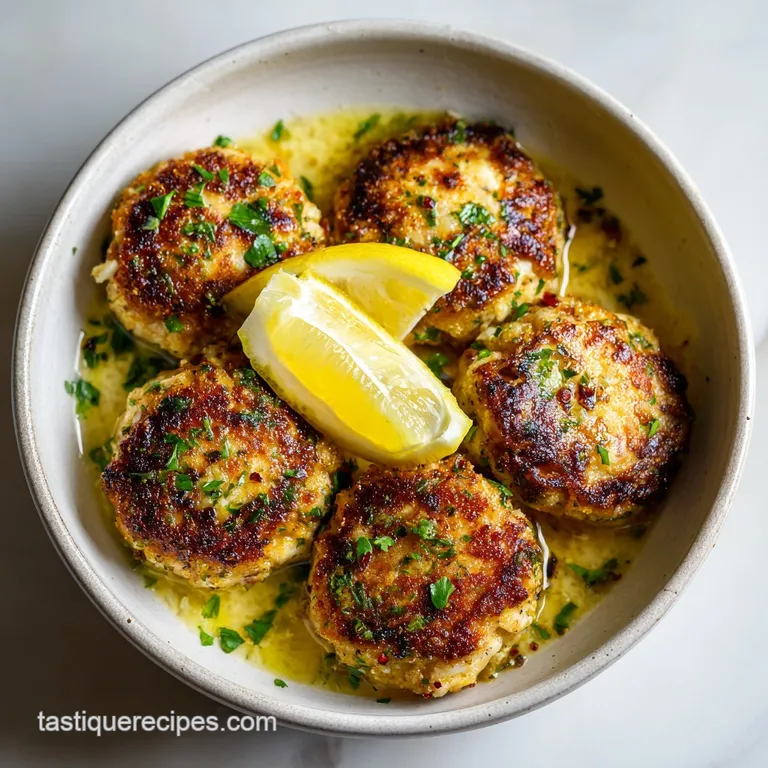
- Flavor/Texture Hook: A shatteringly crisp mahogany crust giving way to sweet, tender jumbo lumps.
- Perfect for: High end date nights, impressive dinner parties, or when you crave that specific steakhouse luxury at home.
- Making Ruth's Chris Crab Cake with Lemon Butter Sauce
- The Secret Chilling Step for a Structurally Sound Patty
- Component Analysis and Ingredient Selection Deep Dive
- Selecting the Finest Lump Crab and Pantry Essentials
- Essential Tools for Achieving a Restaurant Quality Finish
- Step by Step Guide to a Perfect Golden Sear
- Solving Common Problems with Texture and Sauce Stability
- Adjusting the Recipe for Large or Small Batches
- Debunking Seafood Preparation Fallacies
- Keeping Leftovers Fresh and Using Every Last Scraps
- Perfect Sides to Complement Rich Lemon Butter Flavors
- Recipe FAQs
- 📝 Recipe Card
Making Ruth's Chris Crab Cake with Lemon Butter Sauce
The first time I heard that sizzle, I knew I was in for something special. There is a very specific sound that occurs when cold crab meat hits a screaming hot pan of avocado oil it's a sharp, energetic crackle that promises a crust you can hear from across the room.
I remember standing in my kitchen, holding my breath as I flipped the first patty, praying it wouldn't disintegrate into a pile of loose seafood. When it flipped over in one solid, golden piece, revealing a beautiful mahogany hue, I actually cheered.
This article features a spectacular Ruth's Chris Crab Cake with Lemon Butter Sauce recipe. The beauty of this dish lies in the contrast between the sweetness of the jumbo lump crab and the sharp, citrus forward richness of the sauce.
It is a bridge between traditional high end steakhouse techniques and the modern need for recipes that actually work in a home kitchen. You aren't just making a seafood patty; you are building a texture profile that balances "melt in-your mouth" with "satisfyingly crunchy."
We have all been there ordering a crab cake only to find it's mostly breadcrumbs and "mystery meat." This version is the exact opposite. It treats the crab as the star, using just enough binder to hold the lumps together without masking their delicate flavor.
If you follow the chilling steps I've laid out, you will never have to worry about your crab cakes falling apart in the pan again. Let's get into why this method is the gold standard.
The Secret Chilling Step for a Structurally Sound Patty
The Science of the "Cold Set"
Protein Hydration: When you mix the egg and mayo with the crushed saltines, the dry cracker bits begin to absorb the moisture from the liquids. This creates a tacky, structural glue that needs time to fully hydrate; skipping the 30 minutes fridge time means the "glue" hasn't set, leading to cakes that crumble upon contact with the spatula.
Emulsification via Kinetic Energy
Fat Suspension: The lemon butter sauce relies on whisking cold butter into a hot reduction of wine and juice. By adding the butter one cube at a time, you are physically forcing the fat molecules to stay suspended in the liquid, creating a velvety texture rather than a greasy, separated puddle of yellow oil.
The Low Filler Advantage
Structural Integrity: Using saltines instead of panko provides a finer, more consistent "matrix" for the crab. Because saltines are pre salted and have a distinct snap, they provide a savory backbone that complements the sweetness of the jumbo lump meat without absorbing so much moisture that the cake becomes gummy.
| Thickness | Internal Temp | Rest Time | Visual Cue |
|---|---|---|---|
| 2.5 cm | 63°C | 3 mins | Opaque and firm to touch |
| 3.5 cm | 65°C | 5 mins | Golden brown with visible lumps |
| 4.5 cm | 68°C | 5 mins | Deep mahogany and steam rising |
While the crab cakes are the main event, achieving that perfect sear is only half the battle. The temperature of your pan is the most critical variable here. If the oil isn't hot enough, the crab will steam instead of sear, resulting in a pale, soggy exterior.
We want that avocado oil to be shimmering almost at its smoke point before the cakes ever touch the surface.
Component Analysis and Ingredient Selection Deep Dive
| Ingredient | Science Role | Pro Secret |
|---|---|---|
| Jumbo Lump Crab | Main Protein | Drain it for 10 minutes to prevent excess moisture from steaming the cake. |
| Saltine Crackers | Structural Binder | Hand crush them into uneven bits; the variety in size creates better "grip" inside the patty. |
| Cold Unsalted Butter | Emulsion Base | Keep it in the freezer until the very second you need to whisk it into the sauce. |
| Avocado Oil | Heat Transfer | Use this for its high smoke point (270°C) to get that dark crust without burning. |
If you find yourself wanting to experiment with different seafood textures after mastering this, you might enjoy trying my Garlic Butter Crab Legs which use a similar flavor profile but focus on the pure, steamed sweetness of the meat.
Selecting the Finest Lump Crab and Pantry Essentials
- 1 lb jumbo lump crab meat, drained and picked: This is the "money" ingredient. Look for cans in the refrigerated seafood section, never the shelf stable aisle. Why this? Jumbo lumps provide the best texture and visual appeal for a premium finish.
- Substitute: Backfin crab meat (Note: Will have smaller lumps and a slightly more fibrous texture).
- 1 large egg, lightly beaten: Acts as the primary protein binder. Why this? The egg proteins coagulate during cooking, "locking" the other ingredients together.
- Substitute: 1/4 cup liquid egg substitute (Same binding power, less richness).
- 2 tbsp light mayonnaise: Adds moisture and a hint of tang. Why this? Mayo provides a creamy fat source that keeps the crab from drying out under high heat.
- Substitute: Plain Greek yogurt (Adds more tang and reduces fat, but the cake will be slightly more acidic).
- 1 tsp Dijon mustard: Provides "bite" and acts as a secondary emulsifier. Why this? The mustard helps bridge the gap between the rich mayo and the sweet crab.
- Substitute: Yellow mustard (Lower complexity but still provides the necessary acidity).
- 0.5 cup saltine crackers, finely crushed: The structural matrix. Why this? Saltines have a neutral flavor and better absorbency than panko for this specific style.
- Substitute: Panko breadcrumbs (Note: Texture will be crunchier but the patty may feel less cohesive).
- 1 tsp Old Bay seasoning: The classic Maryland style flavor profile. Why this? A complex blend of celery salt, spices, and paprika that defines "seafood" flavor.
- Substitute: Cajun seasoning (Will be spicier and less herbal).
- 1 tbsp fresh parsley, minced: Adds a pop of color and freshness. Why this? Cuts through the richness of the butter and mayo.
- Substitute: Fresh chives (Adds a mild onion like finish).
- 2 tbsp avocado oil: The searing medium. Why this? High smoke point ensures a mahogany crust without the oil breaking down.
- Substitute: Grapeseed oil (Similar high smoke point and neutral flavor).
- 0.25 cup fresh lemon juice: The acid base for the sauce. Why this? Brightens the entire dish and balances the heavy butter.
- Substitute: Lime juice (Will give a more tropical, sharp citrus profile).
- 2 tbsp white wine: Adds depth and aromatics to the reduction. Why this? The alcohol extracts flavors that water or juice cannot.
- Substitute: Chicken stock or dry vermouth (Vermouth adds more herbal notes).
- 0.5 cup unsalted butter, cold and cubed: The heart of the sauce. Why this? Using unsalted allows you to control the seasoning precisely.
- Substitute: Salted butter (Note: Reduce the added salt in the recipe by half).
Essential Tools for Achieving a Restaurant Quality Finish
2 Must Have Tools
- Heavy Bottomed Skillet: Whether it's cast iron or heavy stainless steel, you need something that holds heat. Thin pans will drop in temperature the moment you add the cold crab cakes, resulting in a greasy, soggy bottom.
- Fine Mesh Sieve: Essential for draining the crab meat properly. You'd be surprised how much liquid is hidden in those containers, and liquid is the enemy of a crisp sear.
Chef's Tip: Freeze your butter for 10 minutes before cubing it for the sauce. The colder the butter, the more stable your emulsion will be, and the less likely the sauce is to "break" or become oily.
step-by-step Guide to a Perfect Golden Sear
1. The Gentle Fold (Prep)
In a medium bowl, whisk together the egg, light mayonnaise, Dijon mustard, Old Bay seasoning, and fresh parsley until well combined. This ensures the flavors are evenly distributed before the crab is added. Gently fold in the jumbo lump crab meat and crushed saltines, taking care not to break up the large crab lumps.
Note: You want those big pieces of crab to stay intact for that signature Ruth's Chris look.
2. The Shape and Chill
Shape the mixture into 4 large, equal sized patties. Place them on a parchment lined tray and refrigerate for 30 minutes to allow the binders to hydrate and the 'cold set' to occur. Note: This is the most skipped step, but it is the secret to a cake that doesn't fall apart.
3. Achieving the Mahogany Crust (Cooking)
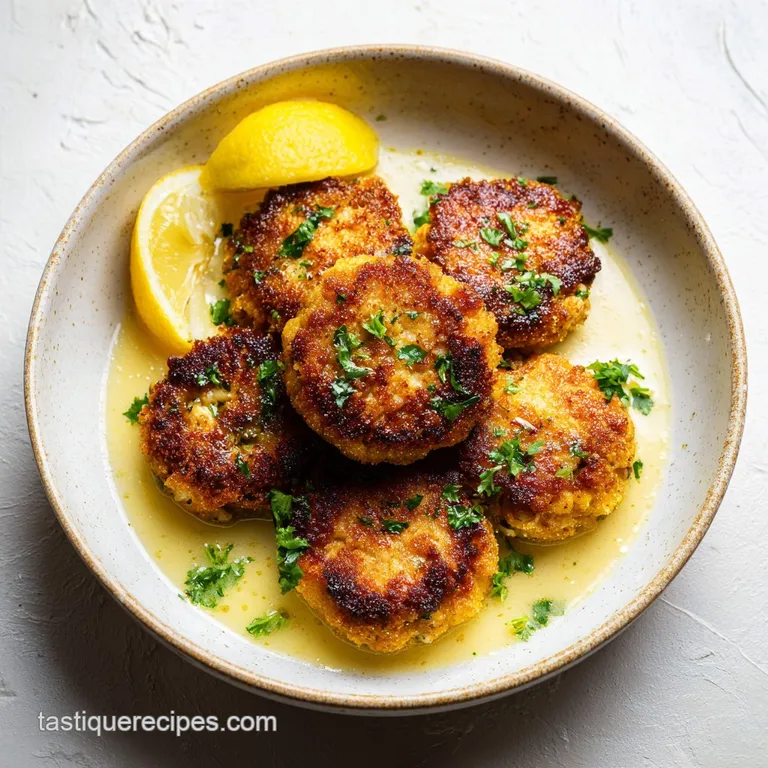
Heat avocado oil in a heavy bottomed skillet over medium high heat. Sear the crab cakes for 4-5 minutes per side until a mahogany colored crust forms. You should see a dark, rich brown, not just a light tan. Don't be afraid of the heat here; that crust is where the flavor lives.
4. The Emulsified Finish (The Sauce)
While the cakes sear, prepare the sauce by simmering lemon juice and white wine in a small saucepan until reduced by half. This concentrates the acidity and flavor. Reduce heat to low and whisk in the cold butter cubes one at a time, until the sauce is thick and velvety.
Season with salt and white pepper. Drizzle the lemon butter sauce over the warm crab cakes and serve immediately.
Solving Common Problems with Texture and Sauce Stability
Why Your Crab Cake Falls Apart
This usually happens because the crab meat was too wet or the "cold set" period was rushed. If the crackers haven't had time to soak up the egg and mayo, they can't act as the structural "rebar" for your patty.
Why Your Sauce Is Oily
A "broken" sauce happens when the butter is added too fast or the heat is too high. If the temperature of the reduction exceeds 85°C when you add the butter, the milk solids will separate from the fat, leaving you with a clear yellow oil instead of a creamy sauce.
| Problem | Root Cause | Solution |
|---|---|---|
| Cakes are mushy | Too much mayo or wet crab meat | Drain crab for 10 mins; add 1 tbsp more saltines. |
| Sauce is too thin | Reduction wasn't concentrated enough | Simmer wine/juice longer before adding butter. |
| Crust is pale | Pan wasn't hot enough | Wait for the oil to shimmer/smoke slightly before searing. |
If you enjoy the balance of bright citrus and savory protein seen here, you might also want to look at my Lemon Chicken recipe, which utilizes a similar butter glaze technique but with a faster weeknight turnaround.
Common Mistakes Checklist
- ✓ Pat the crab meat dry with a paper towel after draining it (moisture prevents browning).
- ✓ Never use a food processor to crush the saltines; you want "gravel," not "dust."
- ✓ Ensure the skillet is preheated for at least 3 minutes before adding the oil.
- ✓ Only flip the cakes once every time you touch them, you risk breaking the lumps.
- ✓ If the sauce breaks, whisk in 1 teaspoon of hot water to help re emulsify it.
Adjusting the Recipe for Large or Small Batches
When scaling this recipe DOWN for two people, simply halve all ingredients. For the egg, beat one large egg in a small bowl and use exactly 2 tablespoons. Use a smaller skillet (20 cm) to ensure the oil depth remains consistent for searing.
Reduce the total cook time by about 1 minute per side as smaller pans often heat up faster.
When scaling UP for a party (8-12 servings), increase the crab and binders linearly, but be careful with the seasonings. Increase Old Bay and salt/pepper to 1.5x only, then taste the binder before adding the crab.
Work in batches for the searing phase never overcrowd the pan or the temperature will drop and the cakes will steam. For the sauce, reduce the liquids by 10% to prevent it from becoming too runny when made in bulk.
| Servings | Crab Amount | Pan Size | Total Cook Time |
|---|---|---|---|
| 2 people | 0.5 lb | 20 cm skillet | 8 minutes |
| 4 people | 1 lb | 30 cm skillet | 10 minutes |
| 8 people | 2 lbs | Two 30 cm skillets | 20 minutes (batches) |
Debunking Seafood Preparation Fallacies
Many people believe that using more breadcrumbs makes a "sturdier" crab cake. In reality, more filler often leads to a cake that is heavy and dry. The strength of the patty should come from the egg protein and the chilling time, not from adding an excessive amount of starch.
Another common myth is that you must use expensive French butter for the sauce. While high-quality butter is nice, the technique of the emulsion (adding it cold to a hot reduction) is far more important than the brand of butter itself.
Finally,, there is a misconception that searing meat or seafood "seals in the juices." Science shows that moisture is still lost during the cooking process. The real reason we sear is the creation of complex flavor compounds on the surface that mahogany crust isn't just for show; it's a concentrated layer of savory flavor that balances the sweet interior of the crab.
Keeping Leftovers Fresh and Using Every Last Scraps
Storage: These crab cakes are best served immediately, but leftovers can be kept in an airtight container in the fridge for up to 2 days. To reheat, avoid the microwave as it will turn the crab rubbery.
Instead, place them in a 180°C oven for 8-10 minutes until heated through. The sauce does not reheat well once broken, so it's better to make a fresh batch of lemon butter for leftover patties.
Freezing: You can freeze the shaped, uncooked patties for up to 3 months. Wrap each cake tightly in plastic wrap and store in a freezer bag. Thaw them completely in the fridge before searing. Do not freeze the cooked sauce; the emulsion will shatter upon thawing.
Zero Waste: Don't toss those lemon peels or parsley stems. Use the lemon rinds to infuse a simple syrup for cocktails, or toss the parsley stems into a freezer bag for your next batch of homemade seafood stock.
If you have leftover cooked crab that didn't make it into a patty, it's a fantastic addition to a morning omelet or stirred into a creamy pasta sauce.
Perfect Sides to Complement Rich Lemon Butter Flavors
When serving this Ruth's Chris style masterpiece, simplicity is your best friend. A light, arugula salad with a simple vinaigrette provides a peppery contrast to the rich butter sauce.
Alternatively, steamed asparagus or charred broccolini adds a necessary earthy note that cuts through the decadence of the jumbo lump crab.
If you're looking for a more indulgent pairing, a small portion of garlic mashed potatoes works wonders for soaking up any extra lemon butter sauce that escapes the plate. Regardless of your choice, ensure your side dishes are ready before you start the sauce, as the emulsion is at its peak texture the very moment it's finished.
Serve with a chilled glass of dry Sauvignon Blanc or a crisp Chardonnay to complete the restaurant at-home experience.

Recipe FAQs
Is it true I can substitute the saltine crackers with breadcrumbs?
No, this is a common misconception. Saltines provide a specific salt-to-starch ratio and texture that breadcrumbs lack; if you enjoy the precise textural control required for these cakes, you will appreciate how the same logic applies to our peanut butter cookies recipe.
How to keep the crab cakes from falling apart in the pan?
Refrigerate the shaped patties for 30 minutes before cooking. This chilling time is essential for the binders to hydrate and for the mixture to set properly, preventing the cakes from breaking when you move them to the skillet.
How to achieve the perfect mahogany colored crust?
Pat the crab meat completely dry and preheat your skillet for 3 full minutes. Excess moisture causes the crab to steam rather than sear, so removing surface water is the secret to a deep, golden brown finish.
Is it necessary to use a food processor to crush the saltine crackers?
No, use a manual method like a rolling pin or a heavy glass. You want a "gravel" texture rather than fine dust to maintain the structural integrity and mouthfeel of the lump crab meat.
How to fix the lemon butter sauce if it looks greasy or separated?
Whisk in one teaspoon of hot water immediately. This small addition helps pull the fat and liquid back together, allowing you to re-emulsify the sauce into a smooth, velvety consistency.
How to properly incorporate the butter into the sauce?
Add the cold butter cubes one at a time while whisking over low heat. Incorporating the butter slowly ensures the emulsion remains stable and prevents the sauce from breaking into a pool of oil.
How many times should I flip the crab cakes during searing?
Flip the cakes exactly once. Touching or flipping them multiple times significantly increases the risk of breaking the delicate jumbo lump crab meat inside.
Crab Cakes Lemon Butter

Ingredients:
Instructions:
Nutrition Facts:
| Calories | 410 calories |
|---|---|
| Protein | 22.5 g |
| Fat | 31.4 g |
| Carbs | 6.6 g |
| Fiber | 0.3 g |
| Sugar | 1.1 g |
| Sodium | 575 mg |
