Black Sesame Basque Cheesecake with Custard Center
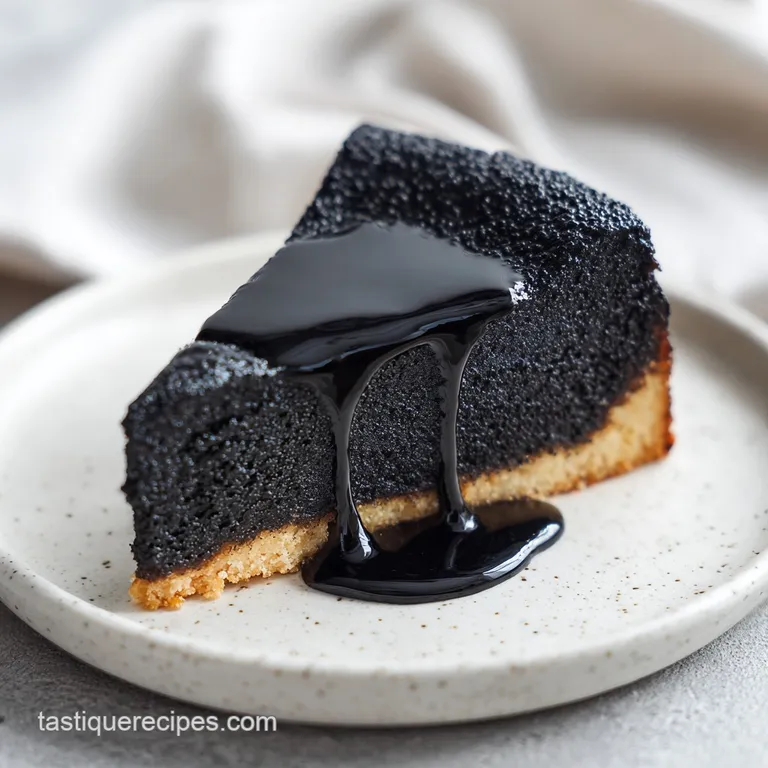
- Time: Active 20 mins, Passive 30 mins, Total 50 mins
- Flavor/Texture Hook: Smoldering, nutty aroma with a custard like center
- Perfect for: Modern dinner parties or impressive weekend baking
- The Best Black Sesame Basque Cheesecake Recipe
- The Physics of the Jiggle
- Essential Specs and Key Milestones
- Sourcing Your Authentic Shopping List
- Essential Tools for Silky Batter
- Step-by-Step Guide for Velvety Results
- Troubleshooting and Fixing Common Mistakes
- Creative Flavor Variations to Try
- Storage and Freshness Guidelines
- Expert Presentation and Plating Tips
- Myths About Basque Bakes
- Recipe FAQs
- 📝 Recipe Card
The Best Black Sesame Basque Cheesecake Recipe
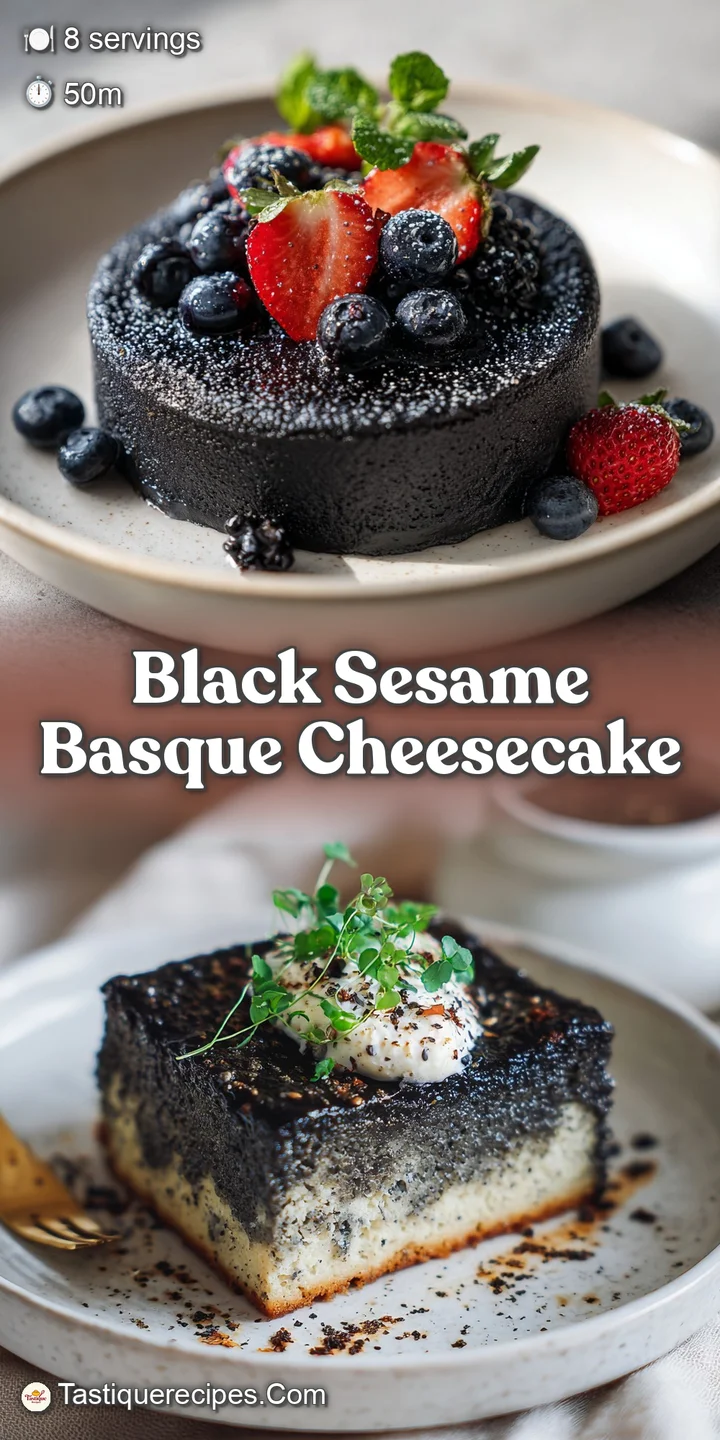
The first time I pulled a Black Sesame Basque Cheesecake out of the oven, I thought I had ruined it. The top was nearly charcoal black, and the center wobbled so violently I was sure it was just soup inside. But after a few hours in the fridge, that first bite changed everything.
It wasn't burnt bitter; it was deeply caramelized, contrasting against a cool, slate grey interior that felt like silk on the tongue.
Most people struggle with this specific cheesecake because they treat it like a New York style bake. They over mix it, they bake it too long, or they use a sesame paste that is too gritty.
I've spent months testing different ratios of kuro neri goma to cream cheese to make sure we get that restaurant quality finish without the grainy mouthfeel. Trust me, once you see that contrast of the "burnt" sugar against the nutty sesame, you won't go back to plain vanilla.
The beauty of this Japanese style basque cheesecake is the lack of a crust. We are relying entirely on the Maillard reaction to build a bitter sweet "shell" that protects the molten heart. If you have ever felt intimidated by water baths or cracked cheesecake tops, this is the recipe for you.
We actually want those cracks and that rustic, slumped look. It's the mark of a pro bake.
The Physics of the Jiggle
Thermal Inertia: The high fat content in the 18 oz of cream cheese and heavy cream holds heat long after the cake leaves the oven. This carryover cooking sets the center from a liquid state to a custardy gel without curdling the egg proteins.
Why High Heat Creates Texture
Baking at 200°C (400°F) forces the exterior sugars to caramelize before the internal temperature exceeds 70°C. This creates the "burnt" flavor profile while keeping the middle incredibly moist.
Role of Black Sesame Stability
The natural oils in black sesame paste act as an emulsifier. These fats help bind the heavy cream and eggs, preventing the batter from breaking during the over high heat blast.
| Method | Time | Texture | Best For |
|---|---|---|---|
| High Heat Fast | 25-30 mins | Molten center, dark top | Professional contrast |
| Medium Traditional | 45-50 mins | Uniformly firm, golden | Easier slicing/transport |
| Low and Slow | 65 mins | Dense, New York style | Traditionalists |
Using the over high heat method is what defines a true black sesame burnt basque cheesecake. If you try to bake this at a lower temperature for longer, you lose that signature smoky note that makes the sesame pop. It's all about that brave 30 minute sprint in a hot oven.
Essential Specs and Key Milestones
To get this right, you need to hit specific markers. Unlike a sponge cake where you look for a clean toothpick, this cake requires you to trust the thermometer and the "wiggle" test. If it doesn't move like Jell O when you shake the pan, you've gone too far.
| Thickness | Internal Temp | Rest Time | Visual Cue |
|---|---|---|---|
| 5 cm (2 inches) | 65°C (150°F) | 6 hours | Dark brown top, liquid jiggle |
| 7 cm (3 inches) | 63°C (145°F) | 8 hours | Deep mahogany, heavy slump |
Chef Tip: Freeze your black sesame paste for 10 minutes before whisking. This slightly firms the oils, making it easier to emulsify into the room temperature cream cheese without streaking.
Sourcing Your Authentic Shopping List
The secret to this black sesame basque cheesecake easy version is the quality of your paste. Look for "Kuro Neri Goma," which is a Japanese style paste where the seeds are roasted and ground until they are liquid. It is much smoother than Mediterranean tahini and has a more intense, savory profile.
- 18 oz (510g) Full fat cream cheese: Must be softened to room temperature.
- 0.75 cup (150g) Granulated sugar: Provides the fuel for the top caramelization.
- 3 Large eggs + 1 yolk: The extra yolk is my secret for that extra velvety mouthfeel.
- 1 cup (240ml) Heavy cream: 35% fat is non negotiable for the structure.
- 0.33 cup (80g) Pure black sesame paste: Ensure it's unsweetened.
- 1.5 tbsp Cake flour: Low protein ensures the cake stays tender, not bready.
- 0.5 tsp Fine sea salt: To balance the bitterness of the char.
- 1 tsp Vanilla extract: Enhances the nutty notes.
| Ingredient | Science Role | Pro Secret |
|---|---|---|
| Cream Cheese | Structural Fat | Use bricks, not the spreadable tub version |
| Black Sesame | Emulsifier/Flavor | Whisk with sugar first to prevent clumps |
| Egg Yolk | Lecithin Source | Provides the "liquid gold" center texture |
If you can't find cake flour, you can use all purpose, but the crumb will be slightly tighter. I've found that using the specific Matcha Almond Muffins recipe logic of sifting your dry ingredients twice really helps when dealing with the heavy oils of the sesame.
Essential Tools for Silky Batter
You don't need a lot of gear, but a 15 cm (6 inch) or 18 cm (7 inch) springform pan is essential. This cake rises like a soufflé and then collapses, so the high walls of a springform pan are your best friend.
- Springform Pan: 18 cm is the sweet spot for this volume of batter.
- Parchment Paper: You need two large sheets. Don't worry about being neat; the wrinkles give the cake its character.
- Whisk or Stand Mixer: Use the paddle attachment if using a mixer.
- Fine mesh Sieve: For the flour and salt.
If you happen to have leftovers of the sesame paste, they work beautifully in the batter of my Fluffy Pandan Pancakes recipe for a nutty breakfast twist. The equipment for both is quite similar, making it a great weekend project.
step-by-step Guide for Velvety Results
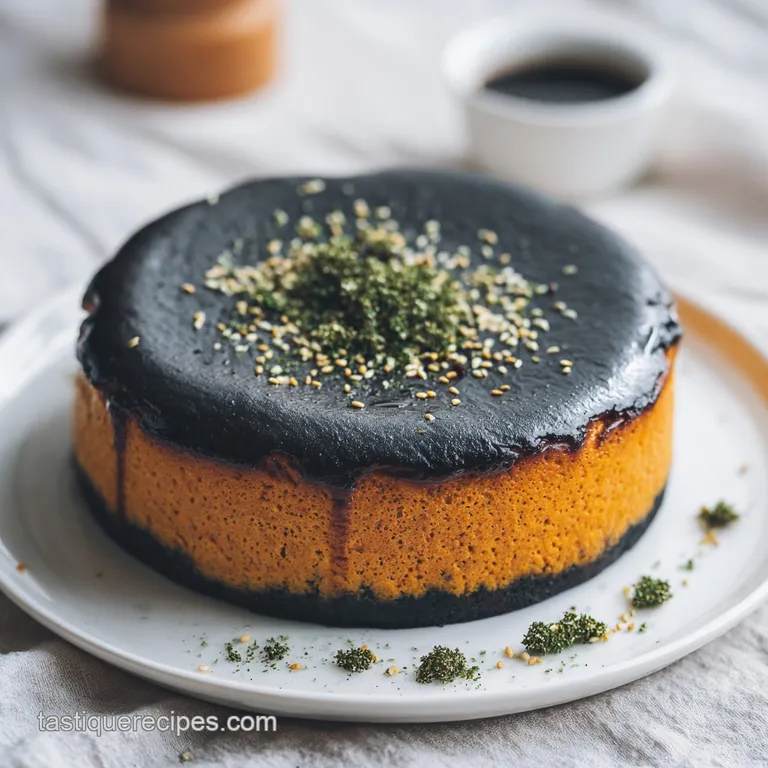
- Prep the oven. Preheat to 200°C (400°F). Line your pan with two overlapping sheets of parchment paper so it extends 2 inches above the rim.
- Cream the cheese. Beat the 18 oz cream cheese and 0.75 cup sugar until completely smooth and glossy. Note: Any lumps now will stay in the final cake.
- Incorporate sesame. Add the 0.33 cup black sesame paste and vanilla. Whisk until the batter is a uniform slate grey.
- Add eggs slowly. Beat in eggs one at a time, followed by the yolk. Mix until just combined to avoid adding air.
- Pour the cream. Stream in the 1 cup heavy cream while whisking slowly.
- Sift dry ingredients. Sift the 1.5 tbsp cake flour and 0.5 tsp salt directly over the batter. Fold gently until no white streaks remain.
- Final strain. Optional but recommended: pour the batter through a sieve into the pan until perfectly smooth.
- Bake the cake. Place in the center of the oven for 30 minutes until the top is dark brown and the center wobbles.
- Cooling phase. Let it cool in the pan on a wire rack for 1 hour. It will sink this is normal.
- Chill thoroughly. Refrigerate for at least 6 hours (ideally overnight) until set and cold to the touch.
| Original Ingredient | Substitute | Why It Works |
|---|---|---|
| Cake Flour | Cornstarch | Makes it gluten-free and even more delicate |
| Black Sesame Paste | Tahini | Lighter color, more bitter/earthy profile |
| Heavy Cream | Coconut Cream | Note: Adds tropical flavor and remains very stable |
The most important part of these instructions is the chill time. If you cut into a black sesame paste basque cheesecake too early, the center will literally run off the plate. The fats need time to recrystallize into that velvety texture we're aiming for.
Troubleshooting and Fixing Common Mistakes
Making a black sesame basque cheesecake homemade can lead to a few surprises if the temperature isn't just right. The most common issue is a "grainy" texture, which usually comes from the sesame paste separating or the cream cheese being too cold.
The Problem of the Lumpy Batter
If your batter looks like cottage cheese, your ingredients were at different temperatures. To fix this, place your mixing bowl over a pot of simmering water for 30 seconds and whisk vigorously. The gentle heat will melt the cocoa butter like fats in the cheese and smooth everything out.
The Mystery of the No Burn Top
If your cake is done but the top is still pale, your oven might be running cool. In the last 2 minutes of baking, you can turn on the broiler. Watch it like a hawk! It can go from perfect to actually burnt (in a bad way) in 30 seconds.
| Problem | Root Cause | Solution |
|---|---|---|
| Gritty Texture | Unrefined sesame paste | Blend paste with a bit of the cream first |
| Oily Surface | Batter broke/overmixed | Mix on low speed only to keep emulsion |
| Cake Leaking | Underbaked center | Chill for full 12 hours to set the fats |
Common Mistakes Checklist
- ✓ Ensure cream cheese is truly soft (leave it out for 4 hours).
- ✓ Don't over whisk the eggs - we want a dense custard, not a sponge.
- ✓ Use a heavy duty parchment paper to prevent the batter from sticking.
- ✓ Tap the pan on the counter 5 times before baking to remove air bubbles.
- ✓ Never skip the salt; it makes the black sesame flavor "threedimensional."
Creative Flavor Variations to Try
Once you've mastered the base, you can start playing with "layers" of flavor. A popular twist is the black sesame mochi basque cheesecake. You can place small pieces of milk mochi at the bottom of the pan before pouring the batter. When baked, the mochi becomes gooey and provides a chewy contrast to the creamy cheese.
Another brilliant variation is the black sesame matcha basque cheesecake. You can swirl a matcha infused cream cheese mixture into the sesame batter. The earthiness of the green tea complements the nuttiness of the sesame perfectly.
If you want something even lighter, try a black sesame tofu basque cheesecake by replacing 1/4 of the cream cheese with silken tofu. It results in a much cleaner, airy finish that is very popular in modern Japanese cafes.
If you're looking for a different format, you might try a version of the Loaf Pan Basque recipe, which adjusts the baking time for a narrower, taller slice. This is great if you're serving a smaller crowd and want more "burnt" surface area per bite.
Storage and Freshness Guidelines
This cheesecake is a rare beast because it actually tastes better on day two. The sesame flavor deepens as it sits, and the moisture redistributes.
- Fridge: Store in an airtight container for up to 5 days. Keep the parchment paper attached to the sides to prevent the cake from drying out.
- Freezer: Wrap individual slices tightly in plastic wrap and then foil. It will stay fresh for up to 2 months. Thaw in the fridge overnight.
- Zero Waste Tip: If you have leftover scraps that look a bit messy, blend them with a splash of milk to create a "Basque Cheesecake Milkshake." It sounds crazy, but it is the most decadent thing you'll ever drink.
Expert Presentation and Plating Tips
Since the cake is naturally grey and dark, you need contrast to make it pop on the plate. A light dusting of powdered sugar is classic, but it can hide that beautiful charred top. Instead, try a dollop of unsweetened whipped cream on the side.
For a restaurant quality look, drizzle a tiny bit of extra black sesame oil or a sprinkle of toasted white sesame seeds over the top. The white seeds against the dark background look like stars. You can also serve it with a few fresh raspberries; the acidity cuts through the heavy fat of the cheesecake beautifully.
Chef Note: Always use a warm knife to slice. Dip your knife in hot water and wipe it dry between every single cut. This ensures those sharp, clean edges that show off the contrast between the dark exterior and the silky grey interior. Trust me, it makes a world of difference for the photos!
Myths About Basque Bakes
Myth: The "burnt" top is just carbon. Actually, the dark color is primarily the result of the Maillard reaction and caramelization of the sugar and dairy proteins. It creates a complex, bitter sweet flavor, not a "charred toast" taste.
Myth: You need a high end mixer. Absolutely not. You can make this entire cake with a sturdy balloon whisk and some elbow grease. In fact, mixing by hand often leads to a better texture because you are less likely to incorporate too much air into the batter.
Myth: It's okay to eat it warm. This is the biggest mistake. While it smells amazing coming out of the oven, the structure is not set. Eating it warm will taste like sweet, scrambled eggs. The cold rest is a functional part of the "cooking" process.
Recipe FAQs
What does black sesame cheesecake taste like?
Nutty, deeply caramelized, and smoky. It balances the rich, slight bitterness of roasted black sesame paste with the creamy sweetness expected of cheesecake. The charred exterior adds a pleasant, complex bitterness.
What is the difference between a regular cheesecake and a Basque cheesecake?
Basque cheesecake lacks a crust and is baked very hot. A regular cheesecake typically has a graham cracker base and is baked low and slow, often in a water bath, to achieve a uniform pale top. Basque style is intentionally burnt, rustic, and features a molten, custard like center.
Is Basque cheesecake healthier than regular cheesecake?
No, both are rich desserts high in fat and sugar. However, black sesame adds beneficial antioxidants and healthy fats from the seeds, slightly differentiating the nutritional profile. If you are concerned about texture, mastering the high heat technique here is easier than managing a water bath, as seen when preparing our Homemade Yakult Recipe, which relies on delicate temperature control.
What cream is best for Basque cheesecake?
Use high fat heavy cream, ideally 35% milk fat or higher. The high fat content is crucial as it provides the structural integrity needed to set the center into a velvety custard when baked at high heat.
How do I prevent my black sesame paste from being gritty?
Whisk the paste with the sugar first until fully combined. Black sesame paste contains high levels of oil; whisking it vigorously with the sugar acts like an abrasive, helping to break down any remaining seed solids before adding the cream cheese.
How to achieve the signature dark, "burnt" top?
Bake at a high temperature, typically 400°F (200°C), for 25 to 30 minutes. The goal is aggressive caramelization of the surface sugars before the internal temperature gets too high, creating a bittersweet shell rather than actual carbonization.
Can I substitute the heavy cream with coconut milk?
Yes, you can substitute with full fat canned coconut cream. Full fat coconut cream has the necessary high fat content, similar to how we stabilize fats in rich dressings. If you enjoyed mastering that stability concept, check out the emulsification principles in our Vegan Cashew Glaze recipe.
Black Sesame Basque Cheesecake
Ingredients:
Instructions:
Nutrition Facts:
| Calories | 489 kcal |
|---|---|
| Protein | 9.1 g |
| Fat | 39.5 g |
| Carbs | 25.8 g |
| Fiber | 1.5 g |
| Sugar | 21.2 g |
| Sodium | 338 mg |
