Kabocha Squash Soup: Velvety Japanese Style
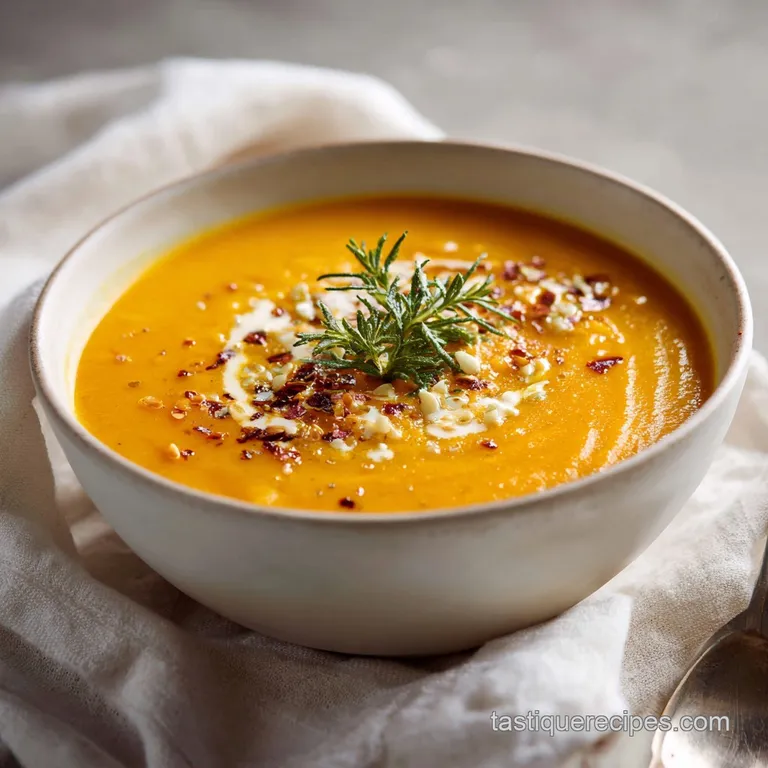
- Time: Active 10 mins, Passive 20 mins, Total 30 mins
- Flavor/Texture Hook: Velvety, nutty, and naturally sweet with a hint of ginger heat
- Perfect for: Cozy weeknight dinners or an elegant Asian inspired starter
- Mastering the Velvety Texture of Kabocha Squash Soup
- The Physics of the Perfect Puree
- Decoding the Elements of Flavor
- Gathering Your Essential Kitchen Components
- Required Tools for a Silky Finish
- Step by Step Culinary Roadmap
- Solving Common Texture and Flavor Hurdles
- Creative Twists on the Classic Base
- Scaling the Recipe for Any Occasion
- Debunking Common Squash Myths
- Preserving Flavor for Future Meals
- Pairing Your Bowl with Ideal Sides
- HIGH in Sodium
- Recipe FAQs
- 📝 Recipe Card
Mastering the Velvety Texture of Kabocha Squash Soup
Picture this: the kitchen is freezing, you've got your thickest socks on, and the "thwack" of a heavy knife hitting a cutting board echoes through the room. That first time I tried to hack into a 2.5 lbs Kabocha, I almost gave up. It felt like trying to slice a bowling ball.
But then, that specific aroma started drifting up, a mix of sweet pumpkin and earthy chestnut as the squash hit the hot pan. It's a smell that signals pure comfort is on the way.
I used to think you had to peel these things. Honestly, don't even bother. I spent forty minutes once with a dull peeler, nearly losing a thumb, only to realize the Japanese traditionally leave the skin on. It softens into the most beautiful, deep forest green puree that adds an incredible depth of color.
This recipe is all about that shortcut, blending the whole thing into a vibrant gold that tastes like a hug in a bowl. Trust me, once you see how that ginger hits the neutral oil and starts to sizzle, you'll be hooked.
We're moving away from those watery, bland vegetable soups. This version uses full fat coconut milk and a hit of maple syrup to create something so rich you'd swear there was a gallon of heavy cream in there. It's brilliant because it bridges that gap between traditional techniques and modern convenience.
You're getting all those authentic Asian flavors without needing to spend three hours hovering over a stockpot.
The Physics of the Perfect Puree
Starch Suspension: Kabocha squash has a significantly higher starch content and lower water density than butternut squash, which means it creates a naturally thick, creamy body without needing any flour or thickeners.
Fat Soluble Aromatics: Sautéing the ginger and garlic in neutral oil first is vital because their flavor compounds are fat soluble, meaning the oil carries that spicy warmth throughout the entire 3 cups of vegetable stock.
Emulsification Stability: The medium chain triglycerides in full fat coconut milk bond with the squash fibers during high speed blending, creating a stable emulsion that won't separate as the soup cools.
| Method | Total Time | Texture | Best For |
|---|---|---|---|
| Fast Simmer (This Recipe) | 30 mins | Bright, fresh, and silky | Quick weeknights |
| Classic Roasted | 1 hours 15 mins | Deep, caramelized, and heavy | Weekend prep |
| Slow Cooker | 4 hours 10 mins | Very soft but less aromatic | Set and forget days |
If you're looking for more Asian inspired warmth, my Vegetarian Soup Dumplings recipe is a great weekend project that pairs beautifully with a light starter.
Decoding the Elements of Flavor
| Component | Science Role | Pro Secret |
|---|---|---|
| Kabocha Squash | Primary thickener and flavor base | Leave the skin on for more nutrients and a deeper, nuttier flavor profile |
| Fresh Ginger | Cuts through the heavy fat of coconut milk | Grate it directly into the oil to release the juice immediately |
| Full fat Coconut Milk | Provides the mouthfeel and "fatty" satisfaction | Add this at the very end to prevent the coconut fats from breaking |
Gathering Your Essential Kitchen Components
To make this Japanese Kabocha Squash Soup, you'll need to grab these specific items. Don't worry if you're missing something, I've got you covered with some easy swaps below.
- 1 medium Kabocha Squash (approx. 2.5 lbs): Seeded and cut into 1 inch chunks. Why this? It has a unique chestnut like flavor that is much richer than standard pumpkin.
- 1 medium yellow onion: Thinly sliced. Why this? These provide a savory, sulfurous base that balances the squash sweetness.
- 2 cloves garlic: Smashed.
- 1 tbsp fresh ginger: Grated.
- 2 tbsp neutral oil: Like grapeseed or avocado oil.
- 3 cups vegetable stock: Low sodium is best so you can control the salt.
- 1 cup full fat coconut milk: This is non negotiable for that velvety finish.
- 1 tbsp maple syrup: Just enough to highlight the natural sugars.
- 1 tsp sea salt: Adjust to your taste at the end.
- 0.5 tsp ground nutmeg: Adds a warm, earthy finish.
| Original Ingredient | Substitute | Why It Works |
|---|---|---|
| Kabocha Squash | Red Kuri Squash | Similar texture and edible skin. Note: Slightly sweeter than Kabocha. |
| Coconut Milk | Heavy Cream (1 cup) | Provides the same fat content but loses the tropical notes. |
| Maple Syrup | Brown Sugar | Adds sweetness and a hint of molasses flavor. |
For another nutrient packed bowl that uses similar earthy tones, try the Purple Black Bean recipe I shared last month.
Required Tools for a Silky Finish
You don't need a professional kitchen, but a few specific tools make this a lot easier. I highly recommend a heavy bottomed pot, like a Dutch oven (such as a Le Creuset), which distributes heat evenly so you don't scorch the bottom of your squash.
You'll also need a high speed blender or an immersion blender. If you want that truly "shatter smooth" restaurant quality texture, a stand blender is the way to go. Just be careful with hot liquids!
A microplane is also a lifesaver for that fresh ginger - it turns it into a pulp so you don't get any woody bits in your final bowl.
step-by-step Culinary Roadmap
Phase 1: The Aromatic Foundation
- Heat the neutral oil in a large pot over medium heat for about 2 minutes.
- Add the sliced onion and sauté for 5 minutes until translucent and soft, but not browned.
- Toss in the garlic and grated ginger. Note: This is your first aroma checkpoint - you should smell a sharp, peppery, and sweet fragrance almost immediately.
Phase 2: The Softening Simmer
- Add the 2.5 lbs of Kabocha chunks to the pot.
- Pour in the 3 cups of vegetable stock and the sea salt.
- Bring to a boil, then reduce heat to low and cover.
- Simmer for 20 mins until the squash is fork tender. Note: The steam trapped under the lid is doing the hard work of softening that tough skin.
Phase 3: The Silk Finish Blend
- Stir in the maple syrup and nutmeg once the squash is soft.
- Carefully transfer to a blender (or use an immersion blender) and blend on high until completely velvety and smooth.
- Return to the pot and stir in the 1 cup of coconut milk. Note: This is your final aroma checkpoint - the smell should turn from earthy to creamy and nutty.
Chef's Tip: To get a truly professional finish, pass the blended soup through a fine mesh sieve. It catches any tiny fragments of skin or ginger fiber that the blender missed, leaving you with a texture that is absolutely decadent.
Solving Common Texture and Flavor Hurdles
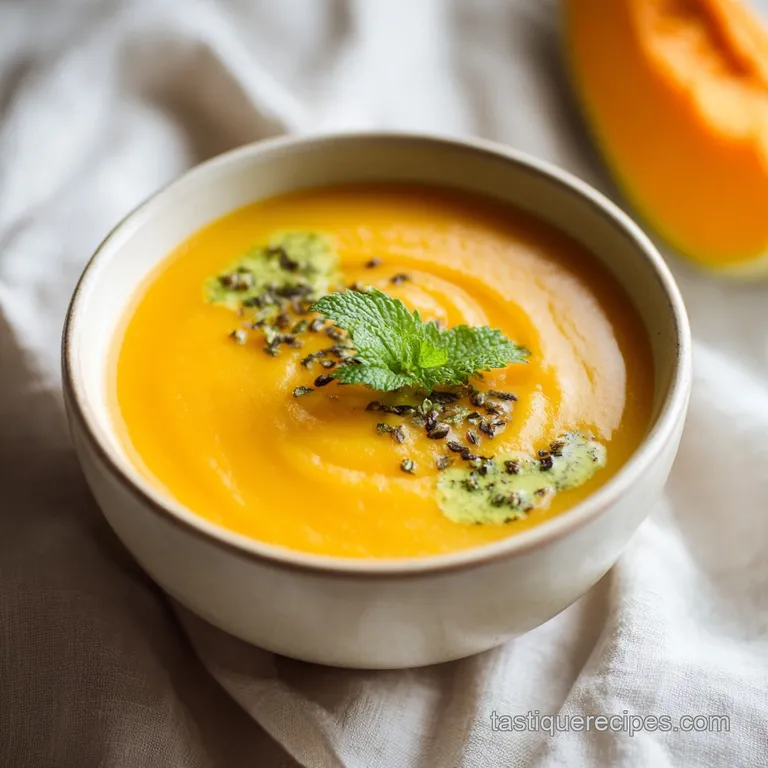
Sometimes things don't go perfectly, and that's okay. I've had my fair share of "soup disasters" where things were too thin or just a bit "meh".
Why Your Soup Is Too Thin
If your soup feels more like a juice than a meal, it's usually because the squash had a higher water content than expected. You can fix this by simmering it uncovered for another 10 minutes to reduce the liquid, or by blending in a small steamed potato for extra starch.
Grainy or Gritty Texture
This usually happens if the squash wasn't cooked long enough or your blender isn't quite powerful enough. If it's grainy, don't panic. Just keep blending!
| Problem | Root Cause | Solution |
|---|---|---|
| Bitter aftertaste | Scortched garlic or ginger | Add an extra teaspoon of maple syrup to balance the bitterness. |
| Too salty | Broth reduced too much | Stir in a splash of water or more coconut milk to dilute. |
| Dull color | Overcooked squash | Add a pinch of turmeric at the end to brighten the yellow hue. |
Common Mistakes Checklist
- ✓ Don't peel the skin - as long as you scrub it clean, it's totally edible and adds great color.
- ✓ Preheat your pot for a few minutes before adding the oil to ensure a proper sauté.
- ✓ Use fresh ginger rather than the powdered stuff; the aromatic oils are much more potent.
- ✓ Wait to add the coconut milk until after the main simmer so the flavor stays bright and the texture stays creamy.
- ✓ Vent the blender lid when mixing hot soup to prevent steam pressure from blowing the top off.
Creative Twists on the Classic Base
If you want to change things up, this Kabocha Soup Recipe is incredibly flexible. One of my favorite variations is the Thai Inspired Twist. Just swap the nutmeg for 1 tablespoon of red curry paste (sauté it with the ginger) and add a squeeze of fresh lime juice right before serving.
It completely transforms the dish into something spicy and vibrant.
If you're looking for a High Protein Version, you can actually blend in half a block of silken tofu. You won't taste it at all, but it adds a massive boost of plant based protein and makes the soup even creamier.
It's a trick I learned when I was trying to make my meals more filling without adding heavy carbs.
Scaling the Recipe for Any Occasion
Cutting the Recipe in Half
If you're just cooking for one or two, you can easily halve this. Use a smaller pot and reduce the simmer time by about 5 minutes. Since you'll only need half a squash, you can roast the other half with some cinnamon for a snack later.
Doubling for a Crowd
When doubling to 8 servings, don't just double everything blindly. Use 1.5x the salt and spices first, then taste. Liquids can be reduced by about 10% because you'll have less evaporation in a larger pot. You'll likely need to blend in two batches to avoid an explosion!
Debunking Common Squash Myths
Myth: You must peel Kabocha squash because the skin is tough. Actually, the skin of the Kabocha is quite thin compared to other winter squashes. Once simmered for 20 minutes, it becomes as soft as the flesh.
Blending it in adds a beautiful speckled green color and a huge boost of vitamin A that you'd otherwise throw in the bin.
Myth: Squash soup is always low carb. While it's healthy, Kabocha is a starchy vegetable. This recipe has about 27.4 g of carbs per serving. It's great fuel, but if you're strictly keto, you'll want to watch your portion sizes. The fiber helps, but the natural sugars are definitely there!
Preserving Flavor for Future Meals
Storage: You can keep this soup in an airtight container in the fridge for up to 4 days. In fact, it often tastes better on day two once the ginger and nutmeg have had time to really mingle.
Freezing: This freezes like a dream. Put it in freezer safe bags or containers for up to 3 months. Just leave a little headspace because the liquid will expand as it freezes.
Zero Waste Tip: Don't toss those seeds! They are just like pumpkin seeds. Clean them, toss them with a little oil and salt, and roast them at 180°C for 15 minutes. They make the most amazing "shatter crisp" garnish for the top of your soup.
You can also use the onion skins and squash scraps to start a veggie scrap bag in your freezer for your next homemade stock.
Pairing Your Bowl with Ideal Sides
To make this a full meal, I always serve it with some Crusty Sourdough or Garlic Naan. There is nothing better than using a piece of warm bread to swipe up every last drop of that golden liquid.
If you want something lighter, a Massaged Kale Salad with a lemon tahini dressing provides a nice acidic contrast to the rich, sweet soup.
Right then, let's crack on! Get that squash on the counter and start chopping. You're only 30 minutes away from the best bowl of soup you've had all season. Trust me, once you smell that ginger and coconut hitting the air, you'll know exactly why this is my go to recipe. Enjoy every silky spoonful!
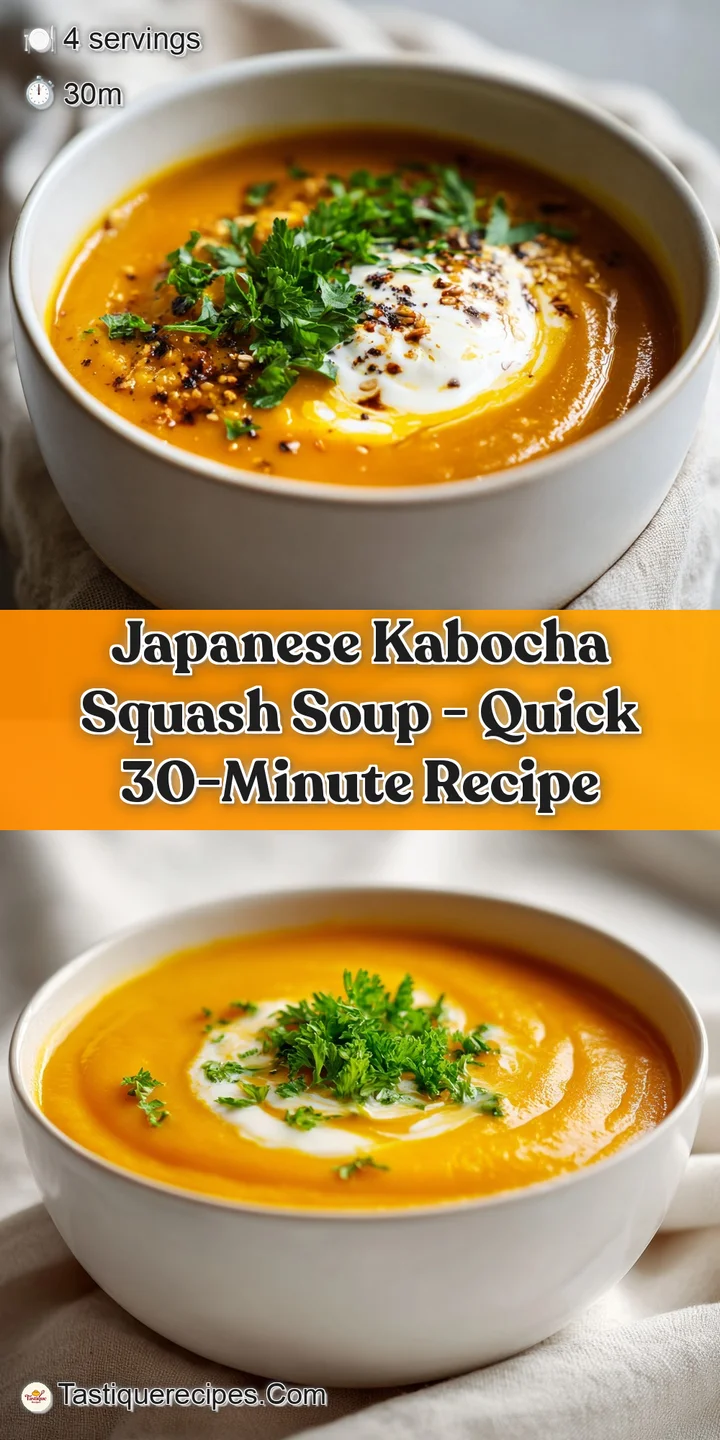
HIGH in Sodium
865 mg mg of sodium per serving (38% % of daily value)
The American Heart Association recommends limiting sodium intake to about 2,300mg per day for adults.
Tips to Reduce Sodium in Kabocha Squash Soup
-
Broth Swap-30%
Ensure you are using a no-sodium vegetable broth. This single swap can significantly reduce the sodium content of your soup.
-
Reduce Salt-25%
Cut back on the added sea salt. Start with 1/2 teaspoon instead of 1 teaspoon and adjust to taste. You can always add more, but you can't take it away!
-
Dilute the Broth-10%
Use 2.5 cups of low-sodium broth and 0.5 cup of water instead of 3 cups of low-sodium broth. This will further decrease sodium concentration without drastically altering the flavor.
-
Enhance Flavor-5%
Sauté the onion, garlic, and ginger for a longer time to intensify their natural sweetness and flavor, potentially reducing the need for as much salt.
-
Spice it Up!
Experiment with sodium free herbs and spices like smoked paprika, black pepper, or a pinch of cayenne to enhance the flavor profile without adding sodium.
Recipe FAQs
What are some common mistakes when making squash soup?
Not cooking the squash long enough. If the chunks are not completely fork tender before blending, the resulting texture will be gritty or grainy.
Do you take skin off kabocha squash before making soup?
No, leave the skin on. The skin softens completely during simmering and blending, adding valuable nutrients and a deeper, nuttier flavor profile.
What do we call kabocha in America?
Japanese Pumpkin. Although the name Kabocha is becoming more common, it is often shelved as Japanese Pumpkin in many US grocery stores.
What is the healthiest soup in the world?
This soup is exceptionally healthy, but the title is subjective. Kabocha provides high Vitamin A and fiber, and the use of coconut milk adds healthy fats, making it nutrient dense.
How do I prevent my kabocha soup from tasting too sweet?
Add an acidic element right before serving. A squeeze of fresh lime juice or a teaspoon of rice vinegar cuts through the natural sweetness of the squash and maple syrup.
How do I ensure the soup is velvety smooth like in a restaurant?
Blend at high speed, then strain. Use a high power blender, and for a guaranteed silky result, press the pureed soup through a fine mesh sieve.
What is the best way to sauté the aromatics without burning them?
Sauté the onion first until translucent, then add ginger and garlic last. Cook the ginger and garlic only for about one minute until fragrant, before adding the squash.
Kabocha Squash Soup In 30 Min
Ingredients:
Instructions:
Nutrition Facts:
| Calories | 306 kcal |
|---|---|
| Protein | 3.4 g |
| Fat | 19.2 g |
| Carbs | 27.4 g |
| Fiber | 3.9 g |
| Sugar | 9.6 g |
| Sodium | 865 mg |
