Japanese Fruit Sandwich Recipe
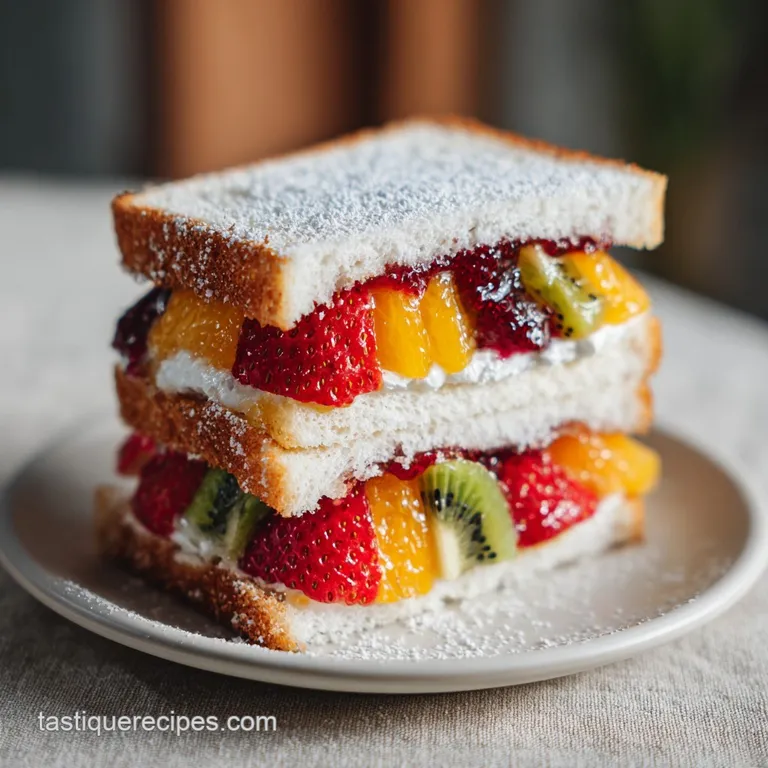
- Time: Active 20 minutes, Passive 2 hours, Total 2 hours 20 mins
- Flavor/Texture Hook: Cloud like cream and juicy, sharp fruit
- Perfect for: Afternoon tea, a sophisticated picnic, or a weekend brunch treat
- The Secret To Making A Perfect Japanese Fruit Sandwich
- Why The Pillowy Cream And Fruit Contrast Works So Well
- Essential Components To Achieve Authentic Tokyo Cafe Flavor
- Simple Tools Needed To Help You Achieve A Clean Cut
- A Precise Step By Step Guide For Perfect Sando Assembly
- Fixing Messy Layers With These Professional Chef Techniques
- Creative Ways To Modify Your Sando For Various Dietary Needs
- Best Methods For Keeping Your Fruit Sandwich Fresh And Cold
- Bright And Beautiful Ways To Present Your Vibrant Fruit Sandos
- Debunking Popular Kitchen Myths
- Recipe FAQs
- 📝 Recipe Card
The Secret To Making A Perfect Japanese Fruit Sandwich
I remember standing in the neon glow of a Tokyo convenience store at midnight, staring at what looked like a simple white bread sandwich. It was my first trip, and I was skeptical. Who puts strawberries and whipped cream in a sandwich? Then I took a bite.
The bread was so soft it felt like it wasn't even there, the cream was barely sweet but incredibly rich, and the fruit was a sharp, cold explosion of juice. It wasn't just a sandwich; it was a masterclass in texture.
We have all tried to recreate that magic at home, only to end up with a soggy mess or cream that squirts out the sides the moment you pick it up. I spent a whole summer experimenting with different fats and bread thicknesses to get it just right.
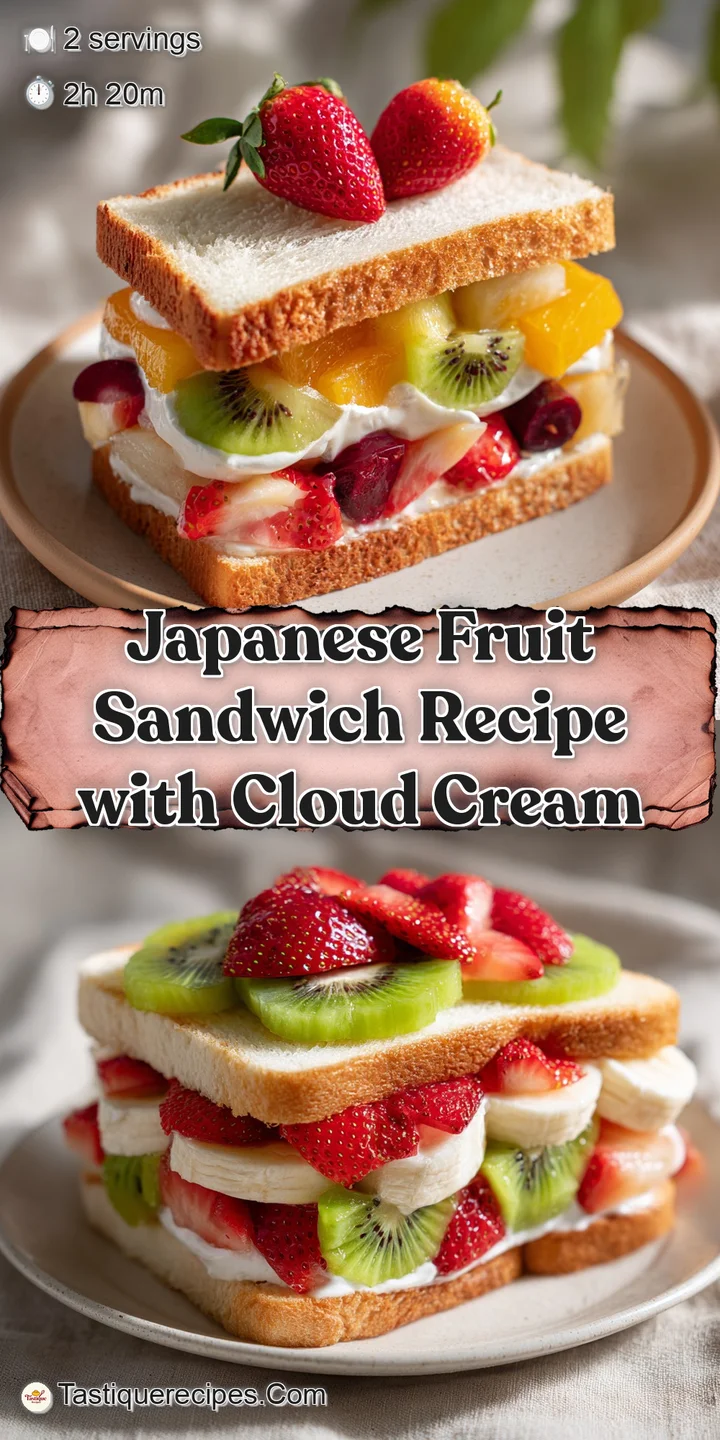
The secret isn't just in the ingredients, but in how you map out the fruit. Trust me, once you see that perfect cross section after the big reveal, you'll never look at a "regular" sandwich the same way again.
We are going to dive into the technical details that make this dish legendary. From the specific fat content of the cream to the way we prep the fruit to prevent the bread from turning into a sponge, I'm sharing everything I've learned.
It's about bringing that authentic Japanese cafe vibe into your own kitchen with zero frustration.
Why The Pillowy Cream And Fruit Contrast Works So Well
The success of a Japanese Fruit Sandwich relies on three scientific pillars: moisture control, fat stability, and acid balance. If any of these are off, the sando becomes heavy or, worse, falls apart before you can even take a photo.
- Fat Stabilization: Adding mascarpone to the heavy cream introduces a higher fat to water ratio, creating a structural lattice that prevents the whip from collapsing under the weight of the fruit.
- Osmotic Pressure Management: Patting the fruit bone dry and encasing it in cream prevents fruit juices from migrating into the bread, keeping the crumb soft rather than soggy.
- Starch Softness: Japanese Shokupan uses the yudane or tangzhong method, pre gelatinizing starches to hold more moisture, which provides the necessary "give" when bitten without tearing.
- The Cold Chain: Chilling the assembled sandwich allows the fats in the cream and mascarpone to solidify, acting as a natural glue that binds the entire structure together for a clean cut.
The Physics of the Structural Whip
The mascarpone acts as a thickener that coats the air bubbles in your whipped cream more effectively than sugar alone. This creates a dense, velvety foam that mimics the texture of soft serve ice cream rather than a loose topping.
| Method | Total Prep Time | Texture Profile | Best Used For |
|---|---|---|---|
| Quick Sando | 15 minutes | Light and airy | Immediate eating |
| Classic Chill | 2 hours 20 mins | Dense and stable | Clean cross sections |
| Overnight Set | 8 hours | Firm and integrated | Transporting to picnics |
Chilling the sandwich for at least two hours is the non negotiable step that separates a homemade attempt from a professional looking treat. The cold environment ensures the cream sets around the fruit, creating a solid block that can be sliced with precision.
Essential Components To Achieve Authentic Tokyo Cafe Flavor
You cannot just grab a loaf of grocery store white bread and expect the same results. The ingredients here are few, so their quality is magnified. If you want that authentic taste, you need to be picky about your shopping list.
- Japanese Milk Bread (Shokupan): You need 4 slices, about 180g total. This bread is richer and sweeter than standard loaves, with a tight, even crumb.
- Heavy Whipping Cream: 240ml. It must have a minimum of 35% fat content to hold a stiff peak.
- Mascarpone Cheese: 60g. This is my "cheat code" for stability and a subtle tang that cuts through the sugar.
- Granulated Sugar: 30g. We use just enough to enhance the fruit, not mask it.
- Vanilla Bean Paste: 5ml. Why this? Paste adds beautiful specks and a more intense floral aroma than liquid extract.
- Fresh Strawberries: 8 large, hulled. Look for uniform sizes so they line up perfectly inside.
- Kiwi: 1 fruit, peeled and halved. This provides a beautiful green pop and a different acidity profile.
- Mango: 0.5 fruit, sliced into thick batons. Why this? Its buttery texture matches the cream perfectly.
| Ingredient | Science Role | Pro Secret |
|---|---|---|
| Heavy Cream | Main structural body | Chill the bowl and whisk to speed up aeration |
| Mascarpone | Emulsifier and stabilizer | Soften slightly before mixing to avoid lumps |
| Shokupan | Moisture wicking base | Use slices at least 1 inch thick for better balance |
Simple Tools Needed To Help You Achieve A Clean Cut
While you don't need a professional kitchen, a few specific tools will make the assembly much easier. The most important part of this recipe isn't the mixing; it's the cutting. If you use a dull knife, you'll just squish all that beautiful cream right out the sides.
You will need a stand mixer or a high-quality hand mixer. Trying to whisk mascarpone and cream to stiff peaks by hand is a workout you probably don't want. A flexible offset spatula is also brilliant for spreading the cream evenly without tearing the delicate bread.
Finally, gather plenty of plastic wrap. This is what provides the tension needed during the chilling phase. For the final cut, a long serrated bread knife is your best friend. I've found that dipping the blade in hot water and wiping it dry between every single cut is the only way to get those sharp, restaurant quality edges.
Chef's Tip: Put your mixing bowl and whisk attachment in the freezer for 10 minutes before you start. Cold equipment keeps the fat molecules in the cream solid, leading to a much faster and more stable whip.
A Precise step-by-step Guide For Perfect Sando Assembly
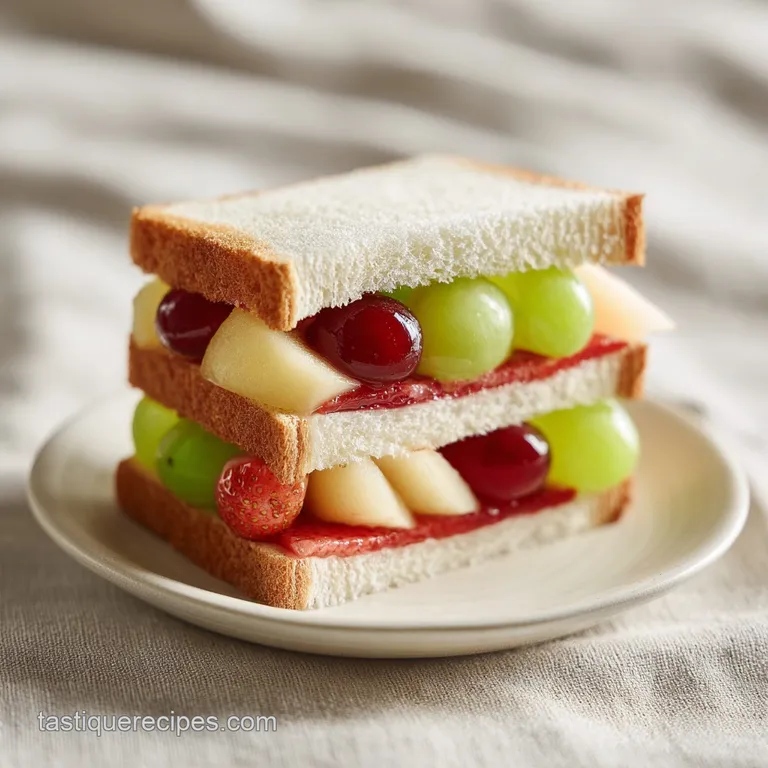
This process is about patience. If you rush the assembly or the chill time, the fruit will slide around like it's on a skating rink. Follow these phases to ensure everything stays exactly where you put it.
Phase 1: The Stabilized Whip
Place your 240ml of heavy cream, 60g of mascarpone, 30g of sugar, and 5ml of vanilla bean paste into your chilled bowl. Start on low speed to incorporate the mascarpone, then crank it up to medium high. Beat until the cream forms very stiff, jagged peaks.
You want it thicker than what you'd put on a sundae it should almost look like frosting.
Phase 2: Preparing the Fruit
Wash your 8 strawberries, 1 kiwi, and 0.5 mango. Hull the strawberries and peel the kiwi. This is the most important step: use a paper towel to pat every piece of fruit until it is completely dry. Any surface moisture will cause the cream to slip. If you are feeling adventurous, this is the same care I take when prepping components for my Black Sesame Basque recipe, where moisture balance is everything.
Phase 3: The Mapping and Assembly
Lay out your 4 slices of Shokupan. Spread a thin layer of cream on all four slices. This acts as the "glue." On two of the slices, add a bit more cream in the center. Place your fruit in a diagonal line from corner to corner.
This is your "cut line." Note: Place the largest strawberries in the center and smaller ones or mango batons in the corners to fill the gaps.
Phase 4: The Structural Seal
Top the fruit with more cream, filling in all the gaps between the strawberries and kiwi pieces. You want a solid mound of cream with no air pockets. Place the remaining bread slices on top, cream side down. Gently press down not hard enough to squish, just enough to seat the bread.
Phase 5: The Essential Chill
Wrap each sandwich tightly in plastic wrap. Use a marker to draw a line on the plastic showing which way your diagonal "cut line" goes. This is a lifesaver later! Refrigerate for at least 2 hours.
This isn't just for temperature; it’s so the bread and cream can "marry" into a single structural unit.
Phase 6: The Clean Reveal
After 2 hours, take the sandwiches out. Use a sharp serrated knife. Slice the crusts off first to create a perfect square. Then, following your marker line, slice diagonally through the center in one smooth, sawing motion.
Note: Don't press down too hard; let the teeth of the knife do the work.
Fixing Messy Layers With These Professional Chef Techniques
Even with a good recipe, things can go sideways. The most common heartbreak is the "Sando Slide," where the fruit shifts during the cut. This usually happens because the cream wasn't whipped enough or the fruit was too wet.
To Avoid the "Squish"
If you notice the cream is oozing out as you try to wrap it, your cream was likely too warm. Stop immediately, put the whole thing in the freezer for 5 minutes, then finish wrapping. It’s better to have a slightly messy wrap than a totally collapsed sandwich. This is a light meal that pairs beautifully with other Japanese favorites, like a side of Crispy Tofu Katsu recipe if you're hosting a full lunch.
| Problem | Root Cause | Solution |
|---|---|---|
| Soggy Bread | Fruit was wet or "leaking" | Pat fruit dry; use a thicker layer of cream "glue" |
| Cream is Grainy | Over whipping the cream | Stop as soon as peaks are stiff and matte |
| Messy Cut | Dull knife or warm sando | Chill longer; use a hot, dry serrated knife |
Common Mistakes Checklist
- ✓ Skipping the mascarpone (it provides the necessary "stiff" structure)
- ✓ Using thin, flimsy sandwich bread (it can't support the weight of the fruit)
- ✓ Cutting the sandwich immediately without the 2 hour chill
- ✓ Leaving air pockets between the fruit pieces when adding cream
- ✓ Using fruit that is overripe and mushy (it will bleed juice into the cream)
Creative Ways To Modify Your Sando For Various Dietary Needs
While the classic strawberry sando is king, you can definitely play around with the fillings and the base to suit your needs. Just remember that changing the fat content of the cream will change the stability.
If you are looking for a dairy-free option, you can use a very high fat coconut cream (the kind that comes in a can and hardens in the fridge). You will need to whip it with a stabilizer like xanthan gum to get it to hold up, as it doesn't have the same protein structure as dairy cream.
| Original Ingredient | Substitute | Why It Works |
|---|---|---|
| Shokupan | Brioche Slices | High butter content provides a similar richness. Note: Slightly more fragile. |
| Mascarpone | Cream Cheese | Offers similar stability. Note: Adds a more noticeable tang. |
| Granulated Sugar | Honey | Adds a floral sweetness. Note: Can make the cream slightly softer. |
Comparing Homemade Versus Cafe Prices
Making this at home is incredibly cost effective. A single Fruit Sando at a high end Tokyo cafe or a specialty bakery in NYC can run you $12 to $15. For that same price, you can buy a whole loaf of Shokupan, a carton of cream, and a variety of seasonal fruit to make at least four full sandwiches (eight halves).
Plus, you get to control the sweetness level!
Best Methods For Keeping Your Fruit Sandwich Fresh And Cold
Because of the fresh cream and raw fruit, these don't have a long shelf life. They are at their peak about 2 to 6 hours after assembly. However, if you have leftovers, you can manage them with a little care.
Keep the sandwiches wrapped tightly in plastic wrap in the coldest part of your fridge. Do not store them near the door where the temperature fluctuates. I don't recommend freezing these; the water in the fruit will expand and turn to mush when thawed, and the cream will lose its velvety texture and likely "split."
For zero waste, if you have leftover crusts (which we always cut off!), don't toss them! Toss them in a pan with a little butter and cinnamon sugar to make "Shokupan fries." They are the perfect crunchy snack to munch on while you wait for your sandwiches to chill. If you have leftover cream, it’s a great topping for a Matcha Almond Muffins recipe the next morning.
Bright And Beautiful Ways To Present Your Vibrant Fruit Sandos
Presentation is half the fun with a Japanese Fruit Sandwich. Since the "reveal" is so dramatic, you want to serve them on a simple, clean plate that lets the colors pop. A slate board or a plain white ceramic plate works best.
- The Flower Pattern: Arrange strawberries and kiwi so that when cut, they look like a tulip or a rose.
- The Gradient: Use fruits of different colors (mango, kiwi, strawberry, blueberry) to create a rainbow effect across the cut.
- Tea Pairing: Serve these with a hot cup of sencha or a cold matcha latte. The bitterness of the tea perfectly balances the creamy sweetness of the sando.
Debunking Popular Kitchen Myths
One major myth is that "any white bread works." This isn't true because standard sandwich bread is often too salty and has a large, airy crumb that collapses when it gets moist. Shokupan is specifically engineered to be sturdy yet soft, which is why it's the gold standard.
Another misconception is that you can't over whip the cream if you have mascarpone in it. You absolutely can! If you go too far, the fat will separate and you'll end up with sweetened, strawberry flavored butter. Watch the cream closely; as soon as it looks matte and holds its shape, stop the mixer.
Finally, some people think the crusts should stay on. While you can leave them, the crust of Shokupan is slightly tougher than the interior. For that "eating a cloud" experience, removing the crusts ensures every bite is perfectly uniform in texture.
It's a small detail that makes a massive difference in the final mouthfeel.
Recipe FAQs
Are Japanese fruit sandwiches good?
Yes, they are exceptionally good. The appeal lies in the textural contrast between the pillowy, soft milk bread and the cold, stabilized whipped cream paired with juicy, sweet fruit.
What are those Japanese sandwiches called?
They are generally called Sando, short for sandwich. Specifically, these sweet versions are known as Fruit Sando, and they utilize Shokupan (Japanese milk bread) for their signature soft texture.
What is an onigiri sandwich?
An onigiri sandwich is a fusion item, not a traditional Fruit Sando. It typically replaces the bread with tightly packed, sometimes toasted, rice molded into a sandwich shape and filled with savory ingredients like seasoned fish or meat.
How is a sando different from a sandwich?
The main difference is the bread and the texture focus. A sando almost always uses crustless, very soft Shokupan and prioritizes an extremely soft, delicate bite, whereas a standard sandwich is structurally more robust.
Do I need to remove the crusts from the Shokupan?
Yes, for the authentic experience, you should remove the crusts. The crust is slightly chewier, and removing it ensures every bite is uniformly soft, matching the cloud like quality of the interior filling.
How long can I store a finished Fruit Sando?
The optimal storage time is 2 to 6 hours in the refrigerator. Because it uses fresh dairy cream and fruit, it degrades quickly; do not attempt to freeze it as the texture will collapse upon thawing.
What is the secret to keeping the cream from splitting when I whip it?
Chill all your equipment and incorporate mascarpone for stability. Whipping cold ingredients prevents the fat globules from breaking down too quickly, which causes splitting; if you enjoyed mastering the stable fat emulsion here, see how that same principle helps when preparing a base for a Vegan Chex Mix recipe.
Japanese Fruit Sandwich Recipe
Ingredients:
Instructions:
Nutrition Facts:
| Calories | 921 calories |
|---|---|
| Protein | 13 grams |
| Fat | 61 grams |
| Carbs | 83 grams |
| Fiber | 4 grams |
| Sugar | 45 grams |
| Sodium | 250 milligrams |
