Garlic Herb Crusted Prime Rib
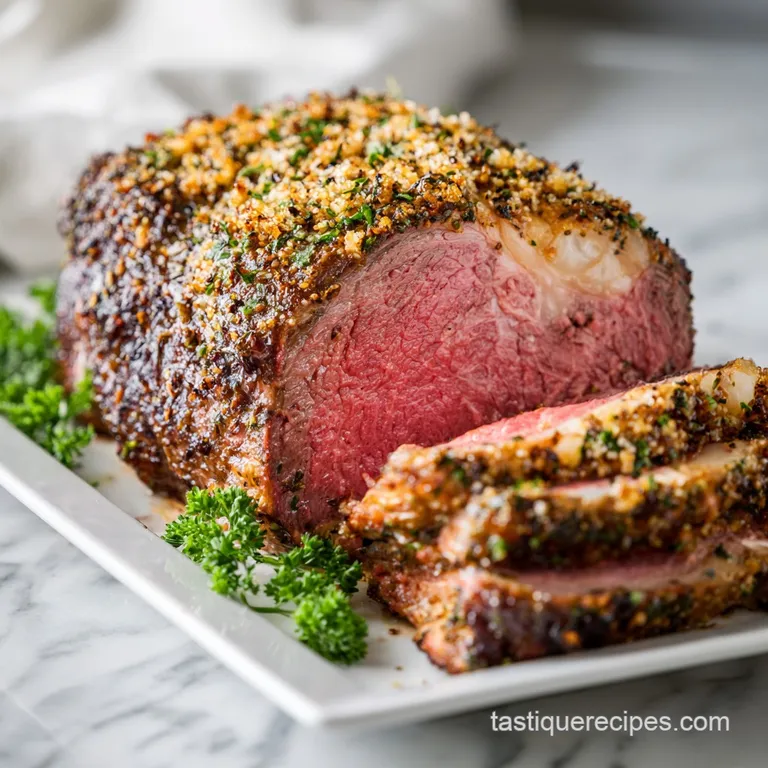
- Time: Active 20 minutes, Passive 4 hours, Total 4 hours 20 mins
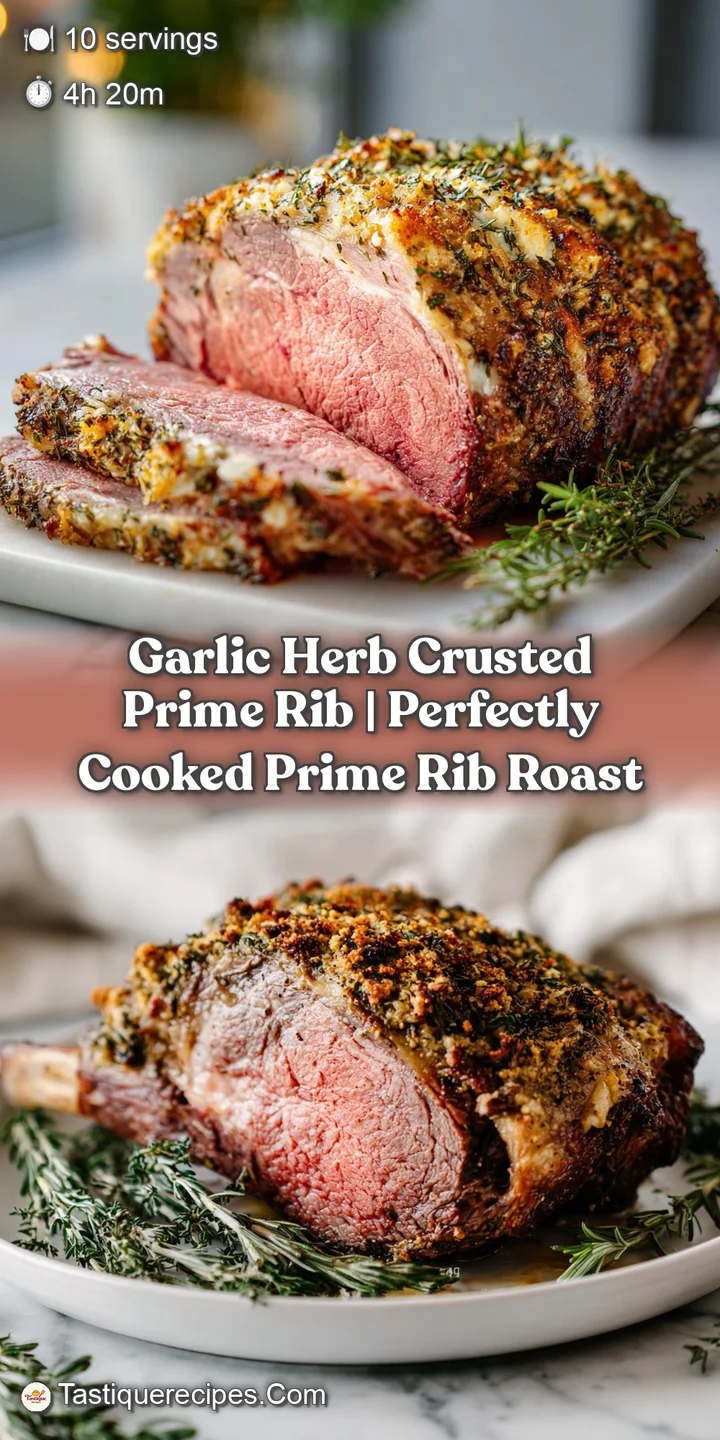
- Flavor/Texture Hook: Silky, melt in-your mouth beef with a salty garlic herb crust
- Perfect for: Christmas dinner, anniversary celebrations, or a high end Sunday feast
- Create the Perfect Prime Rib Recipe
- Why This Method Beats Others
- Essential Roast Specifications
- Choosing Quality Ingredients
- Tools for Success
- Step-By-Step Cooking Guide
- Fixing Common Roast Mistakes
- Smart Substitutions and Variations
- Storing and Reusing Leftovers
- Best Side Dish Pairings
- Why Pay $60 a Plate?
- CRITICAL: Very High in Sodium
- Recipe FAQs
- 📝 Recipe Card
Create the Perfect Prime Rib Recipe
There is a specific kind of silence that falls over a room when a massive, herb crusted roast hits the table. I remember the first time I hosted Christmas dinner; I was so terrified of ruining a ninety dollar hunk of meat that I checked the oven window every five minutes.
The aroma of rosemary and sizzling beef fat filled my tiny kitchen, and when I finally sliced into it, that vibrant pink center felt like a personal victory. It is the ultimate centerpiece that makes everyone feel cared for.
We aren't just making dinner here; we are creating a moment. Most people struggle with prime rib because they treat it like a standard roast, blasting it with heat and hoping for the best. That is how you end up with meat that is burnt on the outside and raw in the middle.
We are going to use the reverse sear method, which is basically a "cheat code" for restaurant quality results at home. It’s consistent, low stress, and works every single time.
You might think you need a culinary degree to pull this off, but honestly, it’s all about patience and a good thermometer. We’re going to slow walk this roast to the finish line, let it take a long nap, and then give it a quick blast of heat to get that crunch we all crave.
I’ve made the mistakes so you don't have to like the time I forgot to let the meat rest and watched all the flavor run off the cutting board. Trust me, follow these steps and you'll be the hero of the holiday.
Why This Method Beats Others
Understanding how meat reacts to heat is the difference between a "good" roast and one people talk about for years. This recipe relies on a few key physical changes that happen inside the oven.
- Gentle Denaturation: Low heat at 225°F prevents muscle fibers from tightening too fast and squeezing out their liquid.
- Surface Dehydration: The 24 hour dry brine and low temp roast dry out the exterior, which is essential for a crispy crust later.
- Enzymatic Activity: Cooking slowly allows natural enzymes in the beef to break down tough connective tissues, making it more tender.
- Carryover Control: A long rest after the low temp phase stabilizes the internal juices so they don't escape when you slice it.
| Cooking Method | Cook Time | Edge to Edge Pink | Crust Quality |
|---|---|---|---|
| Traditional High to Low | 2.5 hours | Poor (large gray ring) | Good |
| Reverse Sear (This Recipe) | 4 hours | Perfect (no gray ring) | Exceptional |
| Stovetop Sear First | 3.5 hours | Average | Fair |
When you cook beef at high temperatures immediately, the exterior overcooks long before the center reaches the right temperature. This creates that unsightly gray band of dry, tough meat around the edges. By reversing the process, we ensure the entire roast reaches 120°F (49°C) uniformly. It is the same logic I use when making a Classic Meatloaf Recipe — even heat distribution is the secret to moisture.
Essential Roast Specifications
Getting the specs right is the first step toward success. We are working with a 9 lb bone in roast, which usually has four bones and feeds about ten people. I always recommend bone in because those bones act as a natural roasting rack and provide a bit of insulation, though a boneless roast works with slightly shorter timing.
| Ingredient | Role in Recipe | Pro Secret |
|---|---|---|
| Coarse Kosher Salt | Moisture Retention | Apply 24 hours early to season the meat deep inside. |
| Unsalted Butter | Fat Carrier | Soften completely so it binds the herbs to the cold meat. |
| Prepared Horseradish | Flavor Catalyst | Adds a sharp "bite" that cuts through the rich beef fat. |
| Beef Bone Broth | Au Jus Base | Use bone broth for a silkier mouthfeel than standard stock. |
The weight matters because it dictates your passive time in the oven. A 9 lb roast is a significant investment, so don't guess the weight check your butcher's label. If you end up with a smaller roast, the logic remains the same, but you'll reach that 120°F (49°C) target much faster.
Choosing Quality Ingredients
When you're at the butcher counter, look for "Prime" or "Choice" grades. Prime has the most intramuscular fat (marbling), which translates to a buttery texture. If you can't find Prime, a well marbled Choice roast is a fantastic alternative.
Make sure the fat cap on top is at least a quarter inch thick; this fat will render down and baste the meat as it cooks.
- 1 (4 bone) Standing Rib Roast: 9 lbs is the sweet spot for a large gathering.
- 3 tbsp Coarse Kosher Salt: This is non negotiable for the dry brine.
- 2 tbsp Coarse Black Pepper: For that classic steakhouse bite.
- 0.5 cup Unsalted Butter: Make sure it’s softened to room temperature.
- 6 cloves Garlic: Minced into a fine paste so it blends into the butter.
- 2 tbsp Fresh Rosemary: Finely chopped; dried herbs just don't have the same aroma.
- 2 tbsp Fresh Thyme: Adds an earthy, floral note.
- 1 tbsp Prepared Horseradish: My secret weapon for the crust.
- 2 cups Beef Bone Broth: The foundation of our dipping sauce.
- 0.5 cup Dry Red Wine: Think Cabernet or Merlot for deglazing.
If you are looking for a different vibe for a smaller crowd, you might want to try a Slow Cooker Chili recipe instead, but for a grand occasion, nothing beats the rib roast. The wine used for the au jus should be something you'd actually enjoy drinking. If the wine tastes sour or flat in the glass, it will taste the same in your sauce.
Tools for Success
You don't need a kitchen full of gadgets, but two things are absolutely mandatory: a roasting pan with a rack and a digital probe thermometer. The rack is vital because it allows hot air to circulate under the meat, preventing the bottom from steaming in its own juices. We want roasting, not braising.
A digital probe thermometer that stays in the meat while it's in the oven is a lifesaver. It removes all the guesswork. I once tried to "poke" a roast to test for doneness and ended up with a medium well tragedy. Now, I set my alarm for 120°F (49°C) and relax.
A heavy bottomed saucepan is also helpful for the au jus to ensure even reduction without scorching the wine.
step-by-step Cooking Guide
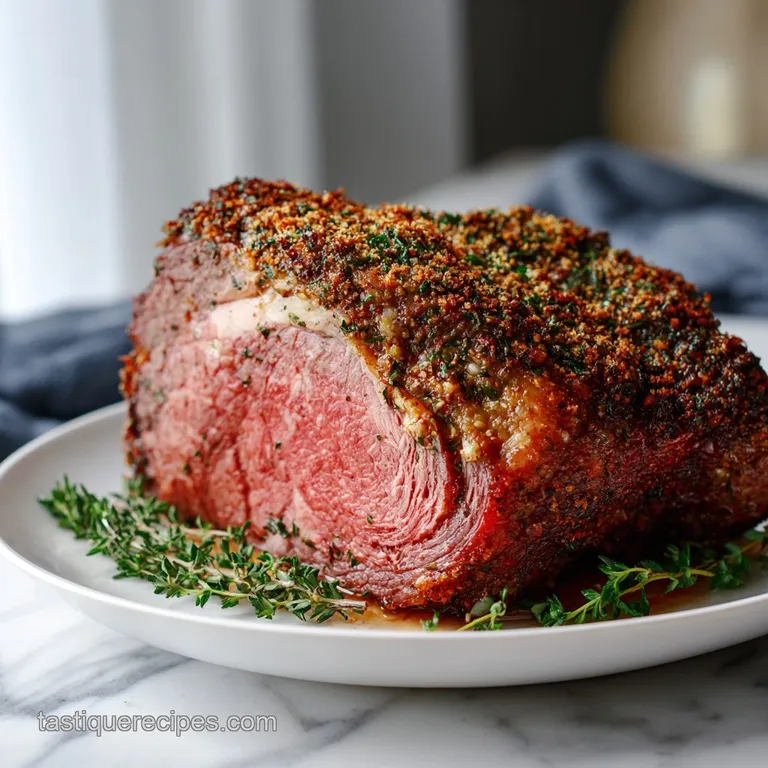
This process is broken down into two phases: the slow flavor build and the over high heat finish. Follow these steps exactly for that "shatter crisp" crust.
Phase 1: The Prep
- Season the roast. Rub 3 tbsp coarse salt over every inch of the 9 lb roast. Place it on a wire rack over a tray and leave it uncovered in the fridge for 24 hours. Note: This dries the surface for a better crust.
- Preheat the oven. Set your oven to 225°F (107°C). Ensure the rack is in the center position.
- Make the herb rub. Mix 0.5 cup softened butter, 6 cloves garlic paste, 2 tbsp rosemary, 2 tbsp thyme, 2 tbsp pepper, and 1 tbsp horseradish.
- Apply the butter. Slather the herb mixture over the entire surface of the roast. Note: The fat in the butter helps brown the herbs without burning them.
Phase 2: The Roast
- Insert the probe. Place the thermometer in the thickest part of the meat, making sure it doesn't touch the bone.
- Slow roast. Place the roast in a V rack in your roasting pan. Cook until the internal temperature hits 120°F (49°C). Expect this to take 3 to 4 hours.
- The big rest. Remove the roast and tent loosely with foil. Let it rest for 30 to 45 minutes. Note: Do not skip this; the temperature will climb slightly and the juices will settle.
Phase 3: The Finish
- Deglaze the pan. While the meat rests, pour 0.5 cup red wine into the roasting pan on the stovetop. Scrape the brown bits, add 2 cups bone broth, and simmer until reduced by a third.
- Blast the heat. Crank the oven to 500°F (260°C).
- The final sear. Put the rested roast back in the oven for 6-10 minutes until the exterior is dark brown and sizzling. Slice and serve immediately with the au jus.
Fixing Common Roast Mistakes
The biggest heartbreak is pulling a roast out and realizing it’s overcooked. Because we are using the reverse sear, our margin for error is much wider, but things can still go sideways if you aren't careful. If your oven runs hot, that 4 hour window might shrink to 3.
Why Your Roast Is Gray
If you see a thick gray band around the edges of your slices, the oven temperature was likely too high during the first phase. Even a jump to 275°F (135°C) can cause this. Stick to the low 225°F (107°C) setting.
This ensures the heat penetrates slowly and evenly, keeping the muscle fibers relaxed.
| Problem | Root Cause | Solution |
|---|---|---|
| Tough Meat | Skipping the rest | Let it sit for 45 mins so juices redistribute. |
| No Crust | Surface too wet | Ensure the 24 hour uncovered dry brine in the fridge. |
| Bland Center | Under salting | Use the full 3 tbsp of salt and apply it early. |
Another common issue is a smoky kitchen during the final sear. This usually happens if there is too much liquid or rendered fat left in the bottom of the pan. Make sure to pour off the fat and use a clean pan (or the deglazed pan) for that final 500°F (260°C) blast.
Common Mistakes Checklist
- ✓ Never cook a roast straight from the fridge; let it sit out for an hour if possible (though the slow roast method is forgiving).
- ✓ Do not cover the roast with foil while it’s in the oven; this steams the meat instead of roasting it.
- ✓ Avoid touching the bone with your thermometer probe; bone conducts heat differently and will give a false reading.
- ✓ Use a sharp carving knife for the final service; a dull blade will tear the tender meat and squeeze out the juices.
- ✓ Don't forget to deglaze; those brown bits in the pan are concentrated "umami" gold.
Smart Substitutions and Variations
If you can't find fresh rosemary or thyme, you can use dried, but you need to reduce the amount. Dried herbs are much more potent in flavor but less vibrant in aroma. Use 2 teaspoons of dried herbs for every tablespoon of fresh.
| Original Ingredient | Substitute | Why It Works |
|---|---|---|
| Red Wine | Pomegranate Juice | Provides the same acidity and depth without the alcohol. |
| Unsalted Butter | Beef Tallow | Offers a more intense beefy flavor and higher smoke point. |
| Prepared Horseradish | Wasabi Paste | Similar heat profile but adds a unique Asian fusion twist. |
For a modern, Asian inspired twist, you could add a tablespoon of soy sauce and a teaspoon of ginger to your butter rub. It bridges that gap between a traditional roast and the bold flavors often found in restaurant quality fusion dishes.
If you're short on time and can't do a 24 hour brine, even 2 hours is better than nothing, though the crust won't be quite as "shattery."
Storing and Reusing Leftovers
Prime rib is just as good the next day, provided you don't microwave it into oblivion. To reheat, place slices in a baking dish with a splash of leftover au jus, cover tightly with foil, and warm in a 250°F (120°C) oven until just heated through.
This preserves the medium rare texture.
- Fridge: Store in an airtight container for up to 4 days.
- Freezer: Wrap tightly in plastic wrap and then foil; it stays good for 2 months.
- Zero Waste: Save the bones! Simmer them with onions, carrots, and celery to make the most incredible beef stock for future soups.
- Leftover Idea: Slice the cold beef paper thin for the best French Dip sandwiches of your life. Serve them on toasted rolls with the remaining au jus for dipping.
Best Side Dish Pairings
Because this roast is so rich and savory, you want sides that offer contrast. Something bright and acidic or creamy and earthy works best. A classic steakhouse pairing would be a loaded baked potato, but I personally love serving this with a vibrant green vegetable to cut through the fat.
I often pair this with a crisp roasted broccoli or a garlicky sautéed spinach. The "reverse sear" gives you plenty of time while the meat is resting to finish off your side dishes.
Since the oven will be at 500°F (260°C) at the very end, you can even roast some asparagus or thin green beans alongside the meat for those final few minutes. It is all about that balance of rich, velvety beef and fresh, bright components.
Chef's Tip: If you want an even deeper crust, let the roast sit uncovered in the fridge for up to 48 hours. The surface will look dark and almost leathery, but that is exactly what creates that legendary crunch.
Why Pay $60 a Plate?
When you master this prime rib recipe, you’ll realize why high end steakhouses charge so much and how much money you can save by doing it yourself. There is something deeply satisfying about carving a 9 lb roast at your own table, knowing you controlled the seasoning, the sear, and the quality of the meat.
It turns a meal into an event.
The contrast of the salty, herbaceous crust against the tender, silky interior is a culinary experience that is hard to beat. Whether it's for a holiday or just a very special Sunday, this dish is the ultimate way to show your friends and family how much you appreciate them.
Just remember: trust the thermometer, give it the rest it deserves, and enjoy that first, perfect bite.
CRITICAL: Very High in Sodium
1240 mg 1240 mg of sodium (54% 54% of daily value)
The American Heart Association recommends a limit of no more than 2,300mg per day, with an ideal limit of no more than 1,500mg per day for most adults.
Tips to Reduce Sodium
-
Opt for Low-Sodium Broth-30%
Replace the 2 cups of Beef Bone Broth with low-sodium or no-salt added beef bone broth. This is the largest contributor to sodium in this recipe.
-
Reduce Coarse Kosher Salt-25%
Significantly decrease the 3 tbsp of Coarse Kosher Salt. Try using half the amount (1.5 tbsp) or less, and taste before adding more during cooking.
-
Boost Flavor with Fresh Herbs & Spices
Amplify the flavor of your Standing Rib Roast by generously using the fresh rosemary, thyme, garlic paste, and black pepper. These ingredients add depth without sodium.
-
Be Mindful of Wine-5%
While dry red wine adds flavor, be aware of its sodium content. If you're aiming for further reduction, consider a very small amount or omit entirely, and adjust other seasonings.
-
Spice Up with Unsalted Options-10%
If using prepared horseradish adds too much sodium, consider making your own by grating fresh horseradish root and mixing with a little vinegar and unsalted liquid.
Recipe FAQs
What is the best method to cook a prime rib?
The reverse sear method is the most reliable. By slow roasting at 225°F first and finishing with a 500°F sear, you ensure edge-to-edge medium rare perfection while achieving a crisp, flavorful crust.
What is the 500 rule for prime rib roast?
The 500 rule refers to the final searing phase. After the roast reaches an internal temperature of 120°F, you increase the oven to 500°F for 6 to 10 minutes to rapidly brown the exterior without overcooking the center.
How long to cook prime rib per pound?
Plan for approximately 25 to 30 minutes per pound. The total cook time is roughly 4 hours, though internal temperature is the only accurate way to determine doneness rather than relying strictly on the clock.
Why is the 500 rule used for prime rib?
This technique creates a Maillard reaction for a "shatter crisp" crust. If you enjoyed mastering this high heat searing technique, you can apply the same principle of temperature control to our roasted lemon chicken recipe for a perfectly browned skin.
How to avoid a false reading with a meat thermometer?
Insert the probe into the thickest part of the meat, ensuring you avoid the bone. Because bone conducts heat faster than muscle tissue, touching it will result in a reading that suggests the meat is done when the center is still raw.
How to handle the roast after removing it from the oven?
Tent the roast loosely with foil and let it rest for 30 to 45 minutes. This crucial pause allows the internal juices to redistribute throughout the meat, ensuring every slice remains succulent and tender.
Is it true I should cover the roast with foil while it is slow roasting?
No, this is a common misconception. Keeping the roast uncovered during the low-temperature phase is essential because foil traps steam, which prevents the development of a dry surface necessary for a good final crust.
Garlic Herb Prime Rib
Ingredients:
Instructions:
Nutrition Facts:
| Calories | 845 kcal |
|---|---|
| Protein | 58 g |
| Fat | 62 g |
| Carbs | 3 g |
| Fiber | 0.6 g |
| Sugar | 0.4 g |
| Sodium | 1240 mg |
